




On March 4, the price of the leading cryptocurrency briefly exceeded $74,000, its first visit to that level in a month.


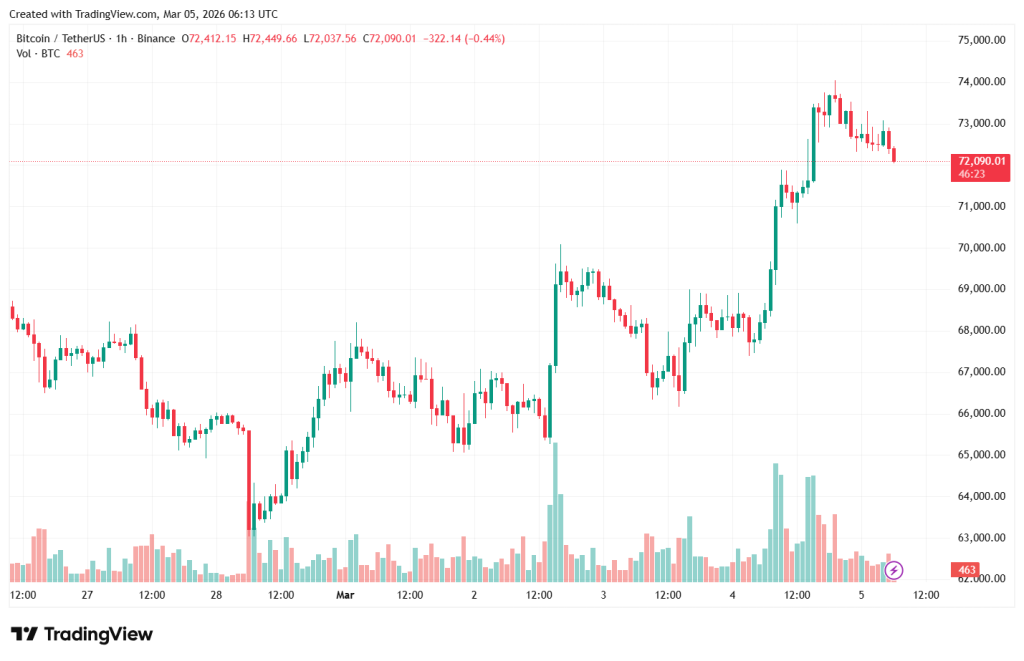
At press time, bitcoin is trading near $72,090, up 6% over the past 24 hours.
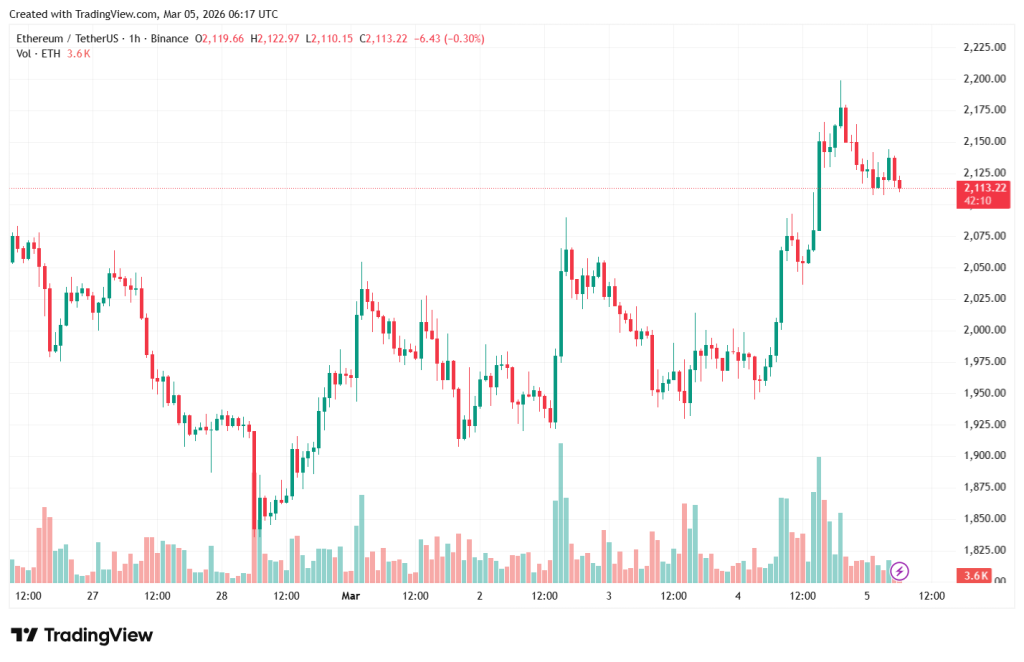
Ether rose 7.5% to $2,113. The token tested a local high above $2,200 before easing back.


Among the top-50 assets, the day’s leaders were Dogecoin and Zcash. DOGE added more than 8% to hold above $0.09. ZEC rose 9% to $235, recovering from February lows.
K33 Research analysts noted the recent record oversold conditions for digital gold. They followed six straight weeks and five consecutive months of market declines.
According to Coin Bureau co-founder Nick Pakrin, the recovery is supported by institutional demand:
“During the recent crisis, bitcoin outperformed the Nasdaq and S&P 500 indices and gold. Such divergence is a positive signal.”
Pakrin noted that since March 2, net inflows into spot bitcoin-ETF have exceeded $680 million. Large investors are using the cryptocurrency to protect capital during geopolitical instability.
Shares of crypto-linked companies also rose:
- Coinbase climbed 15% to $210;
- Gemini shares bounced from lows below $6 and surged 34% to $8.70;
- Galaxy Digital rose nearly 18% to $24.40;
- shares of mining firms Bitfarms, IREN, American Bitcoin and Hut 8 added roughly 13% on the day.
Bears keep the upper hand
Despite guarded optimism, traders continue to hedge against drawdowns. Put-option premia exceed call premia by 10%, whereas in neutral conditions the gap typically stays within 6%. At the same time, demand for bullish bitcoin futures is stalling — their annualised basis has slipped below the 5% baseline.
The pattern reflects investor caution after the early-February sell-off.
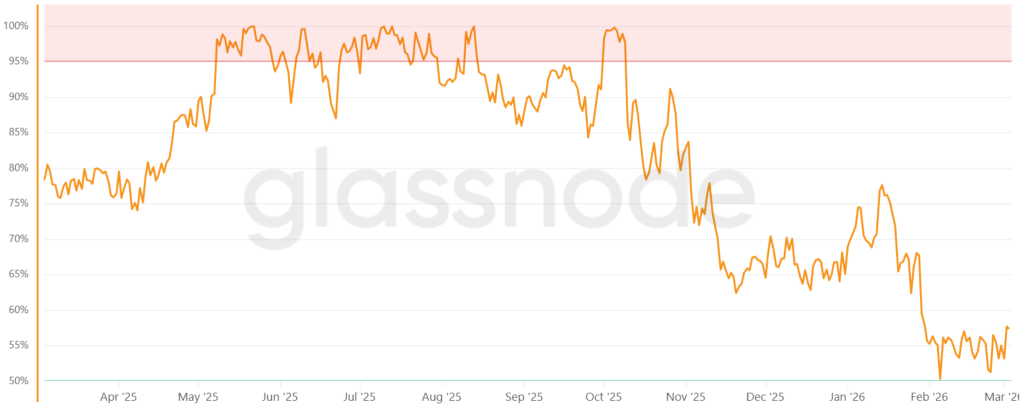
According to Glassnode, 43% of bitcoin’s circulating supply is in loss. At the end of January, the figure was 30%. Traders fear that as prices recover, investors will gradually sell into strength. That would create additional resistance and cap further gains.


Additional pressure comes from miners. The hashprice index has fallen to $30 per 1 TH/s per day. Three months ago it stood at $39.


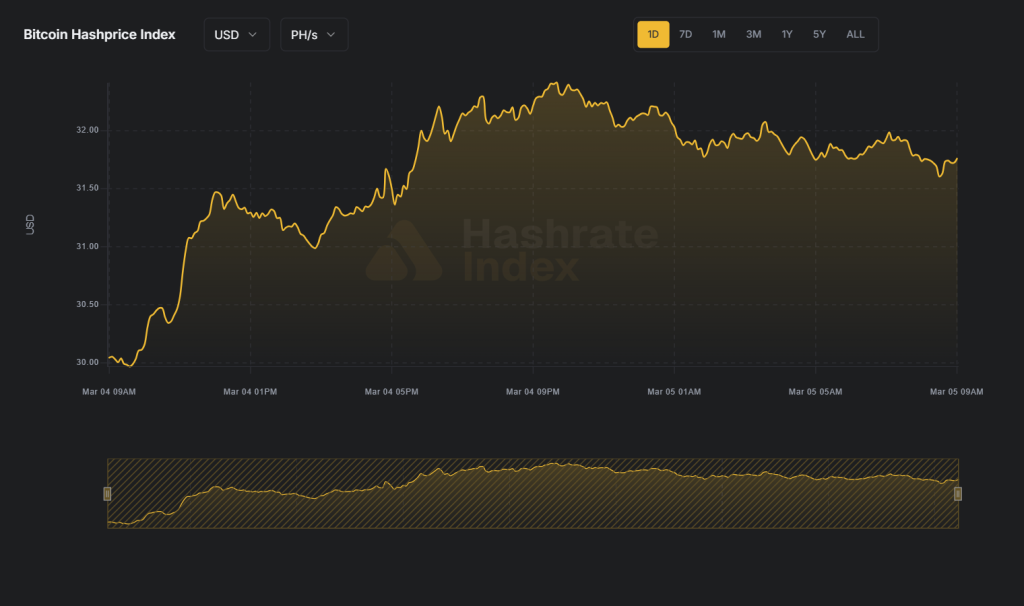
Mining profitability has slumped to record lows amid high electricity costs. Public companies are liquidating bitcoin reserves and repurposing capacity for artificial-intelligence computing.
A key resistance area sits around $76,000. That is the average purchase price of bitcoin for the company Strategy, which holds 720,737 BTC on its balance sheet.
Some market participants benefit from keeping prices below that threshold. A rise would allow Strategy to issue new shares to buy cryptocurrency without harming existing investors’ capital.
A return to January’s $78,700 high may take longer than the market expects. A breakout above that mark would hand the initiative back to buyers.
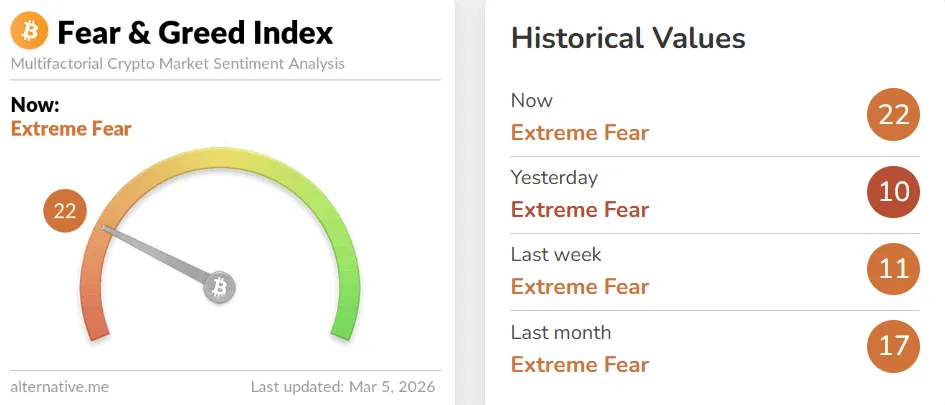
The crypto sentiment index rose from 10 to 22 points, yet still signals extreme fear.


At the start of March, VanEck chief Jan van Eck said the price of digital gold had approached a local bottom.