


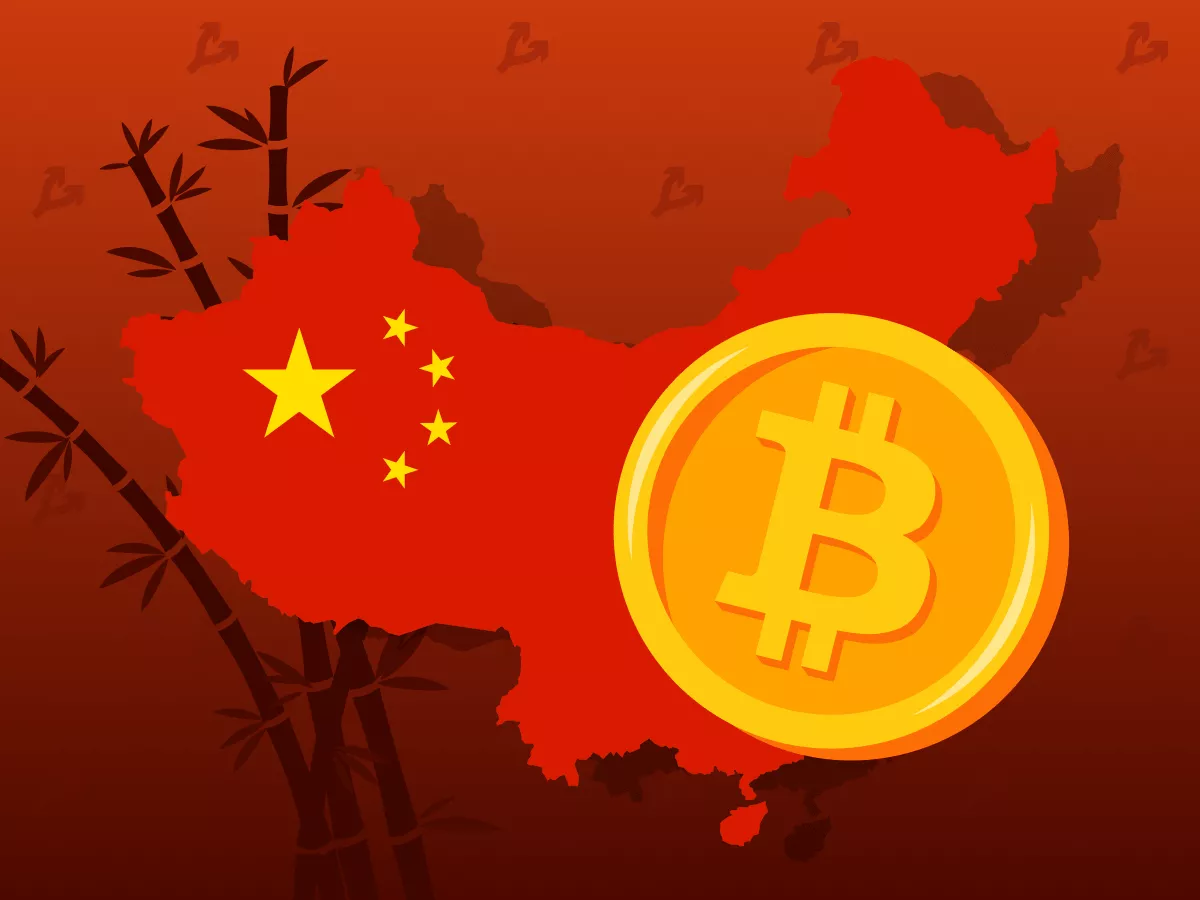
Bitcoin Emerges as a Safe Haven for Chinese Investors Amid Economic Turmoil
- Reuters confirms the existence of a thriving underground crypto market in China.
- Investor interest in digital assets is growing amid economic challenges.
- Hong Kong has become a gateway for Chinese investors to access cryptocurrencies.
Amid the challenges facing China’s economy, local investors are seeking opportunities to purchase cryptocurrency as traditional value preservation tools falter, according to Reuters.
Dylan Ran, a top executive in Shanghai’s financial sector, told reporters he began shifting funds into digital assets at the start of the year when he realized the Chinese stock market was “going downhill.”
“Bitcoin is a safe haven for investments, similar to gold,” he stated.
Beijing imposed an effective ban on cryptocurrency trading in 2021, with digital asset traders facing fines and even imprisonment.
The Ban’s Ineffectiveness
However, this has not deterred many investors. Earlier reports in the WSJ highlighted a thriving underground crypto market in China and the methods traders use to circumvent restrictions. These include using VPN services, social media contacts, and in-person deals.
Ran added more details to this picture. He used cards from small provincial commercial banks to purchase cryptocurrency from grey market dealers. To avoid scrutiny, transaction amounts did not exceed 50,000 yuan ($6978).
According to the investor, he holds cryptocurrencies worth 1 million yuan ($139,560), with digital assets comprising about half of his portfolio compared to a 40% share in Chinese stocks.
Reuters confirmed that exchanges like OKX and Binance continue to offer services to Chinese users. These platforms facilitate the conversion of yuan into stablecoins for cryptocurrency trading through electronic payment services Alipay and WeChat Pay.
Hong Kong as a Loophole for Crypto Investments
Users from the country also open accounts in foreign banks for this purpose, utilizing the annual limit for purchasing foreign currency equivalent to $50,000. By regulation, these funds are meant only for tourism and education.
Following the open endorsement of digital assets in Hong Kong in 2023, Chinese citizens have been using this quota to transfer money into cryptocurrency through the jurisdiction.
“The economic downturn in China has made mainland investments risky, uncertain, and disappointing, so people are eager to place assets offshore,” said the head of a local crypto exchange, speaking anonymously.
According to him, the platform sees an influx of new retail Chinese investors almost daily.
Amid this backdrop, financial institutions from mainland China have begun showing interest in the crypto business.
“If you are a Chinese brokerage facing a sluggish stock market, weak demand for IPOs, and a decline in other business areas, you need a growth story to present to shareholders and the board,” explained a manager.
Local subsidiaries of Bank of China, China Asset Management (ChinaAMC), and Harvest Fund Management are exploring opportunities in the digital asset sector.
Beijing’s Tacit Support for Crypto Initiatives?
According to Chainalysis, the annual volume of cryptocurrency transactions in China reached $86.4 billion, while in Hong Kong it was $64 billion, despite the autonomous region’s population being less than 0.5% of the country’s total. Analysts noted that activity on the mainland is concentrated “in the over-the-counter market and informal P2P grey market platforms.”
In Hong Kong, alongside licensed trading platforms, offline shops for cryptocurrency exchange operate right in the business center. This sector is virtually unregulated. At one of the most popular, Crypto HK, clients can purchase cryptocurrency starting from 50 Hong Kong dollars ($64) without any KYC checks.
Equity analyst Charlie Wong, who invested in bitcoin through the licensed Hong Kong exchange HashKey, confirmed:
“It’s hard to find opportunities in traditional areas. Chinese stocks and other assets are performing poorly, and the economy is undergoing a crucial transition period.”
China’s stringent measures against the real estate sector over the past three years have led to a decline in housing prices, traditionally a foundation for household savings. The stock market is faring even worse: the benchmark CSI 300 index has halved since early 2021.
Wong believes that Chinese officials recognize how “disruptive” bitcoin could be to the traditional financial system, acknowledging the innovative potential of cryptocurrency. In his view, China’s authorities encourage the crypto business in Hong Kong to maintain a “foothold” in the industry alongside established centers like Singapore or New York.
In early 2023, journalists from Bloomberg reported that Beijing is quietly supporting the autonomous region’s authorities in their efforts to create a crypto hub.
However, Shan Zhong, head of a digital asset-focused investment fund in the jurisdiction, believes the central government has not changed its tough anti-cryptocurrency stance.
Yat Siu, co-founder of blockchain game operator Animoca Brands, expressed confidence that the rapid adoption of Web3 initiatives in Hong Kong signals some “big moves” coming from mainland China.
Back in the day, Ethereum co-founder Vitalik Buterin questioned the long-term stability of the region’s friendly policy towards the crypto industry.
Рассылки ForkLog: держите руку на пульсе биткоин-индустрии!