



Bitcoin mining difficulty falls for the first time this year
As a result of another difficulty adjustment, Bitcoin mining difficulty fell for the first time since November 2021. The metric stood at 27.55T.
In percentage terms, the decline was the same as in the previous adjustment — 1.49%.

Over roughly the two-week period separating the recalculations of the indicator, the average hash rate stood at about 197 EH/s versus 200 EH/s in the previous period. Then the difficulty registered historical maximum of 29.97T.
According to Glassnode, the smoothed seven-day moving average of the Bitcoin network’s hash rate reached a maximum of 214.7 EH/s on February 17, before subsequently declining.
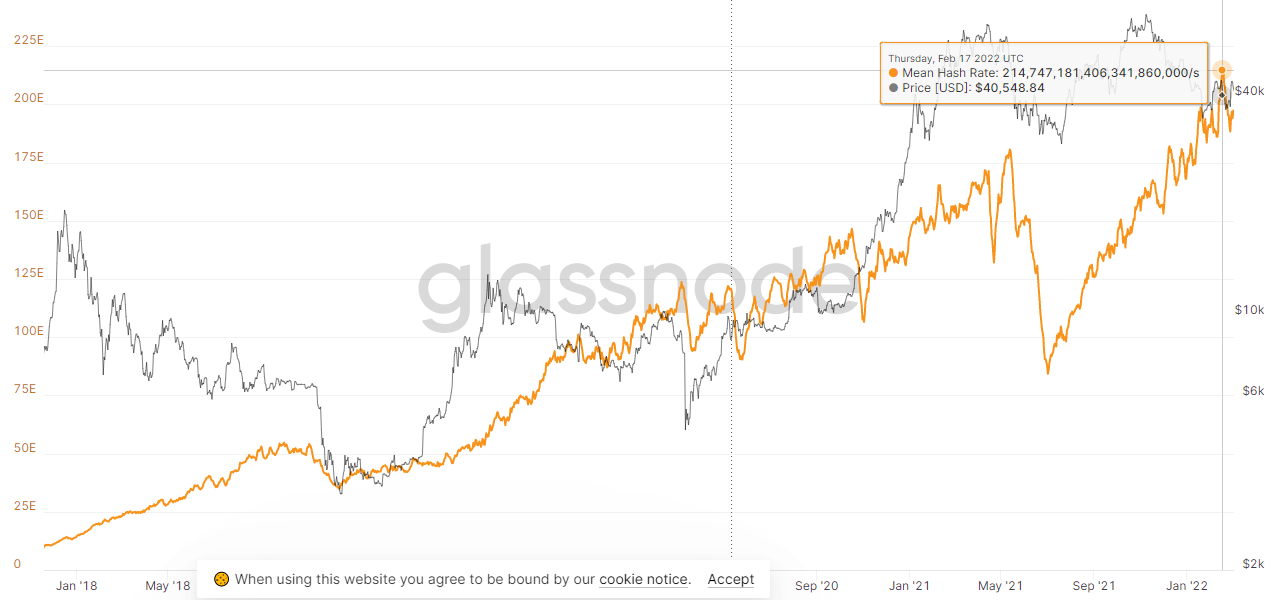
In 2021, the hash rate began to fall in May amid power-supply problems for miners in Sichuan. The decline continued with the exodus of industry players from China following the ban. The hash rate–linked difficulty also declined. As a result of one of the recalculations in July, the drop stood at a record 27.94%.
Both metrics began to recover only closer to August. It was then that the United States first rose to the lead in the share of Bitcoin’s hashrate.
In February, miners’ revenue for the first cryptocurrency fell by 13% compared with the previous month, just over $1 billion.
Рассылки ForkLog: держите руку на пульсе биткоин-индустрии!