




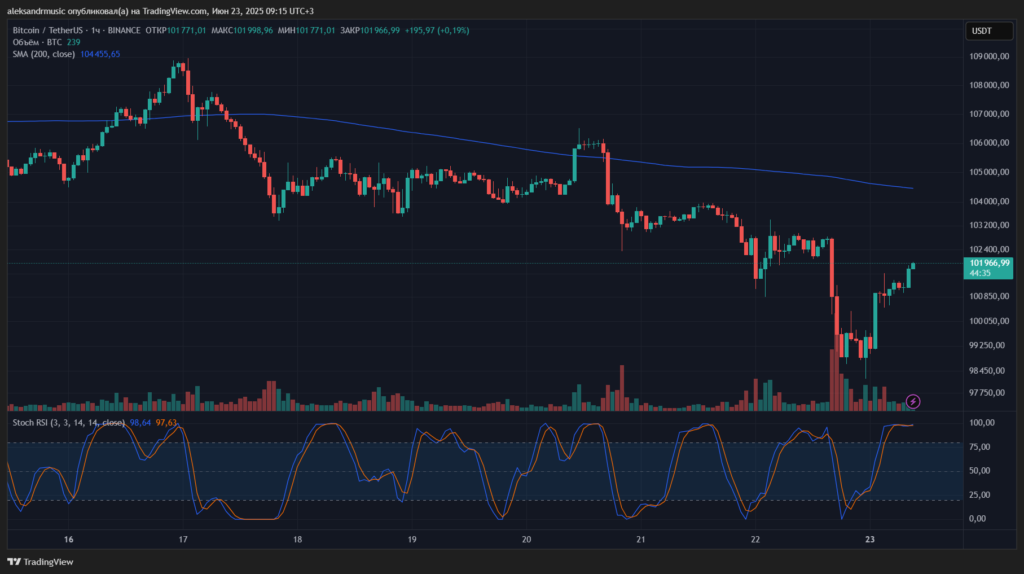
Amid geopolitical tensions linked to Iran’s threat to block the Strait of Hormuz, Bitcoin’s price fell below $99,000 on June 22.
Subsequently, the market partially recovered, with the digital gold’s quotes nearing $102,000.


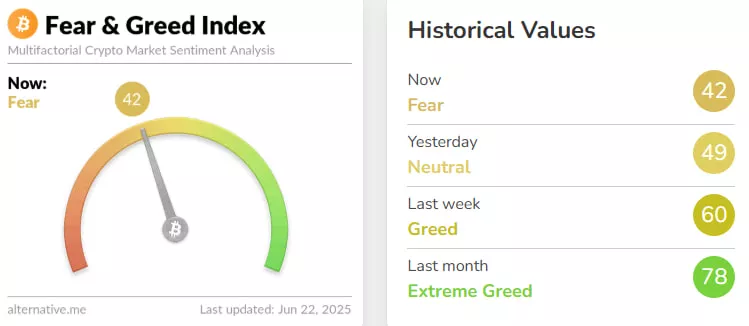
A popular indicator dipped into the “fear” zone for the first time in a long while:


Focus on Iran
The Strait of Hormuz accounts for about 20% of the world’s oil and gas shipments. Any disruptions along this route increase costs and heighten market uncertainty.
IRAN’S PARLIAMENT APPROVES CLOSING HORMUZ STRAIT, TOP SECURITY BODY REQUIRED TO FINALIZE DECISION ON THIS MEASURE
— *Walter Bloomberg (@DeItaone) June 22, 2025
According to analysts at JPMorgan, a blockade of the strait could push oil prices to $120–130 per barrel.
A sharp rise in energy costs amid trade conflicts could trigger stagflation—economic stagnation with high inflation. This is one of the most adverse scenarios for financial markets, including cryptocurrencies.
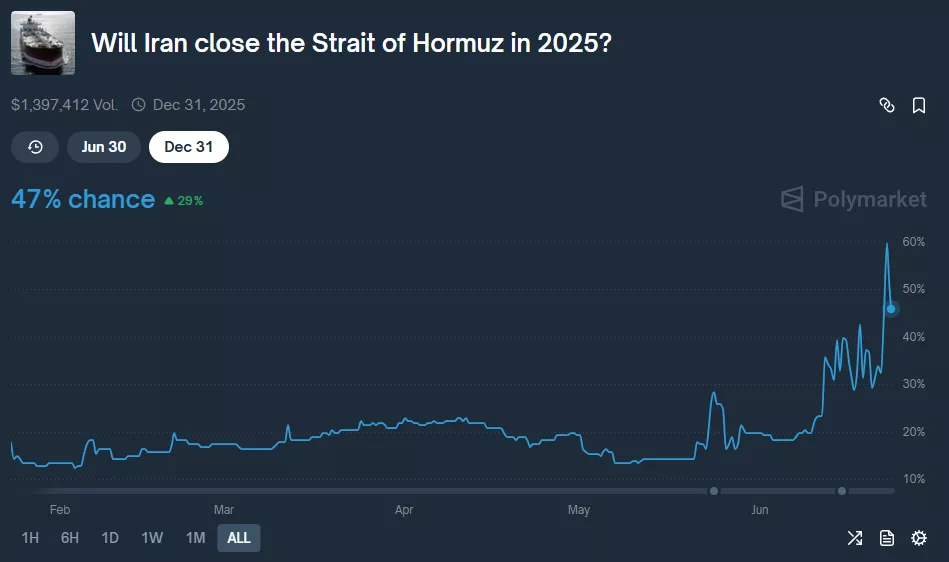
The likelihood of the Strait of Hormuz being blocked by the end of the year reached 60% on the betting platform Polymarket. At the time of writing, the figure stands at 47%.

No Cause for Panic
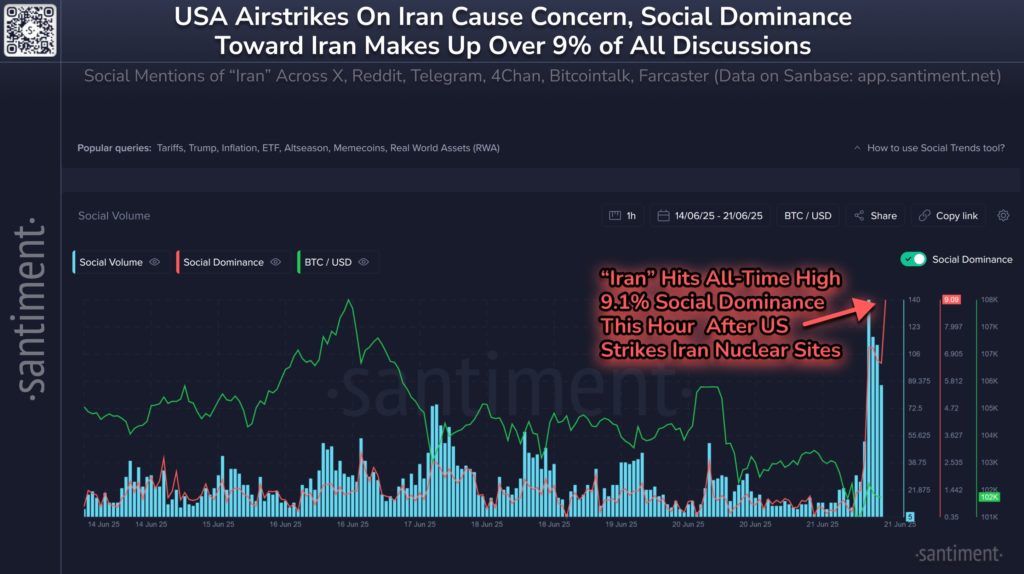
According to Santiment, social media activity surged following direct U.S. intervention in the conflict between Iran and Israel.
Analysts warn of risks of cyberattacks and oil supply disruptions, yet Bitcoin’s price remains “surprisingly stable.”
CryptoQuant noted “quiet consolidation”—observing that long-term investors are holding onto their digital gold reserves without selling.
“Historically, Bitcoin’s explosive growth often began amid declining interest and a lull in sentiment. The current pause could herald the next surge,” experts explained.
The total cryptocurrency market capitalization stands at $3.23 trillion. The digital gold dominance index is 62.6%, according to CoinGecko.
As reported, CryptoQuant contributor Carmelo Aleman forecasted a Bitcoin price peak above $200,000 based on historical patterns.