


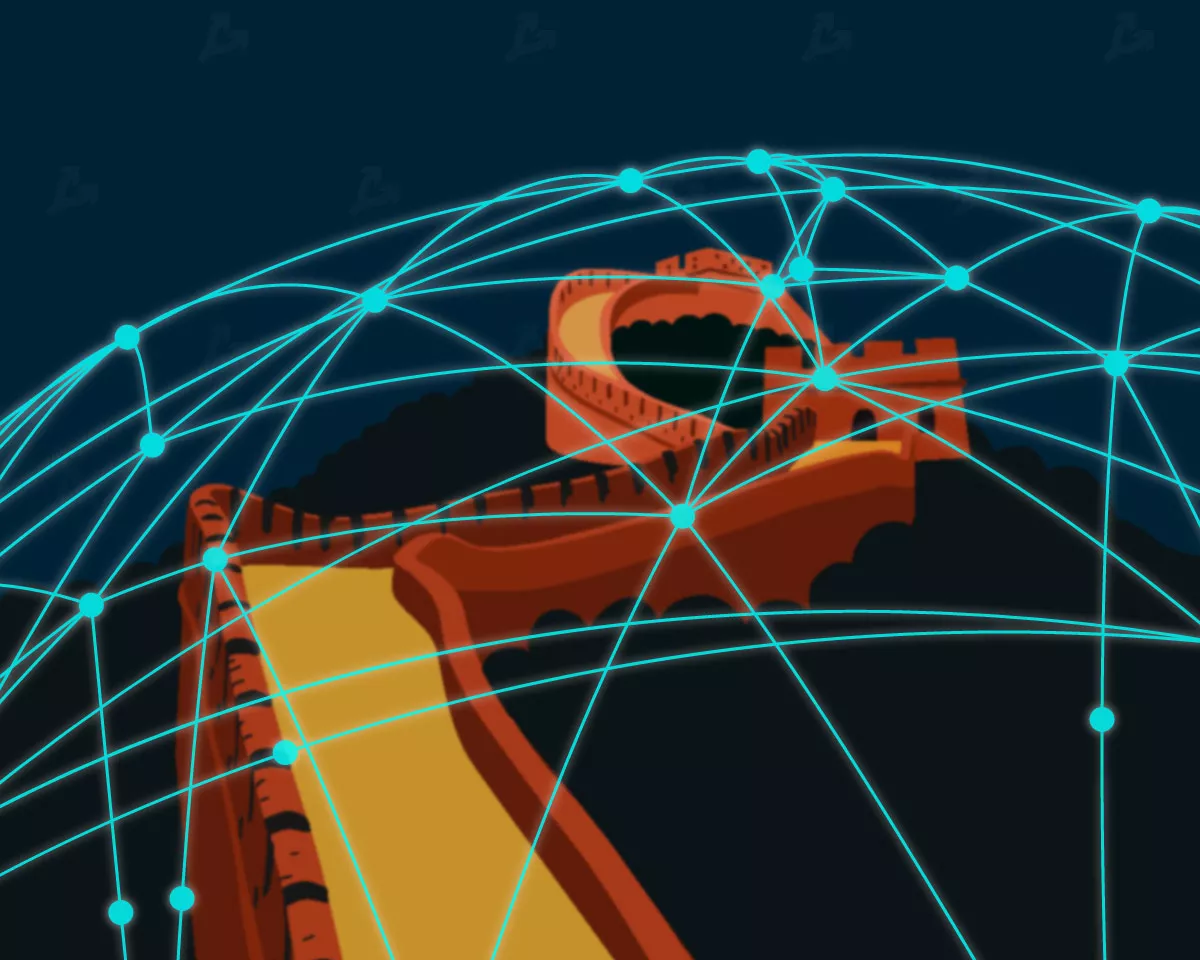
Blockchain, Chinese-Style: How China Is Building a Centralised Platform for DLT Development
In October 2019, China’s President Xi Jinping stated the need for China to become a leader in blockchain technology.
The key “locomotives” on the path to this goal appear to be the digital yuan and the Blockchain-based Service Network — BSN — infrastructure platform.
The main aim of the BSN is to become “the Internet of Blockchains,” according to the project’s white paper. ForkLog examined what that actually means, how the platform is structured, and why it matters to the Chinese government.
- China launched the BSN infrastructure platform designed to ease and reduce the costs of launching blockchain applications.
- The development of the BSN split into two tracks — Chinese and international — due to the integration of public blockchains.
- In August, BSN will begin supporting networks such as Ethereum, EOS, Tezos, NEO, Nervos and IRISnet.
BSN is positioned as a scalable infrastructure, whose key task is to reduce costs and simplify the launch of blockchain applications.
It is expected to accelerate the adoption of decentralized technologies, and to stimulate the development of “smart cities” and the digital economy.
It is important to note that BSN is merely a platform for integrating various solutions and tools for developers and is not a blockchain in itself.
“We are not going to build BSNChain and will never issue a cryptocurrency. This would distract us from BSN’s core value — providing developers cheaper and easier access to DLT technologies,” according to a BSN statement.
The #BSN is not a blockchain itself. We have no plan to build a BSNChain and will never issue a cryptocurrency. We believe this would distract us from BSN’s core value: providing developers cheaper and easier access to #DLT and #Blockchain technologies. pic.twitter.com/KWnZpaaRNn
— BSN (@bsnbase) July 21, 2020
The BSN is overseen by the eponymous alliance led by the State Information Center of the People’s Republic of China (SIC).
In addition to SIC, the platform’s development involves the telecommunications giant China Mobile, the national payment system China UnionPay, China Mobile Financial Technology and Red Date Technology. One of the first BSN alliance members was also the Chinese unit of the cryptocurrency exchange Huobi.
At the first BSN conference, seven main characteristics of the new infrastructure were announced — openness, usefulness, scalability, open source, multi-portal, low cost and autonomy.
“Created to unite a fragmented market, BSN is a cross-cloud, cross-portal and cross-platform public network that enables developers to easily and affordably design, deploy, and support applications and nodes of public and exclusive blockchains,” said Huobi founder Leon Li.
BSN is likened to Amazon Web Services or Microsoft Azure for the blockchain world. Hence the “Internet of Blockchains” they seek to build with the new infrastructure.
“Our mission is to put everything related to blockchain on the BSN platform,” said Bloomberg’s head of Red Date Technology He Yifan.
Testing of the platform began in autumn 2019. The outbreak of the coronavirus in China did not derail BSN’s plans — the official launch, as expected, took place in April 2020.
At launch, the BSN network comprised 128 so-called Public City Nodes (PCNs). They are one of the key elements of the infrastructure.
A look at the architecture of a Public City Node (PCN) in the Blockchain-based Service Network (BSN). Over 100 PCNs make up the BSN. Thanks to @agreechee from @technodechina for the diagram. We look forward to taking a deeper dive into all aspects of the BSN soon! pic.twitter.com/LTdOJgYjmT
— BSN (@bsnbase) July 16, 2020
As Forbes’ Vipin Bharathan explains, PCNs are based on cloud platforms. Users interact with the nodes through the BSN infrastructure, administered and serviced by accredited service providers.
Seventy-six of the 128 such nodes at launch were located in China, 44 were in the process of deployment, and 8 were outside China on all continents.
In June BSN announced partnerships with Chainlink and Cosmos projects.
“Users will be able to obtain data from external sources, for example from stock markets, via Chainlink, and cross-chain interoperability will be based on Cosmos’ Tendermint technology,” said He Yifan at the time.
A hallmark of BSN is the scale of the ambition. The creators envisage that the platform’s capabilities will be accessible not only to Chinese companies, but to developers of both enterprise and public blockchains worldwide.
Nevertheless, a few months after launch BSN split into two tracks — Chinese (BSN-China) and international (BSN-International).
The founding partners of the BSN have officially announced their decision to separate the governance of the BSN into two ecosystems; BSN China and BSN International. Learn more in the following article.https://t.co/gMGXOmbpY8
— BSN (@bsnbase) July 31, 2020
In the words of a well-placed source familiar with the situation, the split was driven by disagreements among alliance members over integrating public blockchains into the infrastructure.
According to the white paper, BSN originally supported several enterprise blockchains, including Hyperledger Fabric, FISCO BCOS, Baidu Xuperchain and CITA.
Introductory White Paper by ForkLog on Scribd
Later, the BSN creators announced plans to add support for 100 public blockchains within a year.
From 10 August, BSN will integrate six public networks — Ethereum, EOS, Tezos, NEO, Nervos and IRISnet. Developers will be able to launch nodes and applications using data storage, bandwidth and other resources provided by BSN.
BSN is excited to announce the six public chains that will be integrated at the launch of the redesigned BSN International Portal @ethereum @block_one_ @tezos @NervosNetwork @Neo_Blockchain @irisnetwork @IRITAchain @chainlink @dfuseio https://t.co/CGtw2azbaQ
— BSN (@bsnbase) July 21, 2020
As outlined by blockchain optimist Vipin Bharathan, PCNs are based on cloud platforms. Users interact with the nodes through the BSN infrastructure, administered and serviced by accredited service providers.
Seventy-six of the 128 such nodes at launch were located in China, 44 were in the process of deployment, and 8 were outside China on all continents.
In June, BSN announced partnerships with Chainlink and Cosmos projects.
“Users will be able to obtain data from external sources, for example from stock markets, via Chainlink, and cross-chain interoperability will be based on Cosmos’ Tendermint technology,” said He Yifan at the time.
A hallmark of BSN is the scale of the ambition. The creators envisage that the platform’s capabilities will be accessible not only to Chinese companies, but to developers of both enterprise and public blockchains worldwide.
Nevertheless, a few months after launch BSN split into two tracks — Chinese (BSN-China) and international (BSN-International).
The founding partners of the BSN have officially announced their decision to separate the governance of the BSN into two ecosystems; BSN China and BSN International. Learn more in the following article.https://t.co/gMGXOmbpY8
— BSN (@bsnbase) July 31, 2020
In the words of a well-placed source familiar with the situation, the split was driven by disagreements among alliance members over integrating public blockchains into the infrastructure.
According to the white paper, BSN originally supported several enterprise blockchains, including Hyperledger Fabric, FISCO BCOS, Baidu Xuperchain and CITA.
Introductory White Paper by ForkLog on Scribd
Позже создатели BSN заявили о планах по добавлению поддержки 100 публичных блокчейнов в течение года.
С 10 августа в BSN интегрируют шесть публичных сетей — Ethereum, EOS, Tezos, NEO, Nervos и IRISnet. Разработчики смогут запускать ноды и приложения, используя хранилище данных, пропускную способность и другие ресурсы, предоставляемые BSN.
BSN is excited to announce the six public chains that will be integrated at the launch of the redesigned BSN International Portal @ethereum @block_one_ @tezos @NervosNetwork @Neo_Blockchain @irisnetwork @IRITAchain @chainlink @dfuseio https://t.co/CGtw2azbaQ
— BSN (@bsnbase) July 21, 2020
How BSN’s access is explained by blockchain enthusiast Vipin Bharathan: PCNs are based on cloud platforms. Users interact with the nodes via the BSN infrastructure, administered and serviced by accredited service providers.
76 of the 128 PCNs at launch were located in China, 44 were in deployment, and 8 were outside China across continents.
In June, BSN announced partnerships with Chainlink and Cosmos projects.
“Users will be able to obtain data from external sources, for example from stock markets, via Chainlink, and cross-chain interoperability will be based on Cosmos’ Tendermint technology,” said He Yifan at the time.
A hallmark of BSN is the scale of the ambition. The creators envisage that the platform’s capabilities will be accessible not only to Chinese companies, but to developers of both enterprise and public blockchains worldwide.
Nevertheless, a few months after launch BSN split into two tracks — Chinese (BSN-China) and international (BSN-International).
The founding partners of the BSN have officially announced their decision to separate the governance of the BSN into two ecosystems; BSN China and BSN International. Learn more in the following article.https://t.co/gMGXOmbpY8
— BSN (@bsnbase) July 31, 2020
In the words of a government aide, China’s split was driven by disagreements among alliance partners about integrating public blockchains into the infrastructure.
According to the white paper, BSN originally supported several enterprise blockchains, including Hyperledger Fabric, FISCO BCOS, Baidu Xuperchain and CITA.
Introductory White Paper by ForkLog on Scribd
позже создатели BSN заявили о планах по добавлению поддержки 100 публичных блокчейнов в течение года.
From 10 August, BSN will integrate six public networks — Ethereum, EOS, Tezos, NEO, Nervos and IRISnet. Developers will be able to launch nodes and applications using data storage, bandwidth and other resources provided by BSN.
BSN is excited to announce the six public chains that will be integrated at the launch of the redesigned BSN International Portal @ethereum @block_one_ @tezos @NervosNetwork @Neo_Blockchain @irisnetwork @IRITAchain @chainlink @dfuseio https://t.co/CGtw2azbaQ
— BSN (@bsnbase) July 21, 2020
How the BSN looks to Vipin Bharathan: PCNs are cloud-based. Users interact with nodes via the BSN infrastructure, run and serviced by accredited providers.
Seventy-six of the 128 PCNs at launch were located in China, 44 were in deployment, and 8 were outside China on all continents.
In June, BSN announced partnerships with Chainlink and Cosmos projects.
“Users will be able to obtain data from external sources, for example from stock markets, via Chainlink, and cross-chain interoperability will be based on Cosmos’ Tendermint technology,” said He Yifan at the time.
A hallmark of BSN is the scale of the ambition. The creators envisage that the platform’s capabilities will be accessible not only to Chinese companies, but to developers of both enterprise and public blockchains worldwide.
Nevertheless, a few months after launch BSN split into two tracks — Chinese (BSN-China) and international (BSN-International).
The founding partners of the BSN have officially announced their decision to separate the governance of the BSN into two ecosystems; BSN China and BSN International. Learn more in the following article.https://t.co/gMGXOmbpY8
— BSN (@bsnbase) July 31, 2020
In the words of a government adviser, China’s split was driven by disagreements among alliance partners about integrating public blockchains into the infrastructure.
According to the white paper, BSN originally supported several enterprise blockchains, including Hyperledger Fabric, FISCO BCOS, Baidu Xuperchain and CITA.
Introductory White Paper by ForkLog on Scribd
Authors later said they plan to add 100 public blockchains within a year.
From 10 August, BSN will integrate six public networks — Ethereum, EOS, Tezos, NEO, Nervos and IRISnet. Developers will be able to launch nodes and applications using data storage, bandwidth and other resources provided by BSN.
BSN is excited to announce the six public chains that will be integrated at the launch of the redesigned BSN International Portal @ethereum @block_one_ @tezos @NervosNetwork @Neo_Blockchain @irisnetwork @IRITAchain @chainlink @dfuseio https://t.co/CGtw2azbaQ
— BSN (@bsnbase) July 21, 2020
As outlined by blockchain optimist Vipin Bharathan, PCNs are based on cloud platforms. Users interact with the nodes through the BSN infrastructure, administered and serviced by accredited service providers.
Seventy-six of the 128 PCNs at launch were located in China, 44 were in deployment, and 8 were outside China across continents.
In June, BSN announced partnerships with Chainlink and Cosmos projects.
“Users will be able to obtain data from external sources, for example from stock markets, via Chainlink, and cross-chain interoperability will be based on Cosmos’ Tendermint technology,” said He Yifan at the time.
A hallmark of BSN is the scale of the ambition. The creators envisage that the platform’s capabilities will be accessible not only to Chinese companies, but to developers of both enterprise and public blockchains worldwide.
Nevertheless, a few months after launch BSN split into two tracks — Chinese (BSN-China) and international (BSN-International).
The founding partners of the BSN have officially announced their decision to separate the governance of the BSN into two ecosystems; BSN China and BSN International. Learn more in the following article.https://t.co/gMGXOmbpY8
— BSN (@bsnbase) July 31, 2020
In the words of a government adviser, China’s split was driven by disagreements among alliance partners about integrating public blockchains into the infrastructure.
According to the white paper, BSN originally supported several enterprise blockchains, including Hyperledger Fabric, FISCO BCOS, Baidu Xuperchain and CITA.
Introductory White Paper by ForkLog on Scribd
Authors later said they plan to add 100 public blockchains within a year.
From 10 August, BSN will integrate six public networks — Ethereum, EOS, Tezos, NEO, Nervos and IRISnet. Developers will be able to launch nodes and applications using data storage, bandwidth and other resources provided by BSN.
BSN is excited to announce the six public chains that will be integrated at the launch of the redesigned BSN International Portal @ethereum @block_one_ @tezos @NervosNetwork @Neo_Blockchain @irisnetwork @IRITAchain @chainlink @dfuseio https://t.co/CGtw2azbaQ
— BSN (@bsnbase) July 21, 2020
What the BSN means to the world, according to Vipin Bharathan: PCNs are cloud-based. Users interact with nodes via the BSN infrastructure, administered and serviced by accredited providers.
Seventy-six of the 128 PCNs at launch were located in China, 44 were in deployment, and 8 were outside China across continents.
In June, BSN announced partnerships with Chainlink and Cosmos projects.
“Users will be able to obtain data from external sources, for example from stock markets, via Chainlink, and cross-chain interoperability will be based on Cosmos’ Tendermint technology,” said He Yifan at the time.
A hallmark of BSN is the scale of the ambition. The creators envisage that the platform’s capabilities will be accessible not only to Chinese companies, but to developers of both enterprise and public blockchains worldwide.
Nevertheless, a few months after launch BSN split into two tracks — Chinese (BSN-China) and international (BSN-International).
The founding partners of the BSN have officially announced their decision to separate the governance of the BSN into two ecosystems; BSN China and BSN International. Learn more in the following article.https://t.co/gMGXOmbpY8
— BSN (@bsnbase) July 31, 2020
In the words of a government adviser, China’s split was driven by disagreements among alliance partners about integrating public blockchains into the infrastructure.
According to the white paper, BSN originally supported several enterprise blockchains, including Hyperledger Fabric, FISCO BCOS, Baidu Xuperchain and CITA.
Introductory White Paper by ForkLog on Scribd
Authors later said they plan to add 100 public blockchains within a year.
From 10 August, BSN will integrate six public networks — Ethereum, EOS, Tezos, NEO, Nervos and IRISnet. Developers will be able to launch nodes and applications using data storage, bandwidth and other resources provided by BSN.
BSN is excited to announce the six public chains that will be integrated at the launch of the redesigned BSN International Portal @ethereum @block_one_ @tezos @NervosNetwork @Neo_Blockchain @irisnetwork @IRITAchain @chainlink @dfuseio https://t.co/CGtw2azbaQ
— BSN (@bsnbase) July 21, 2020
What the BSN means to the world, according to Vipin Bharathan: PCNs are cloud-based. Users interact with nodes via the BSN infrastructure, administered and serviced by accredited providers.
Seventy-six of the 128 PCNs at launch were located in China, 44 were in deployment, and 8 were outside China across continents.
In June, BSN announced partnerships with Chainlink and Cosmos projects.
“Users will be able to obtain data from external sources, for example from stock markets, via Chainlink, and cross-chain interoperability will be based on Cosmos’ Tendermint technology,” said He Yifan at the time.
A hallmark of BSN is the scale of the ambition. The creators envisage that the platform’s capabilities will be accessible not only to Chinese companies, but to developers of both enterprise and public blockchains worldwide.
Nevertheless, a few months after launch BSN split into two tracks — Chinese (BSN-China) and international (BSN-International).
The founding partners of the BSN have officially announced their decision to separate the governance of the BSN into two ecosystems; BSN China and BSN International. Learn more in the following article.https://t.co/gMGXOmbpY8
— BSN (@bsnbase) July 31, 2020
In the words of a government adviser, China’s split was driven by disagreements among alliance partners about integrating public blockchains into the infrastructure.
According to the white paper, BSN originally supported several enterprise blockchains, including Hyperledger Fabric, FISCO BCOS, Baidu Xuperchain and CITA.
Introductory White Paper by ForkLog on Scribd
Authors later said they plan to add 100 public blockchains within a year.
From 10 August, BSN will integrate six public networks — Ethereum, EOS, Tezos, NEO, Nervos and IRISnet. Developers will be able to launch nodes and applications using data storage, bandwidth and other resources provided by BSN.
BSN is excited to announce the six public chains that will be integrated at the launch of the redesigned BSN International Portal @ethereum @block_one_ @tezos @NervosNetwork @Neo_Blockchain @irisnetwork @IRITAchain @chainlink @dfuseio https://t.co/CGtw2azbaQ
— BSN (@bsnbase) July 21, 2020
How the BSN looks to Vipin Bharathan: PCNs are cloud-based. Users interact with nodes via the BSN infrastructure, administered and serviced by accredited providers.
Seventy-six of the 128 PCNs at launch were located in China, 44 were in deployment, and 8 were outside China across continents.
In June, BSN announced partnerships with Chainlink and Cosmos projects.
“Users will be able to obtain data from external sources, for example from stock markets, via Chainlink, and cross-chain interoperability will be based on Cosmos’ Tendermint technology,” said He Yifan at the time.
A hallmark of BSN is the scale of the ambition. The creators envisage that the platform’s capabilities will be accessible not only to Chinese companies, but to developers of both enterprise and public blockchains worldwide.
Nevertheless, a few months after launch BSN split into two tracks — Chinese (BSN-China) and international (BSN-International).
The founding partners of the BSN have officially announced their decision to separate the governance of the BSN into two ecosystems; BSN China and BSN International. Learn more in the following article.https://t.co/gMGXOmbpY8
— BSN (@bsnbase) July 31, 2020
In the words of a government adviser, China’s split was driven by disagreements among alliance partners about integrating public blockchains into the infrastructure.
According to the white paper, BSN originally supported several enterprise blockchains, including Hyperledger Fabric, FISCO BCOS, Baidu Xuperchain and CITA.
Introductory White Paper by ForkLog on Scribd
Authorities later said they plan to add 100 public blockchains within a year.
From 10 August, BSN will integrate six public networks — Ethereum, EOS, Tezos, NEO, Nervos and IRISnet. Developers will be able to launch nodes and applications using data storage, bandwidth and other resources provided by BSN.
BSN is excited to announce the six public chains that will be integrated at the launch of the redesigned BSN International Portal @ethereum @block_one_ @tezos @NervosNetwork @Neo_Blockchain @irisnetwork @IRITAchain @chainlink @dfuseio https://t.co/CGtw2azbaQ
— BSN (@bsnbase) July 21, 2020
What the world might gain: Importance of BSN in reducing costs, expanding access, and boosting global blockchain adoption.
In May in the United States, a national blockchain strategy was proposed, motivated by China’s efforts including the BSN.
“We cannot let China win,” said the author of the legislation, Brett Guthrie.
Russia has similar ambitions — President Vladimir Putin has said the country should be among the world leaders in digital technology. Whether this includes blockchain remains to be seen.
Perhaps BSN will be the catalyst for truly mass adoption of the technology underlying Bitcoin.
Author: Alina Saganskaya.
Follow ForkLog news on Telegram: ForkLog Feed — all the news, ForkLog — the most important news and polls.
Рассылки ForkLog: держите руку на пульсе биткоин-индустрии!