




Bitcoin and other cryptocurrencies have introduced a new level of transparency, previously unseen in the world of financial and economic data. Because all transactions are recorded on a public ledger, every market participant can study on-chain activity in considerable detail.
New analytical tools open up broad possibilities for deep analysis of the state of the crypto asset market and for identifying emerging trends. They help track stolen funds and predict future price movements, giving cautious investors confidence. In this piece of the ‘What to Become‘ series we will examine the distinctive features and key on-chain analytics metrics. We will also learn what skills are needed for a budding crypto researcher, the demand for the profession, where to find work and approximate salary levels in the sector.
- On-chain analysis is used to forecast trends, assess market sentiment and identify investment opportunities.
- This type of analysis involves using a multitude of metrics that provide valuable insights into the current state and prospects of the market.
- To use the methods and metrics of on-chain analysis effectively, one needs not only specialized knowledge but also an understanding of the fundamental laws of economics.
What is on-chain analysis
On-chain data includes transactions that are verified and recorded on the public blockchain. Such information is publicly accessible; explorers such as btc.com, Etherscan or BscScan exist to view them.
Users can use on-chain data for:
- identifying investment opportunities (for example, overbought or oversold periods);
- tracking funds stolen by hackers;
- monitoring the movement of large sums in cryptocurrency;
- tracking changes in market sentiment and/or behaviour of a certain group of market participants;
- identifying market trends.
Unlike other asset classes, crypto-transaction data is freely accessible, opening broad opportunities for Data science and machine learning.
Fundamental and technical analysis also provide insight into various aspects of the market and individual assets. The approaches listed above are not mutually exclusive — they can be used for a comprehensive study of the potential of cryptocurrencies.
In fundamental analysis, many aspects are taken into account, such as market capitalisation, trading volume, token applicability, the number of holders, information about the team behind the project, etc. This approach aims to help determine whether an asset is overvalued or undervalued.
For example, the maximum supply of the first cryptocurrency is 21 million BTC. There are 19.5 million BTC in circulation. Thus, miners have about 1.5 million coins left to mine. In addition, several million bitcoins have been irretrievably lost.
This points to a scarcity of the first cryptocurrency. And the more limited the supply, the greater the potential for the asset to grow as demand increases.
Following the axiom “history repeats itself,” technical analysis involves using past data to forecast future price movements. It also takes into account various price patterns and trading activity.
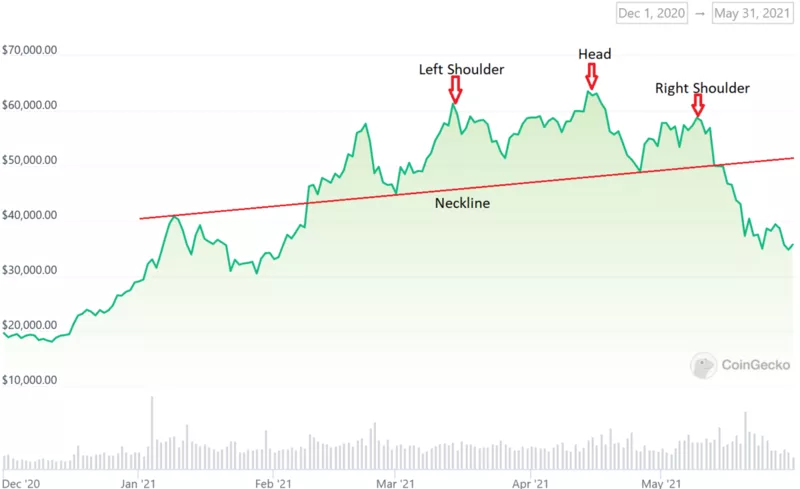
As an example, consider Bitcoin’s price movement from November 2020 to July 2021. The chart below shows a popular technical analysis pattern “Head and Shoulders.” The bearish pattern illustrates how Bitcoin’s price fell from $50,000 to almost $35,000 after the neckline breakout on 15 May 2021.


On-chain analysis is a cryptocurrency-market-specific methodology designed to explain investor behaviour and forecast asset price movements using blockchain data.
In such analyses, various metrics are used, the source of which is the cryptocurrency network:
- the total number and growth rate of addresses;
- changes in exchange balances;
- the share of short- and long-term holders, etc.
Some indicators establish a relationship between changes in individual blockchain metrics and the price of the crypto asset.
For example, with the Glassnode platform you can track the dynamics of inflows to centralized exchanges (CEX), or the outflow of cryptocurrency from trading venues to non-custodial wallets.
Significant inflows to CEXs imply a greater probability of selling pressure in the future. Conversely, outflows from exchanges suggest that many market participants are presumably moving funds to cold wallets for long-term storage.
How to analyse on-chain data
As mentioned, on-chain analysis involves using a multitude of metrics. The latter provide valuable insights into the current state and prospects of the market.
For example, the increase or decrease in the number of active addresses of a given network may signal growth or contraction of the user base.


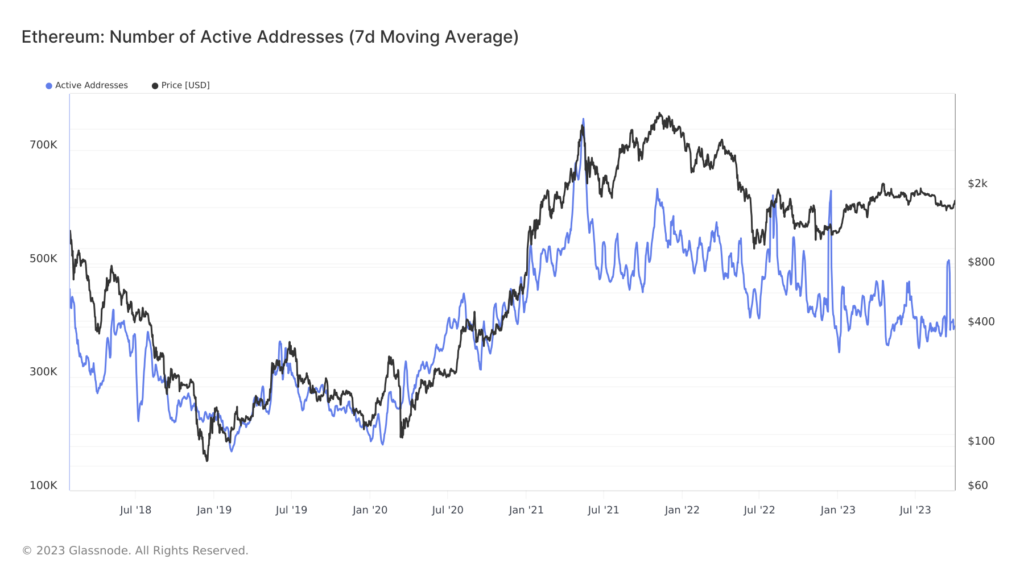
It is important not only to pay attention to changes in the indicator over time but also to compare it with other metrics such as transaction volume. This reflects the overall level of on-chain activity and provides a sense of demand dynamics for operations with the asset.

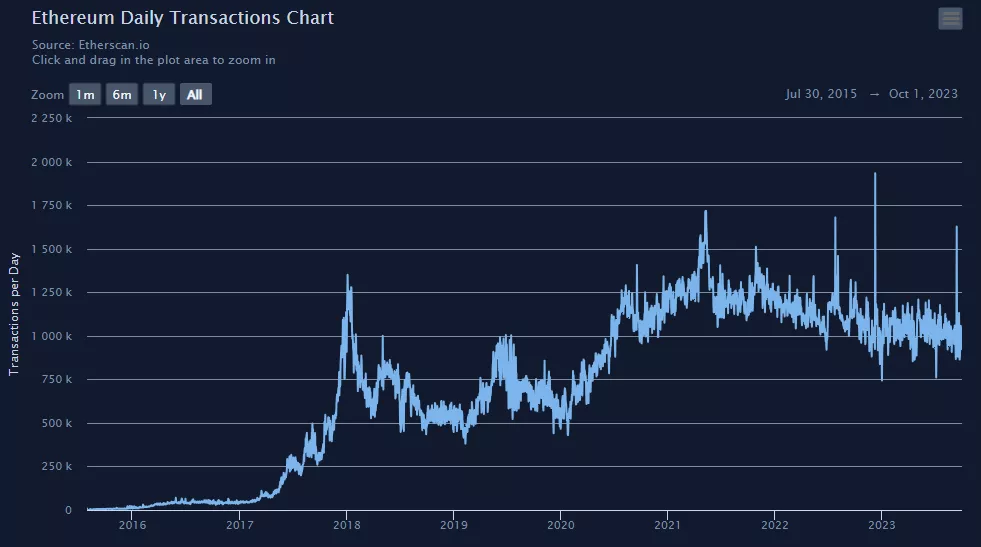
Spikes in transaction volume can be observed during periods of heightened volatility. They are typically accompanied by a sharp rise in gas prices on the Ethereum network.
It is also sensible to analyse the distribution of supply across the network. Uneven coin dispersion among a small circle of large market participants may indicate centralisation risks and a material potential influence of whales on the asset’s price.
To analyse supply distribution one should track the number and concentration of wallets that hold a substantial portion of the project’s coins.
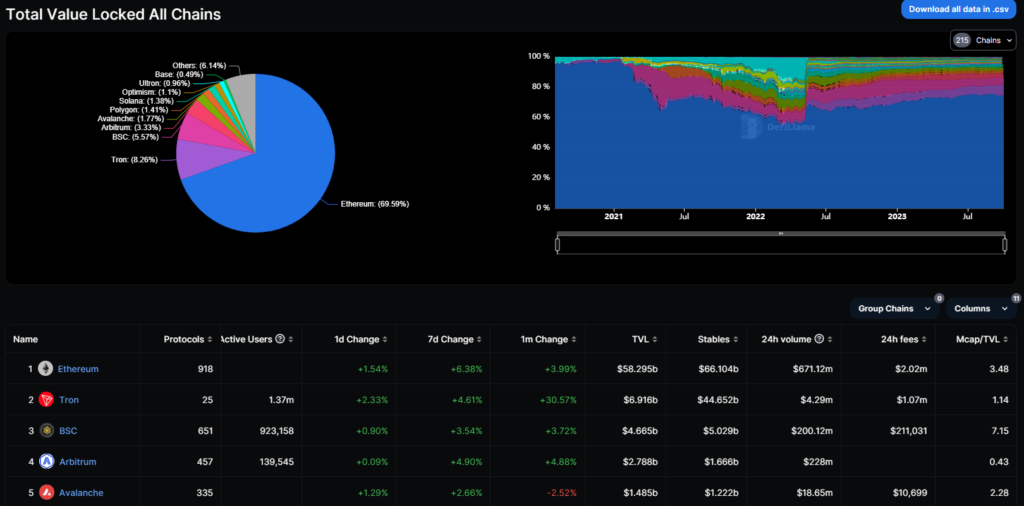
With the growth of decentralized finance (DeFi) the Total Value Locked (TVL) metric has gained significant popularity. It shows the total value of assets locked in the smart contracts of decentralized applications (dapps).
The increase in TVL signifies growing popularity of the DeFi ecosystem or individual platforms, high activity of dapp usage and strong demand for utility- or governance-token.


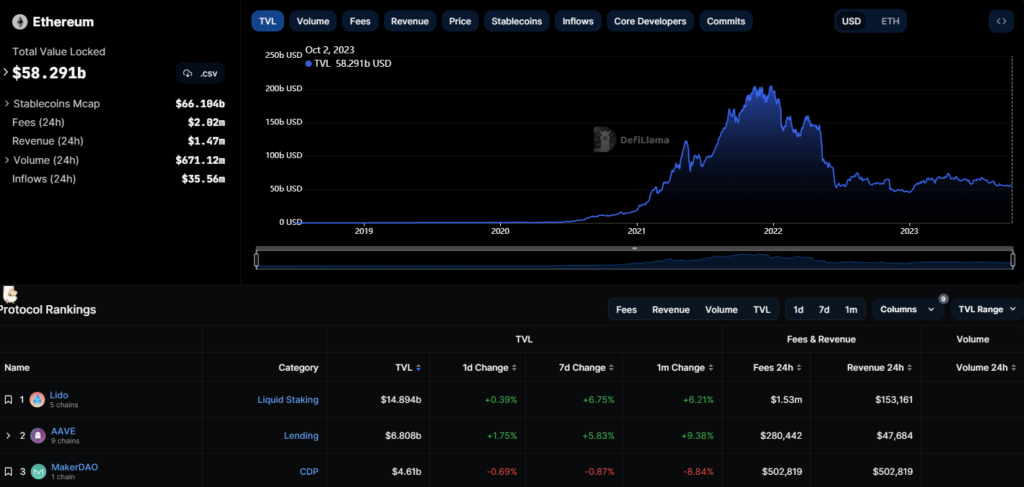
It is useful to compare TVL with the dynamics of user numbers and transaction volumes. Analysts also frequently compare metrics across different networks and dapps, using services such as Defi Llama.


There are also indicators that help predict future price movements. For example, Realized profits and losses (RPL, Realised Profits and Losses).
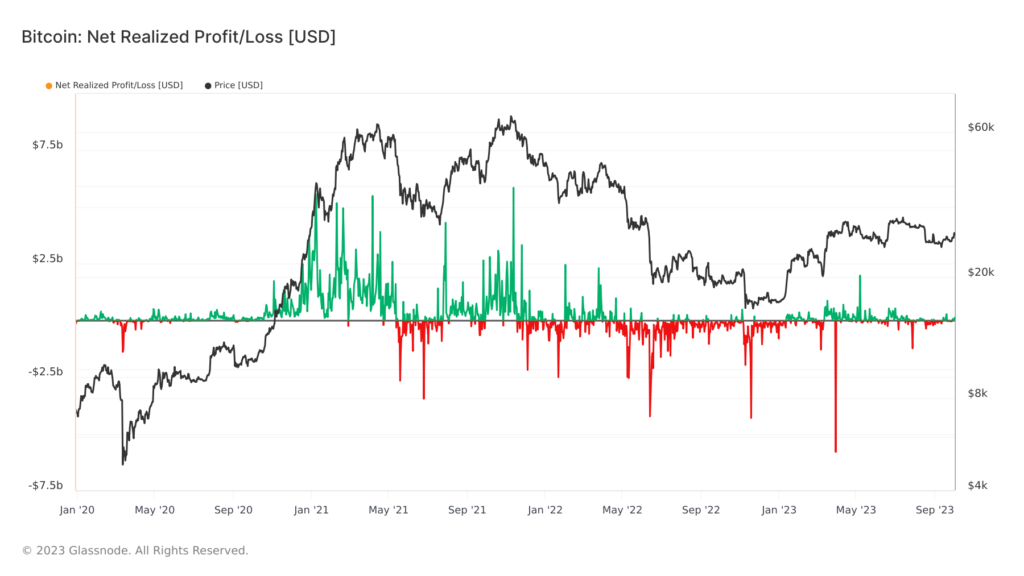
High values of RPL may indicate that long-term investors are in paper profit and may start selling soon. Conversely, low values of the metric suggest that hodlers are holding their digital stocks, signalling a favourable buying opportunity.
The indicator Supply in Profit illustrates the number of coins that are “in the green”—the price above which assets were last moved, relative to their current value.


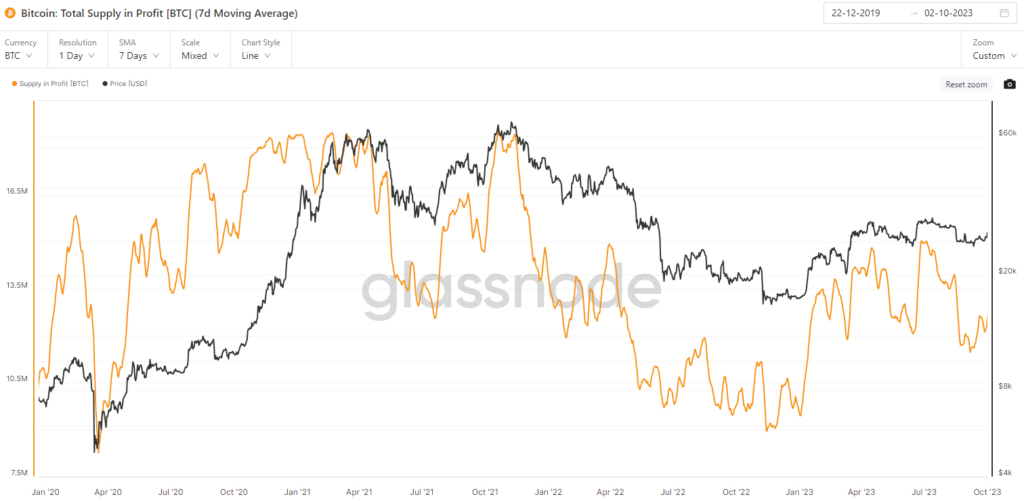
«This indicator is useful for identifying market tops. It points to a period when investors may be close to booking profits», — explained the analysts at Glassnode.
In other words, when the price of a crypto asset reaches a level at which most investors are in profit, a potential resistance level is created. The latter implies a range where strong selling pressure may occur.
And conversely, when the crypto asset reaches a price level where most investors are in losses, a level of support may be created. This is because many hodlers aim to buy more coins “on the cheap” while sp eculators sell.
On the other hand, non-custodial wallets shows the total number of coins “in the red.” The price at which these moves last occurred is below the current price.
«This indicator helps identify market bottoms, suggesting periods when investors may be ready to re-enter the market», — described in the description of the indicator.
What qualities and skills should an on-chain analyst possess?
There are many platforms that help with on-chain analysis and offer broad opportunities for data visualisation. Among the most popular are Glassnode, Dune, Nansen, Arkham.
Many options are available on lesser-known services — Artemis and TokenTerminal. The DeFi Llama platform allows thorough exploration of the DeFi segment. In addition to advanced tools, blockchain explorers such as Etherscan play an important role for any on-chain analyst.
However, to use all these services effectively, a deep understanding of distributed ledger technology, the workings of various blockchains, and the fundamental laws of economics is highly desirable.
Researcher Roman Degtyaryev listed the following key skills for an on-chain analyst:
- understanding how the blockchain mechanics work (transactions, blocks, addresses, hashes, fees, gas, etc.);
- knowledge and ability to use Python/SQL for data collection and automated analysis;
- basic financial literacy and understanding what a deal is and how protocol fees differ from network fees;
- ability to read smart-contract code (“a big plus”).
«There are quite specific knowledge that is necessary for analysis. You need to know the details. For example, if you plan to compare Ethereum transactions with Bitcoin transactions, it doesn’t work quite the same. These are different protocols with different purposes. You must understand these nuances», — explained Vincent Maliepaard, Chief Marketing Officer of IntoTheBlock.
Besides technical knowledge, it is highly desirable to have grounding in statistics and financial mathematics. For example, an analyst might need to forecast changes in the supply of a cryptocurrency over time using linear extrapolation.
In addition to specialized knowledge, soft skills are also important.
«A substantial portion of on-chain analysis concerns tracking various transactions. You need to be patient and pay attention to detail to complete the research», — said independent analyst Patrick Scott in an interview with Decrypt.
According to him, tracking a long sequence of transactions can be a tedious process. However, it is an important part of the job.
«I like to think of on-chain analysts in the context of the scientific method. You start with a hypothesis and test it with data. You find information that quickly refutes your hypothesis, then return to the drawing board with other data. This iterative process — you hypothesise, then test, until you obtain data that confirms your hypothesis», — said Nirmal Krishnan, a representative of Artemis.xyz.
According to Nansen’s analysts, “you need to feel comfortable tracking wallets and on-chain movements.” Early-career researchers should also “actively share their findings on X” — this should help “build your profile.”
After gaining prominence thanks to accurate forecasts, proper risk assessments and high-quality on-chain investigations, one can find work in the field.
Job platforms:
Roman Degtyaryev listed the main daily tasks of an on-chain analyst:
- gathering and analysing data to assess the market or its segments;
- examining specific market situations (in effect, sequences of events/transactions);
- presenting the results of the analysis in a business-friendly form (interpretation of results).
According to the researcher, demand for this profession will grow. The average salary is fairly high — $3,500–5,000, depending on the region.
«As the market matures, more professional participants appear who are willing to pay for information», — Degtyarev emphasised.
When asked whether it is easy for an on-chain analyst to find work, the expert replied as follows:
«First and foremost, it depends on qualifications — in this profession there is a large gap between practically traditional data analytics, derived from blockchain data, and deep analysis that includes understanding the workings of the network and specific contracts. The latter is very easy. Overall, I would say it is harder than analytics for online data such as Google Analytics and BigQuery, but easier than analytics of the options market».
Conclusions
On-chain analysis is still in its early stages of development. Yet the field is evolving rapidly — more sophisticated metrics are continually developed, historical data accumulate, and more users equip themselves with new tools to study the crypto market.
With on-chain analysis, traders and investors can improve the effectiveness of trading strategies and foresee future market movements.
To effectively use the methods and metrics of on-chain analysis, one needs an understanding of the digital asset industry, the features of blockchains underpinning different ecosystems. Alongside financial literacy, it is highly desirable to be able to read smart-contract code and to have Python/SQL skills for data collection and automated analysis.