




Since 2019, crypto platforms have received digital assets worth approximately $100 billion from known illicit wallets, according to a report by Chainalysis.
Our Money Laundering report reveals how bad actors now use crypto to launder funds from off-chain crimes — not just crypto-native crimes like ransomware. We explore advanced tracing techniques and how blockchain data is leading the fight against fincrime.https://t.co/32ApuphHpU
— Chainalysis (@chainalysis) July 11, 2024
The largest amount, $30 billion, was recorded in 2022, linked to activities of sanctioned platforms such as the Russian exchange Garantex.
Experts classify illicit wallets as those associated with criminal proceeds from hacks, crypto scams, darknet market trading, and other activities.
The funds tracked by analysts represent the dollar equivalent of digital currencies sent for the initial stage of laundering to conversion services. These include crypto mixers, exchanges, DeFi protocols, gambling sites, and cross-chain bridges.


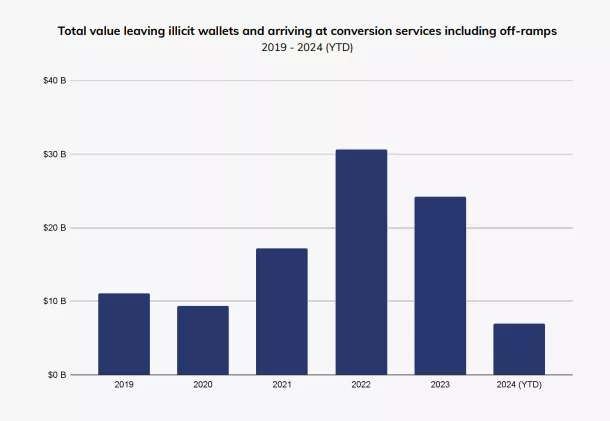
The company’s assessment does not include laundered funds whose illicit origin is unidentified or off-chain.
They also did not account for coin transfers between intermediaries, which may involve “dozens or hundreds of separate transactions.” This method is used by criminals to obscure links to illicit proceeds before reintegrating assets into the economy.
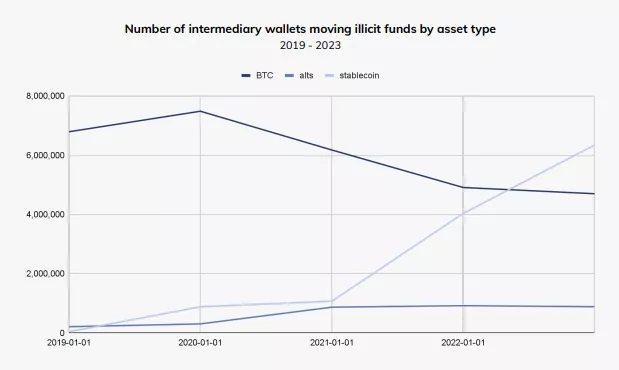
Chainalysis noted a trend of increasing numbers of wallets involved in the “whitening” of cryptocurrencies.
Experts also observed that since 2021, the share of stablecoins in laundered digital assets has increased compared to traditional cryptocurrencies.

In May, Tether, the issuer of the largest stablecoin by market capitalization, USDT, and Chainalysis partnered to track coin movements in the secondary market.
As reported by Chainalysis, illicit revenues from crypto scams and hacks declined by 29.2% and 54.3% respectively in 2023.