



Chainalysis: rug-pull schemes accounted for 37% of scammers’ income in 2021
In 2021, criminals stole more than $7.7 billion in cryptocurrencies from users. More than a third of this amount came from the so-called rug pull, said the analytics firm Chainalysis.
The number of cybercrimes in the crypto market rose 81% from 2020. In the DeFi ecosystem, the rug pull scheme spread widely, yielding more than $2.8 billion to the attackers. This accounted for 37% of all cryptocurrency fraud revenues, compared with only 1% in 2020.
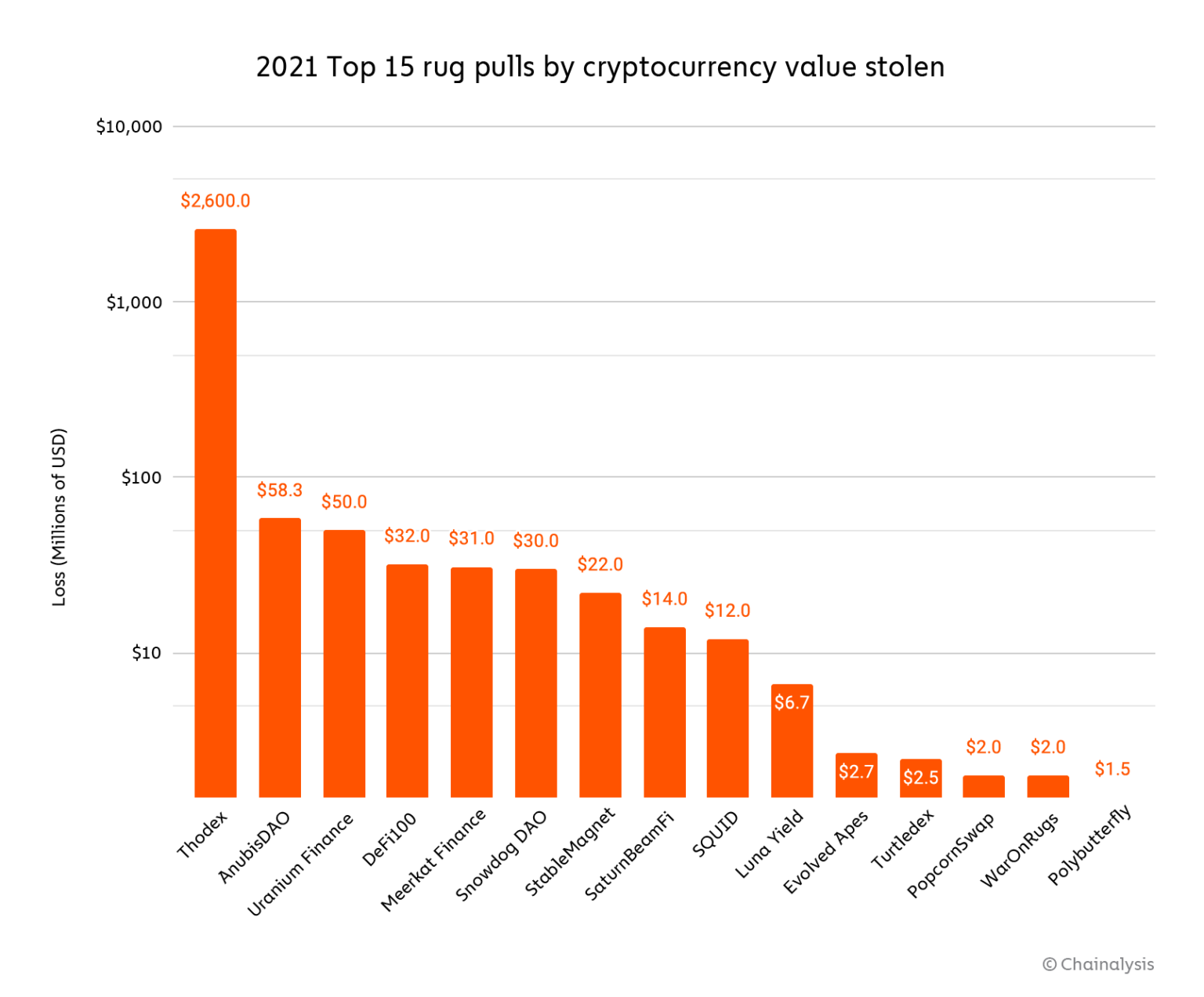
The largest rug pull, according to Chainalysis, occurred outside the DeFi segment. In April, a major Turkish cryptocurrency exchange Thodex unexpectedly halted trading, citing first technical maintenance, and then the transfer of the platform to a new partner.
The head of the company fled the country and was placed on the wanted list. As part of the investigation, more than 60 people were detained.
The loss of more than $2 billion accounts for almost 90% of the total from similar scams.
The second-largest rug pull was carried out by developers of the AnubisDAO project, which was pitched as a fork of OlympusDAO.
The project’s token sale launched on October 28 on Copper Launch. AnubisDAO did not even have a website — only a Discord server and a Twitter account, yet the project still attracted investors. In less than a day, 13,597 ETH ($58.78 million at the time of the incident) was deposited into the liquidity pool.
It was planned that ANKH would be distributed after the token sale ended, but a few hours before the sale closed all liquidity had been withdrawn.

The attacker moved the funds to wETH through a series of intermediary wallets. Shortly after, the Twitter account that served as the public face of AnubisDAO went offline, and the price of ANKH fell to zero.
It is not yet clear whether all of the project’s developers were involved in the theft.
Chainalysis advised users to avoid new tokens that have not undergone a code audit.
Overall, the number of deposits to fraudulent addresses in 2021 fell from 10.7 million to 4.1 million. Analysts say this indicates a reduction in the number of victims and an increase in the average loss per incident.
The number of active fraudulent addresses on major exchanges rose year over year from 2,052 to 3,300.
Meanwhile, the average duration of a financial scam shortened—70 days in 2021 vs. 192 in 2020. One reason may be improved law-enforcement capabilities in cybercrime investigations.
Analysts also noted a lack of correlation between the rise in digital asset prices and fraudulent activity observed during the bull rallies of 2017 and 2020.
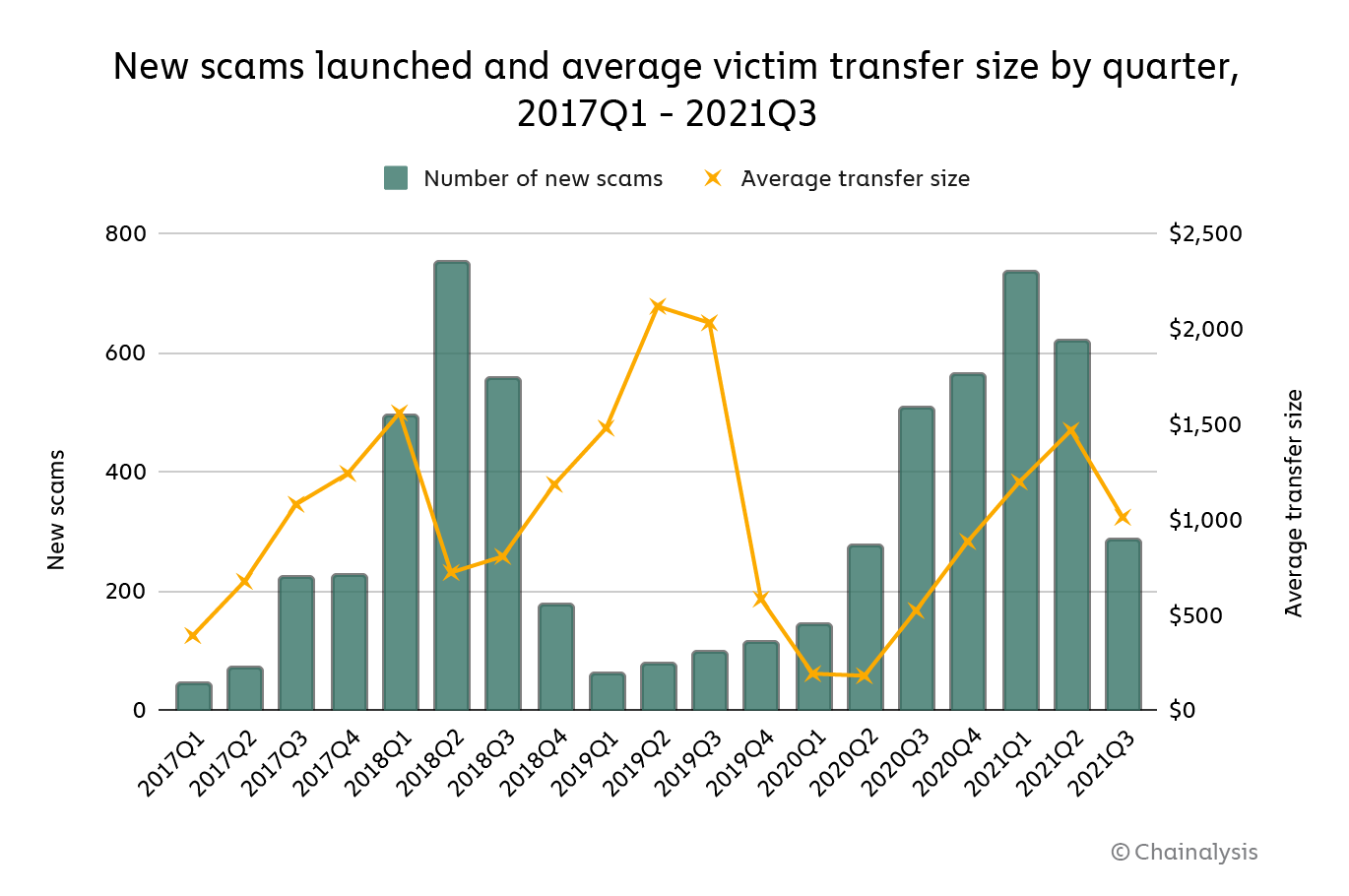
“New users attracted by the rise of cryptocurrency are more likely to become victims of fraud than experienced ones. However, the link between asset prices and fraudulent activity now seems to be disappearing,” Chainalysis concluded.
Earlier, Crystal Blockchain analysts calculated that over ten years the cumulative damage to crypto platforms and their users from hackers and scammers exceeded $12 billion.
Read ForkLog’s bitcoin news in our Telegram — cryptocurrency news, prices and analytics.
Рассылки ForkLog: держите руку на пульсе биткоин-индустрии!