



ChatGPT was released on 30 November 2022. What first looked like another experimental chatbot quickly revealed revolutionary potential. Users embraced it for everything from everyday conversation to tackling complex tasks and drafting academic papers.
In two years, ChatGPT has shifted from a niche product to a fixture of the modern internet. This article revisits the chatbot’s technical foundations, the story of its rapid rise and the key shifts over that short period.
Under the hood
ChatGPT is built on OpenAI’s GPT family of language models. The story began with GPT-3, a product that was revolutionary for its time but fairly limited in function: simple dialogues, basic answers to questions and straightforward problem-solving.
A major leap arrived in March 2023 with GPT-4. It not only improved core capabilities but introduced multimodality. ChatGPT could now work with text as well as images, audio and video.
In May 2024 the GPT-4o model (omni) took the chatbot to a new level. Key upgrades included real-time data handling, better multilingual support and deeper understanding of visual and audio inputs. GPT-4o’s hallmark was fusing different interaction modes into a single system, markedly improving efficiency.


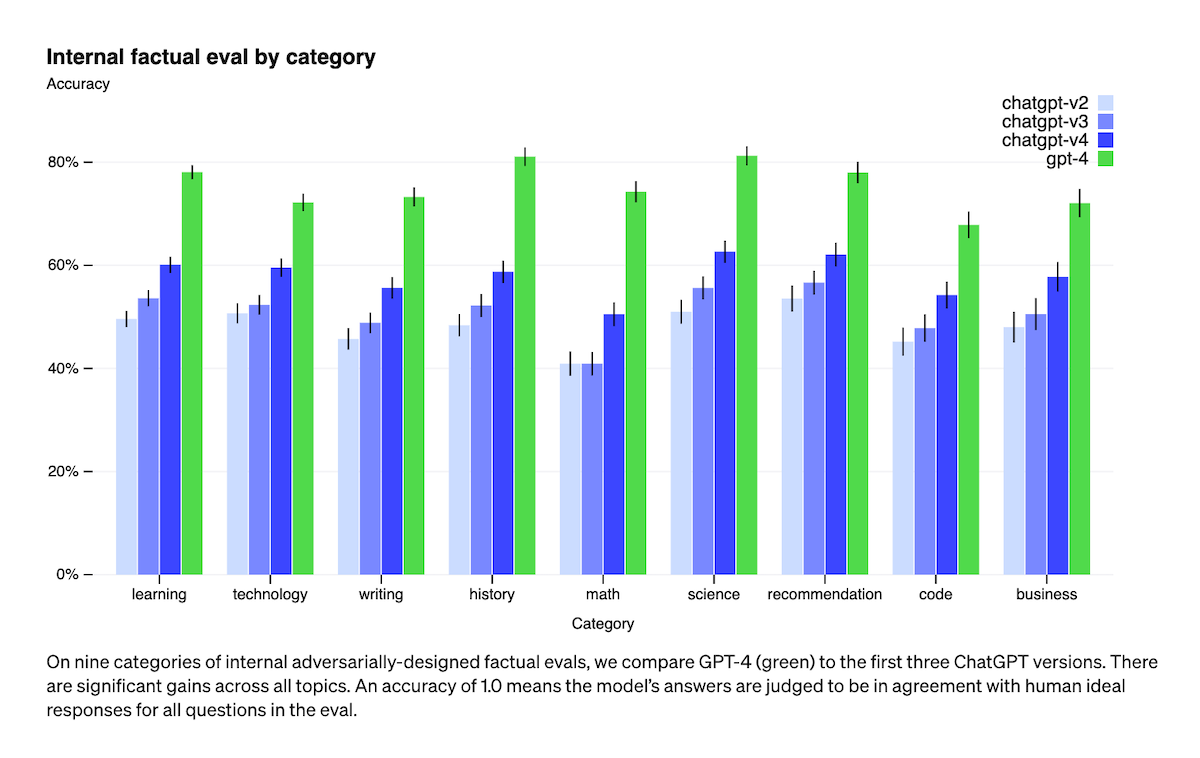
The latest version to date — OpenAI o1, released in September 2024 — introduced a new approach to processing information. The model has a distinctive ability to “reason” before producing an answer, especially useful for complex scientific problems. OpenAI built o1 as a complement to GPT-4o rather than a replacement, offering two variants: the full o1-preview and the lighter o1-mini.
New functions in ChatGPT
Feature growth has been constant. In February 2023, just three months after launch, OpenAI introduced a paid tier — ChatGPT Plus. For $20 a month, subscribers gained access to advanced models, priority service and experimental features.
Spring 2023 brought important updates for Plus users: support for third-party plugins and real-time web browsing. In the same period, OpenAI accelerated its mobile push, releasing an iOS app with chat sync and voice input powered by Whisper. An Android version followed two months later.
Autumn 2023 marked a significant expansion of multimedia capabilities. ChatGPT learned to work with images, recognise speech and support voice conversations. A highlight was integration with DALL·E 3, enabling image generation from text prompts.
In early 2024 OpenAI launched the GPT Store — a marketplace for user-built chatbots created with GPT Builder. The platform let anyone build custom bots without coding and, at launch, already offered more than three million different solutions.
The evolution of search
Although people used ChatGPT for information retrieval from the outset, the service long lacked access to up-to-date material from the web. On 1 November 2024 OpenAI took a notable step by unveiling an updated capability.
The new ChatGPT system takes a fundamentally different tack from traditional search engines. Its hallmarks include a minimalist interface, no advertising and more structured results. The system is already showing impressive outcomes, outpacing other AI-driven offerings in referral traffic.

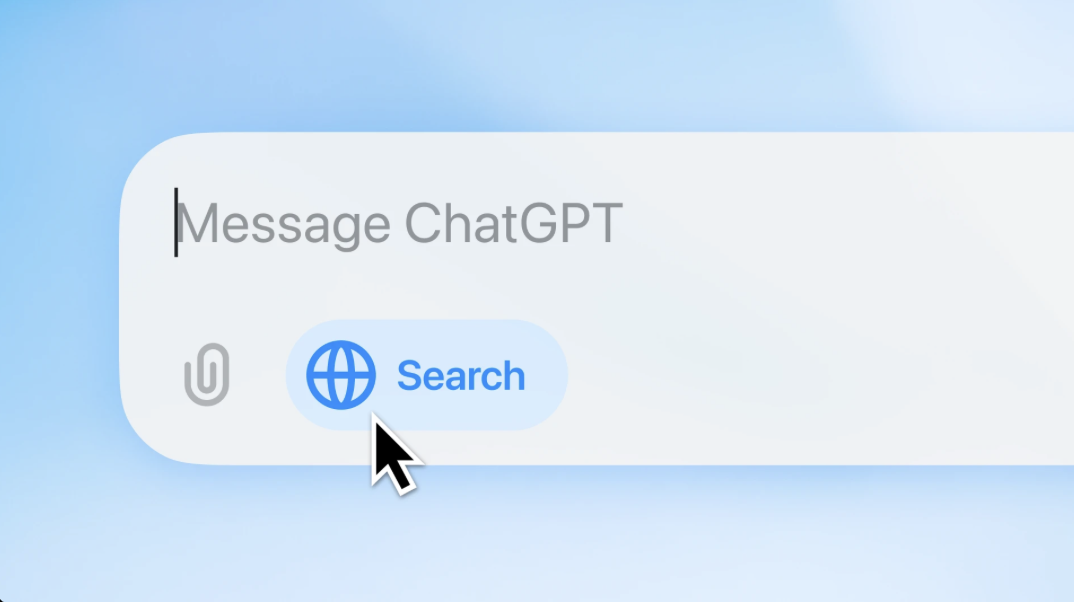
The search tool focuses on several key categories:
- weather;
- stock quotes;
- sports results;
- news;
- mapping data.
A notable advantage is source transparency — each answer is accompanied by links to original sources.

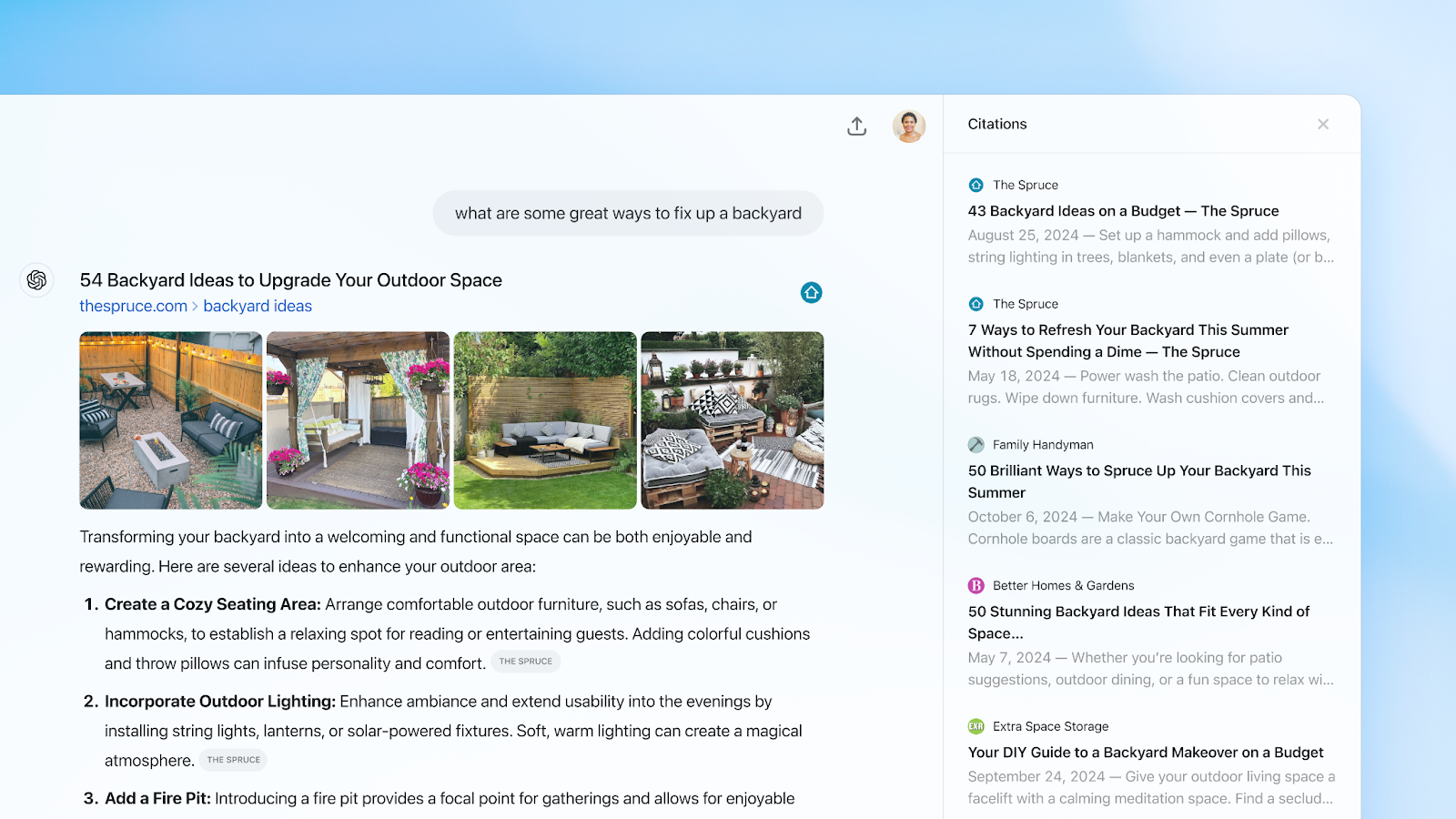
Technically, the search runs on an enhanced GPT-4o, further trained with new data-generation methods and integrated with various providers, including Microsoft Bing.
The feature is currently available to ChatGPT Plus and Team users. OpenAI has also flagged further development, including improved product and travel search.
New year, familiar problems
Despite notable progress and steady upgrades, ChatGPT still faces several material limitations, many present since launch.
Answer accuracy
Even current versions can make factual mistakes or provide imprecise information. This is especially problematic in professional settings, such as marketing or technical documentation.
Mitigation requires mandatory fact-checking of generated content and using the latest models. For mission-critical work, paid tiers are recommended as they offer higher accuracy.
Bias in answers
ChatGPT may reflect biases inherited from its training data. A tilt towards English-language sources is particularly evident, affecting answer quality in other languages.
To minimise this, use diverse data sources and supply as much context as possible. When working across languages, additional quality checks are advisable.
Common-sense gaps
Despite producing grammatically correct text, ChatGPT often lacks logical reasoning. The result can be linguistically correct but meaningless prose.
Clear context and additional instructions help steer answers. A human should always make the final judgement about coherence.
Ethical concerns
ChatGPT can generate content that falls short of contemporary ethical standards, including inadvertent bias or discriminatory language. It also struggles to judge the reliability of conflicting sources.
Clear ethical guidelines in prompts and mandatory review of generated output are the remedies.
Incomplete answers
Under heavy load or with complex queries, ChatGPT may produce partial or truncated answers due to compute constraints and resource balancing.
Breaking complex tasks into smaller pieces and using incremental follow-up questions is an effective workaround.
Lack of creativity
While ChatGPT writes clean copy, it often lacks originality. Outputs can skew formal and formulaic.
For more creative output, use ChatGPT as an ideation and drafting tool, leaving the final creative polish to humans.
Weak grasp of niche topics
In specialised domains, ChatGPT often shows a superficial understanding, reflecting limited training data.
Provide extra context for niche subjects and subject outputs to expert review.
Privacy and security
The use of third-party API and the need to process data on external servers create potential risks for the confidentiality of corporate information.
Limit the transmission of sensitive data through ChatGPT and employ specialised, higher-security solutions where possible.
Prospects for development
ChatGPT technology shows ample room for improvement in language modelling. Researchers and developers are focused on several fronts.
First, deeper contextual understanding. The model can generate answers from supplied words and phrases, but it still struggles to capture the nuances of their use. Improving this would yield more relevant results.
Second, advances in multimodal learning. Integrating data types, including images and video, will broaden capabilities and enable more comprehensive solutions that factor in visual information.
Third, domain-specific variants for particular applications. Tailored versions for, say, legal or medical work could deliver higher accuracy than a generalist model.
Pursuing these directions opens wide prospects for deployment across industries and use cases, making artificial intelligence more accessible and useful for practical tasks.