




The Chinese laboratory DeepSeek has introduced a contender to OpenAI’s o1—a ‘supercharged’ AI model named DeepSeek-R1-Lite-Preview.
? DeepSeek-R1-Lite-Preview is now live: unleashing supercharged reasoning power!
? o1-preview-level performance on AIME & MATH benchmarks.
? Transparent thought process in real-time.
?️ Open-source models & API coming soon!? Try it now at https://t.co/v1TFy7LHNy#DeepSeek pic.twitter.com/saslkq4a1s
— DeepSeek (@deepseek_ai) November 20, 2024
Reasoning neural networks are capable of self-verification, dedicating more time to question analysis. This helps avoid certain pitfalls that confuse ordinary models.
Like o1, DeepSeek-R1-Lite-Preview plans ahead and executes a series of actions before providing an answer, sometimes taking several seconds to do so.


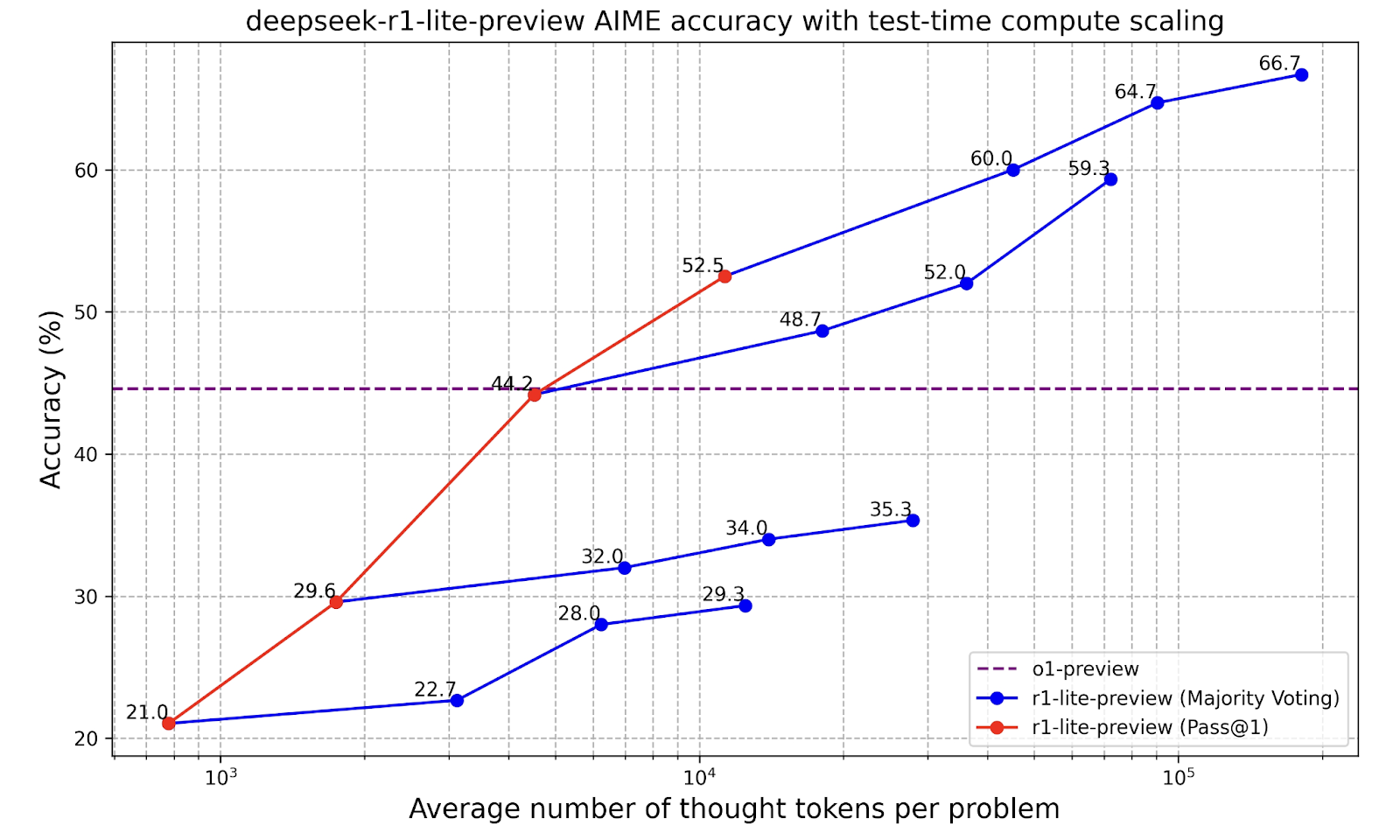
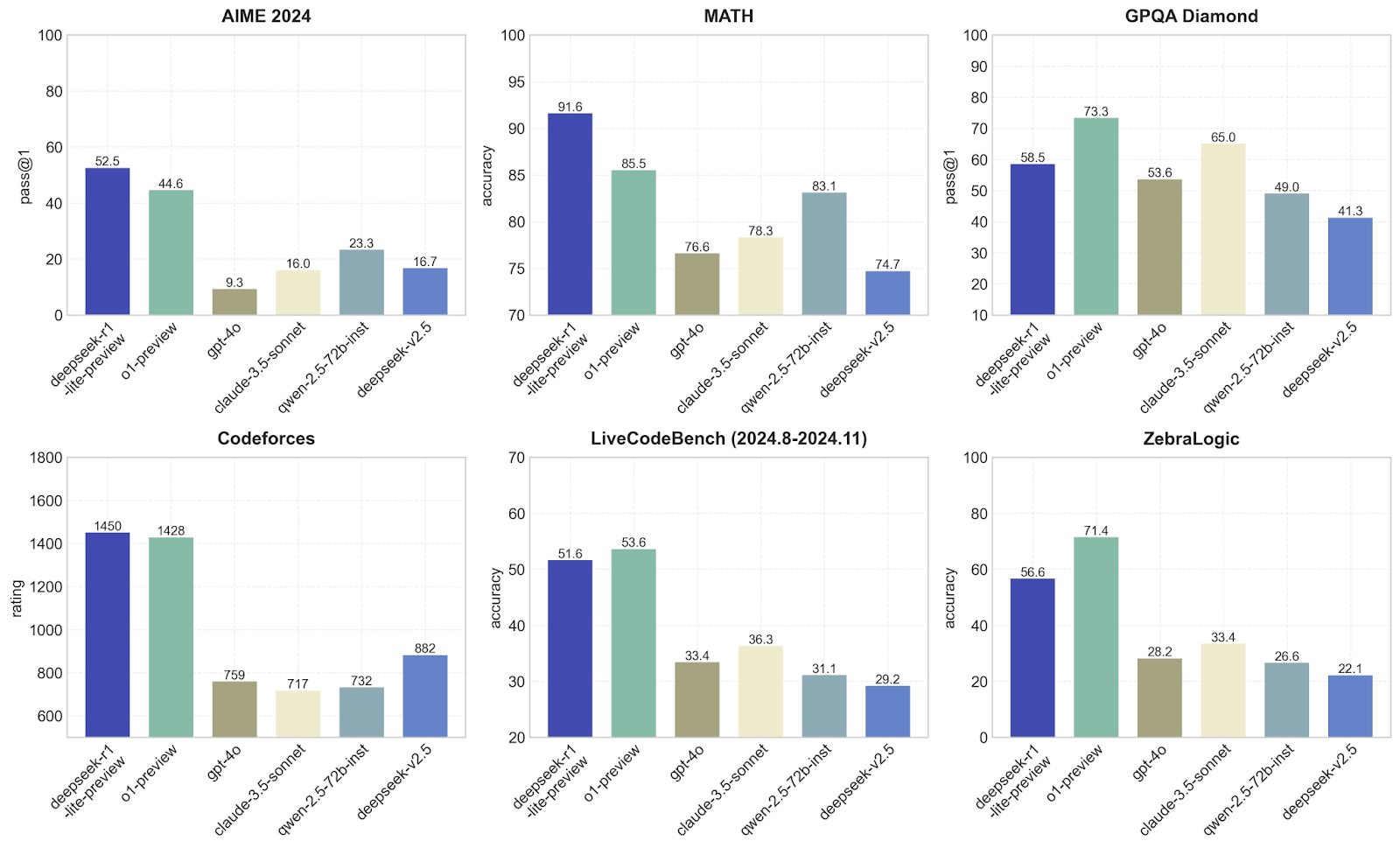
According to the developers, the Chinese AI model performs on par with OpenAI’s o1-preview, as evidenced by tests.

However, the neural network struggles with the game of tic-tac-toe, noted X user Paul Calcraft.
Tic tac toe will be cracked one day. Not today pic.twitter.com/6JJbfGPEmL
— Paul Calcraft (@paul_cal) November 20, 2024
Additionally, the artificial intelligence is easily hacked, bypassing its basic security measures. A user named Pliny the Liberator managed to obtain a methamphetamine recipe.
Back in July, the Chinese company Kuaishou released the AI model Kling for video generation to the public.