




The year 2020 proved far better for long-term investors than the previous one. The market capitalization of the top-30 cryptocurrencies rose by 308%, according to a CoinGecko report.
The performance of the 30 most capitalised cryptocurrencies over the past year was five times higher than in 2019 (308% vs 62%). Portfolios containing DeFi protocol tokens gained an average of 718%.
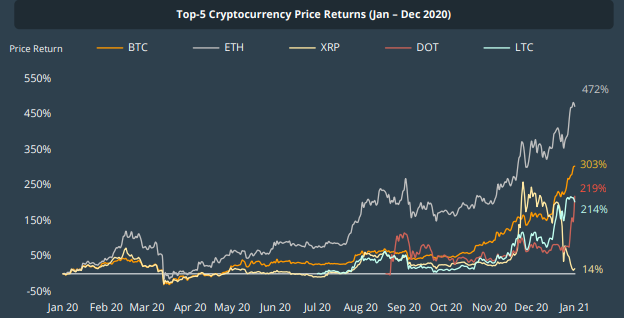
The combined market capitalization of top-30 crypto assets in 2020 rose by $552 billion. Among the five largest coins, Bitcoin performed the best, rising roughly fourfold (vs 95% in 2019). Ethereum fared even better, its price up 472% after near-flat movement over the previous 365 days.


Source: CoinGecko.
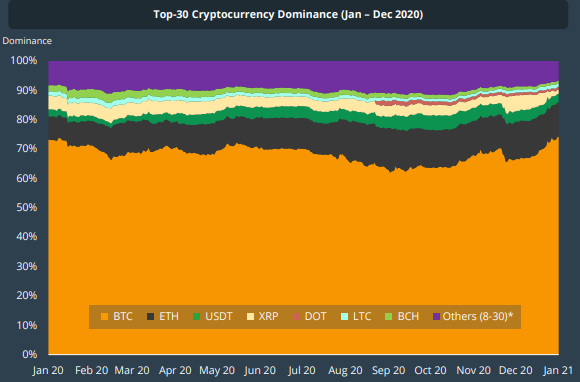
Bitcoin’s dominance index rose by 0.9 percentage points to 73.7%. Ethereum’s share of total market capitalization increased by 3.6 percentage points to 11.5%.
Tether (USDT) also extended its market share—from 2.4% to 2.9%, while the weight of other top-8 coins declined. The debut of Polkadot (DOT) accounted for around 1.2% of total capitalization.


Source: CoinGecko.
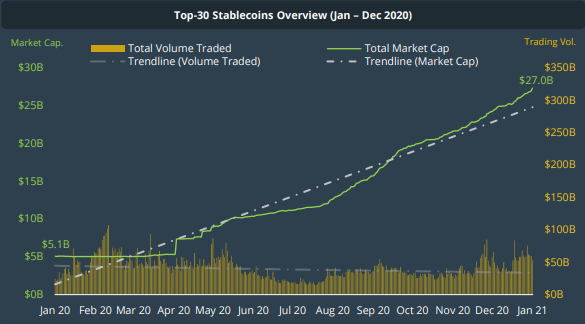
Last year was marked by rapid growth of the stablecoin sector. The supply of USDT increased by 388%, USDC by 652%, DAI by 2698% and BUSD by 397%. The combined capitalization of these tokens, as well as PAX, rose 439% in 2020—from $4.7 billion to $27 billion.


Source: CoinGecko.
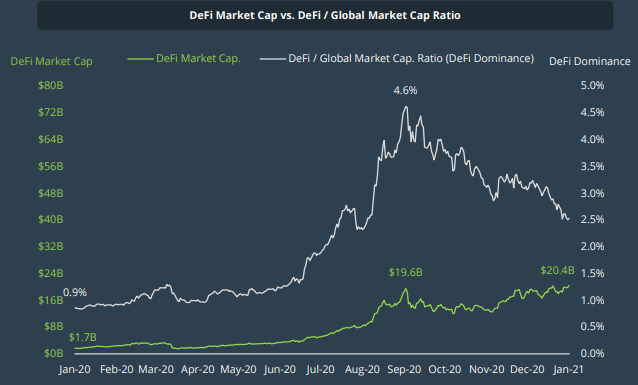
The DeFi token segment in 2020 reached 4.6% of the total cryptocurrency market capitalization in September, but by year-end it slid to 2.5% as other coins rose.
DeFi Chronicles in 2020: rapid growth, problems and hurdles for institutions
By year’s end, the capitalization of DeFi tokens stood at $20.4 billion, up 4% from the summer peak. Analysts did not rule out a revival of DeFi mania if the Bitcoin dominance index weakens.


Source: CoinGecko.
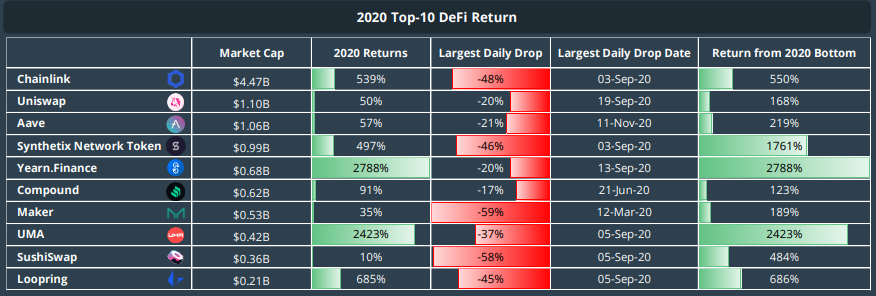
DeFi token dynamics in 2020 were uneven. Notable gains came from YFI (+2,788%) and UMA (+2,423%). Tokens SUSHI, MKR, AAVE, UNI and COMP yielded holders less than the market average.


Source: CoinGecko.
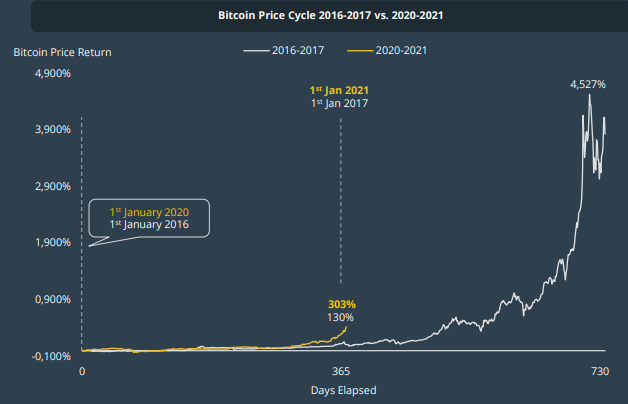
Analysts compared Bitcoin’s rally with the 2016-2017 bull market when the price of the leading cryptocurrency surged 4,527%. The 303% rise in 2020 surpassed intermediate gains in the previous Bitcoin cycle (+130%).


Source: CoinGecko.
Experts saw a chance to repeat the four-year-ago dynamic, driven by three catalysts:
- increased accessibility — for example, the addition of PayPal to buy and sell crypto;
- the ongoing operation of the “printing presses” (leading global central banks, flooding economies with monetary mass to cushion the COVID-19 shock);
- Bitcoin adoption among institutions — public companies such as MicroStrategy and Square began adding Bitcoin as a reserve asset in liquidity management.
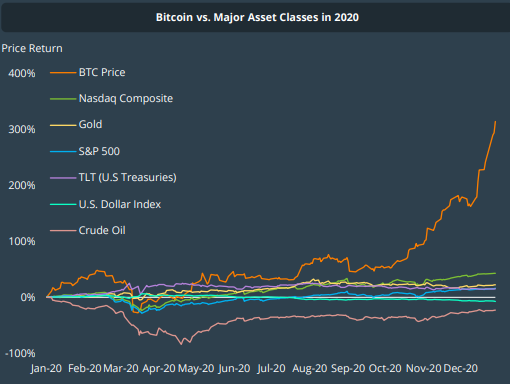
In 2020 Bitcoin performed notably better than traditional-asset indicators. Compared with the Nasdaq Composite, its gain was seven times higher — 303% vs 43%.
Analysts noted the 12-13 March crash, when Bitcoin fell by 35% in a day. Oil prices fell even more in the same period, by 45%.


Source: CoinGecko.
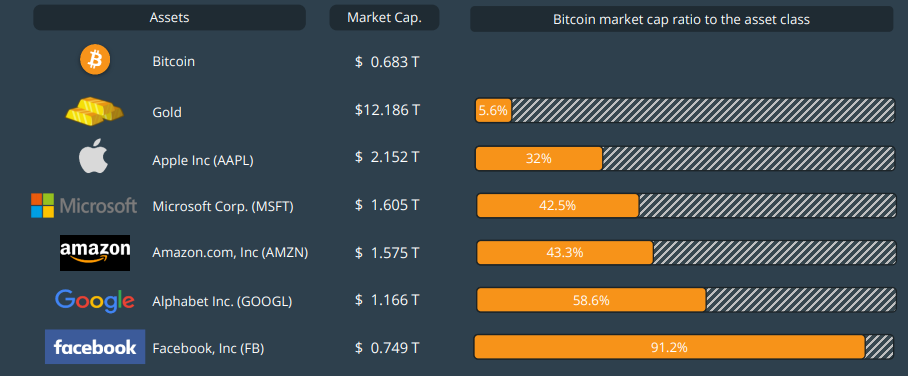
By year-end, as Bitcoin rose above $29,000, its market capitalization was virtually on a par with Facebook’s value, amounting to 5.6% of the value of all mined gold.


Source: CoinGecko.
Earlier ForkLog reported that institutional investors bought over 1 million BTC (~$37 billion).
JPMorgan analysts say that for the rally to continue, Bitcoin must hold above $40,000.
2020 in numbers: Bitcoin records, DeFi boom and institutional adoption
Follow ForkLog’s news on Twitter!