




On September 29, at ForkLog Live, an online conference titled “DeFi: A Practical Guide” took place. Nine speakers outlined the trends and challenges in the decentralized finance market and discussed the prospects for its regulatory oversight. Here is a brief summary of their presentations.
The conference was opened by UniDAO co-founder Denis Smirnov. He spoke about the rapid growth of the DeFi segment: the volume of assets locked in projects stands at $13 billion.
Водка и Суши Или Откуда в Крипте Вампиры и Единороги by ForkLog on Scribd

“There is no liquidity in DeFi, but to solve this problem, developers began inventing incentive models that would redirect the flow of funds from centralized platforms to decentralized ones,” noted Smirnov.
One of them became yield farming, where, besides the main benefits, active users could generate governance tokens that allowed influence on the project’s development.
“The tokens did not carry investment appeal, but quickly attracted speculators. As a result, for example, the price of the utterly useless token yEarn rose from $90 to a peak of $32,000, making it the first altcoin to surpass Bitcoin in value.”
Among yield-farming projects, SushiSwap stood out in particular. The project is fully decentralized; users earn from trading fees by providing liquidity for trading. Any user can contribute funds to the communal pool and receive liquidity tokens that reflect their share of ownership.
“It is liquidity that determines the success of a DeFi product. This gave rise to real liquidity wars, as open-source projects became vulnerable to faster competitors with more advantageous usage models,” said Denis Smirnov.
ForkLog’s regular author Dmitry Bondar focused on governance-token characteristics.
Бондарь11 by ForkLog on Scribd
He listed four main reasons for yield farming:
- to obtain them to sell;
- to hodl to sell at a higher price;
- to invest in the liquidity pool to earn passive income from the token;
- to count on the token’s cash flow.
“If a governance token yields passive income, the question arises: why use it to govern a DAO, since that entails costs? It makes sense to engage in governance if it yields additional benefits, for example from the token’s price growth or the size of the passive income,” the expert noted.
Bondar added that the most coveted DeFi tokens offer no direct voting incentives. KyberDAO was the first to apply the reward mechanism: part of a protocol’s revenue from fees goes to those who lock governance tokens for voting.
Readers can participate in the collection of statistics on governance tokens of DeFi applications by completing a short survey. Its results will be published in Dmitry Bondar’s blog on ForkLog HUB.
Founder of p2p.org Konstantin Lomashuk suggested that on the leading decentralized exchange Uniswap accounts would be tied to KYC.
“The mechanism of distributing tokens that bring liquidity to the product is very clever. The way you implement it will determine how long it will survive,” he added.
CTO and co-founder of 1inch.exchange Anton Bukov believes that the strategies used on the crypto market are how fiat money should work:
P advantages of first-level DEX on Ethereum by ForkLog on Scribd
“The throughput of a first-level DEX is limited by Ethereum’s capacity. And each second-layer solution has its own throughput, higher due to data compression when moving transactions to the first layer,” explained the expert.
For the same reason, fees are cheaper on second-layer solutions.
However, despite the apparent upside of second-layer solutions, they show low viability. The primary reason for the success of first-layer solutions is their interoperability with each other and with other DeFi components.
“On the first layer, composability allows working with all exchanges in a single transaction. That is why such solutions grow well; you can interact with them continuously,” summarized Anton Bukov.
The prospects for decentralized finance were outlined by the CEO of DeFi LoG Sviatoslav Yakovets. He said the market is currently in a state of “FOMO” and in a flood of information noise.
Перспективы DeFi by ForkLog on Scribd
Meanwhile, DeFi already represents an alternative to the banking system in a decentralized form.
To engage more users, Yakovets recommends simplifying interactions related to lending and adding liquidity.

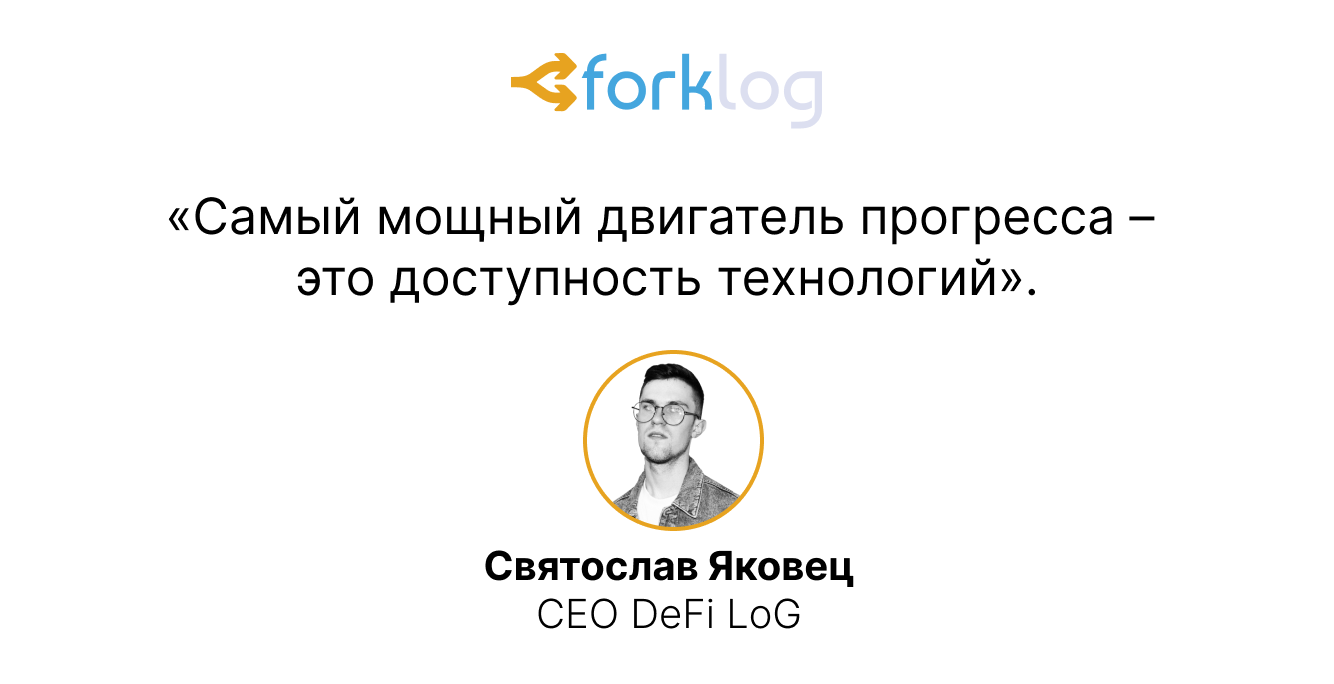

In the expert’s view, the market’s early stage is a great opportunity for ambitious programmers.
“In the future, there will be rising competition between automated market makers and other products. DeFi is taking a global form, spreading to centralized platforms.”
There are also paths for DeFi protocols with yield-farming concepts, continued Chrono.tech CTO Mike Flaf.
Development of DeFi protocols with yield-farming concepts by ForkLog on Scribd
“Parece that high Ethereum fees remain a deterrent for many users; if costs rise beyond potential gains, that should be viewed as a sign of things to come rather than a barrier,”
For now, several alternative blockchains are developing their own DeFi protocols:
- Tron (JustSwap, Unifiprotocol);
- Binance Smart Chain (BurgerSwap, bscswap, pancakeswap);
- Cosmos (Kava, THORChain);
- Polkadot (Polkaswap).
“In the longer term, a bridge between Ethereum and Binance Smart Chain is quite plausible, enabling interoperation. But universal bridges require economic incentives,” warned the expert.
CBDO of Monolithos DAO Dmitry Kryshstal spoke about their company’s algorithmic stablecoin MCR, positioned at the intersection of CeFi and DeFi products.
Symbiosis CeFi and DeFi by ForkLog on Scribd
“Developers forked MakerDAO and made changes to the auctions, and the motivation was that many ruble-denominated transactions in centralized payment systems are blocked.”
On a panel discussion the speakers discussed possible regulation of the DeFi market.
“I find it hard to imagine regulating this ecosystem. Banning it won’t work, because everything will be decided by a more primitive market for buying and selling,” said Dmitry Kryshstal.
Founder of p2p.org Konstantin Lomashuk suggested that on the leading decentralized exchange Uniswap there will be binding accounts to KYC.
“The mechanism of distributing tokens that bring liquidity to the product is very clever. How you implement it will determine how long it will survive,” he added.
CTO and co-founder of 1inch.exchange Anton Bukov believes that the strategies used in the crypto market are how fiat money should work:
P advantages of first-level DEX on Ethereum by ForkLog on Scribd
“The throughput of a first-level DEX is limited by Ethereum’s capacity. And each second-layer solution has its own throughput, higher due to data compression when moving transactions to the first layer,” explained the expert.
For the same reason, fees are cheaper on second-layer solutions.
However, despite the apparent upside of second-layer solutions, they show low viability. The primary reason for the success of first-layer solutions is their interoperability with each other and with other DeFi components.
“On the first layer, composability allows working with all exchanges in a single transaction. That is why such solutions grow well; you can interact with them continuously,” summarized Anton Bukov.
The prospects for decentralized finance were outlined by the CEO of DeFi LoG Sviatoslav Yakovets. He said the market is currently in a state of “FOMO” and in a flood of information noise.
Перспективы DeFi by ForkLog on Scribd
At the same time, DeFi already represents an alternative to the banking system in a decentralized form.
To engage more users, Yakovets recommends simplifying interactions related to lending and adding liquidity.
In the expert’s view, the market’s early stage is a terrific opportunity for ambitious programmers.
“In the future, there will be rising competition between automated market makers and other products. DeFi is taking a global form, spreading to centralized platforms.”
There are also paths for DeFi protocols with yield-farming concepts, continued Chrono.tech CTO Mike Flaf.
Development of DeFi protocols with yield-farming concepts by ForkLog on Scribd
For now, high Ethereum fees remain a deterrent for many users:
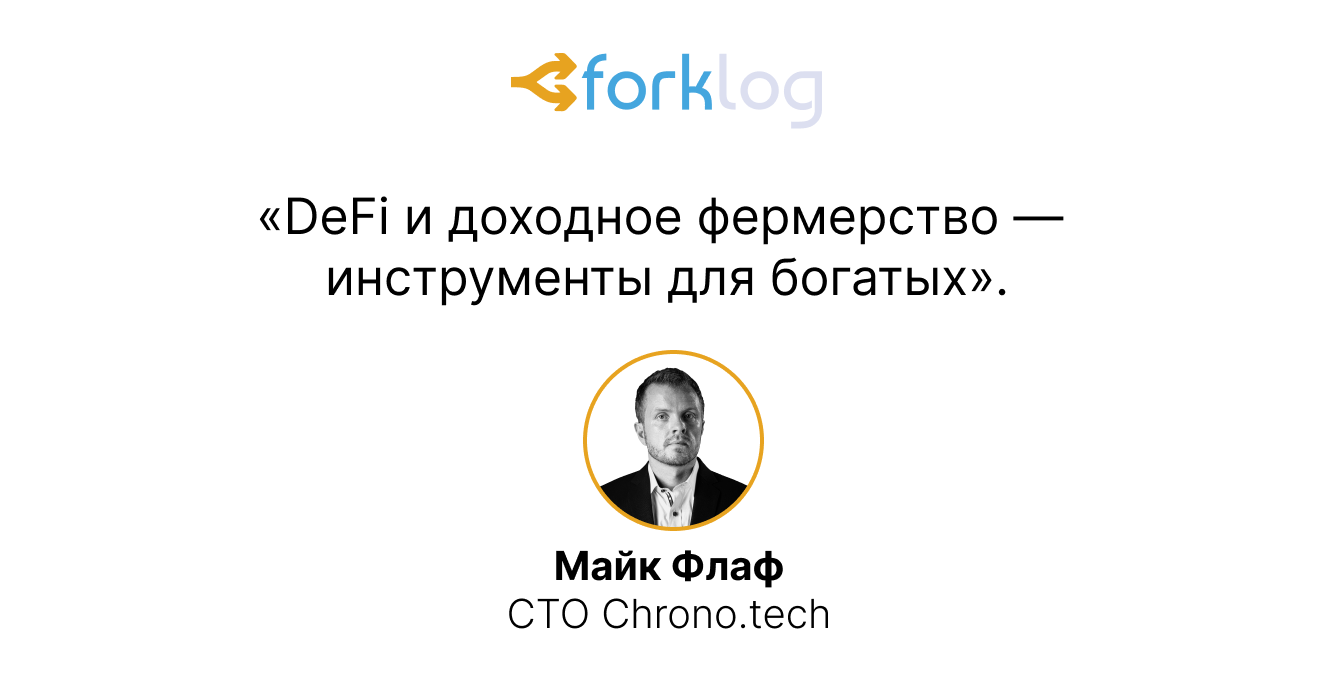
However, if transaction costs exceed potential earnings, this should be viewed not as a barrier but as a precursor to development, Flaf added.
There are already several alternative blockchains developing their own DeFi protocols:
- Tron (JustSwap, Unifiprotocol);
- Binance Smart Chain (BurgerSwap, bscswap, pancakeswap);
- Cosmos (Kava, THORChain);
- Polkadot (Polkaswap).
“In the long run, a bridge between Ethereum and Binance Smart Chain is quite plausible, enabling inter-blockchain interaction. But universal bridges require economic incentives,” warned the expert.
CBDO of Monolithos DAO Dmitry Kryshstal spoke about their company’s algorithmic stablecoin MCR, which sits at the intersection of CeFi and DeFi products.
Symbiosis CeFi and DeFi by ForkLog on Scribd
“Developers forked MakerDAO and made changes to the auctions, and the motivation was that many ruble-denominated transactions in centralized payment systems are blocked.”
On a panel discussion the speakers discussed possible regulation of the DeFi market.
“I find it hard to imagine regulating this ecosystem. Banning it won’t work, because everything will be decided by a more primitive market for buying and selling,” said Dmitry Kryshstal.
Founder of p2p.org Konstantin Lomashuk suggested that on the leading decentralized exchange Uniswap there will be binding accounts to KYC.
“The mechanism of distributing tokens that bring liquidity to the product is very clever. How you implement it will determine how long it will survive,” he added.
CTO and co-founder of 1inch.exchange Anton Bukov believes that the strategies used on the crypto market are how fiat money should work:
P advantages of first-level DEX on Ethereum by ForkLog on Scribd
“The throughput of a first-level DEX is limited by Ethereum’s capacity. And each second-layer solution has its own throughput, higher due to data compression when moving transactions to the first layer,” explained the expert.
For the same reason, fees are cheaper on second-layer solutions.
However, despite the apparent upside of second-layer solutions, they show low viability. The primary reason for the success of first-layer solutions is their interoperability with each other and with other DeFi components.
“On the first layer, composability allows working with all exchanges in a single transaction. That is why such solutions grow well; you can interact with them continuously,” summarized Anton Bukov.
The prospects for decentralized finance were outlined by the CEO of DeFi LoG Sviatoslav Yakovets. He said the market is currently in a state of “FOMO” and in a flood of information noise.
Перспективы DeFi by ForkLog on Scribd
Meanwhile, DeFi already represents an alternative to the banking system in a decentralized form.
For broader user participation, Yakovets suggests simplifying lending and liquidity-adding services.
In the expert’s view, the market’s early stage is a terrific opportunity for ambitious programmers.
“In the future, competition between automated market makers and other products will intensify. DeFi is taking a global form, spreading to centralized platforms.”
There are also paths for DeFi protocols with yield-farming concepts, continued Chrono.tech CTO Mike Flaf.
Development of DeFi protocols with yield-farming concepts by ForkLog on Scribd
For now, high Ethereum fees remain a deterrent for many users:
However, if transaction costs exceed potential earnings, this should be viewed not as a barrier but as a precursor to development, Flaf added.
There are already several alternative blockchains developing their own DeFi protocols:
- Tron (JustSwap, Unifiprotocol);
- Binance Smart Chain (BurgerSwap, bscswap, pancakeswap);
- Cosmos (Kava, THORChain);
- Polkadot (Polkaswap).
“In the long run, a bridge between Ethereum and Binance Smart Chain is quite plausible, enabling inter-blockchain interaction. But universal bridges require economic incentives,” warned the expert.
CBDO of Monolithos DAO Dmitry Kryshstal spoke about their company’s algorithmic stablecoin MCR, which sits at the intersection of CeFi and DeFi products.
Symbiosis CeFi and DeFi by ForkLog on Scribd
“Developers forked MakerDAO and made changes to the auctions, and the motivation was that many ruble-denominated transactions in centralized payment systems are blocked.”
On a panel discussion the speakers discussed possible regulation of the DeFi market.
“I find it hard to imagine regulating this ecosystem. Banning it won’t work, because everything will be decided by a more primitive market for buying and selling,” said Dmitry Kryshstal.
Founder of p2p.org Konstantin Lomashuk suggested that on the leading decentralized exchange Uniswap there will be binding accounts to KYC.
“The mechanism of distributing tokens that bring liquidity to the product is very clever. How you implement it will determine how long it will survive,” he added.
CTO and co-founder of 1inch.exchange Anton Bukov believes that the strategies used on the crypto market are how fiat money should work:
P advantages of first-level DEX on Ethereum by ForkLog on Scribd
“The throughput of a first-level DEX is limited by Ethereum’s capacity. And each second-layer solution has its own throughput, higher due to data compression when moving transactions to the first layer,” explained the expert.
For the same reason, fees are cheaper on second-layer solutions.
However, despite the apparent upside of second-layer solutions, they show low viability. The primary reason for the success of first-layer solutions is their interoperability with each other and with other DeFi components.
“On the first layer, composability allows working with all exchanges in a single transaction. That is why such solutions grow well; you can interact with them continuously,” summarized Anton Bukov.
The prospects for decentralized finance were outlined by the CEO of DeFi LoG Sviatoslav Yakovets. He said the market is currently in a state of “FOMO” and in a flood of information noise.
Перспективы DeFi by ForkLog on Scribd
Meanwhile, DeFi already represents an alternative to the banking system in a decentralized form.
For broader user participation, Yakovets suggests simplifying lending and liquidity-adding services.
In the expert’s view, the market’s early stage is a terrific opportunity for ambitious programmers.
“In the future, competition between automated market makers and other products will intensify. DeFi is taking a global shape, spreading to centralized platforms.”
There are also paths for DeFi protocols with yield-farming concepts, continued Chrono.tech CTO Mike Flaf.