



DEXs Without Native Tokens — Relic of the Past or Viable Path Forward?
Yield farming is one of the most topical trends in the decentralized finance (DeFi) space. The decentralized exchange (DEX) segment is no exception—many trading venues have issued native tokens. Among such platforms is Uniswap, which has emerged as a leader in total value locked.
Nevertheless there are still DEXs that operate without a native token. ForkLog presents readers with a brief overview of several such platforms.
- Issuing a native token is not a guarantee of success, but may drive activity on the platform.
- In the DEX segment, liquidity-pool-based platforms with automated market-maker functionality predominate.
Most market participants still prefer trading cryptocurrencies on centralized exchanges (CEXs), offering significant liquidity and a familiar interface for many.
However, more people recognise the risks to which CEXs are exposed and turn to DEXs. The latter are non-custodial venues (do not hold users’ funds), using smart contracts and on-chain transactions, removing the need for an intermediary.
Trading volumes on exchanges rise, DEX token prices fall
The rapid rise in popularity of DEXs is evident in the impressive growth in trading volumes.
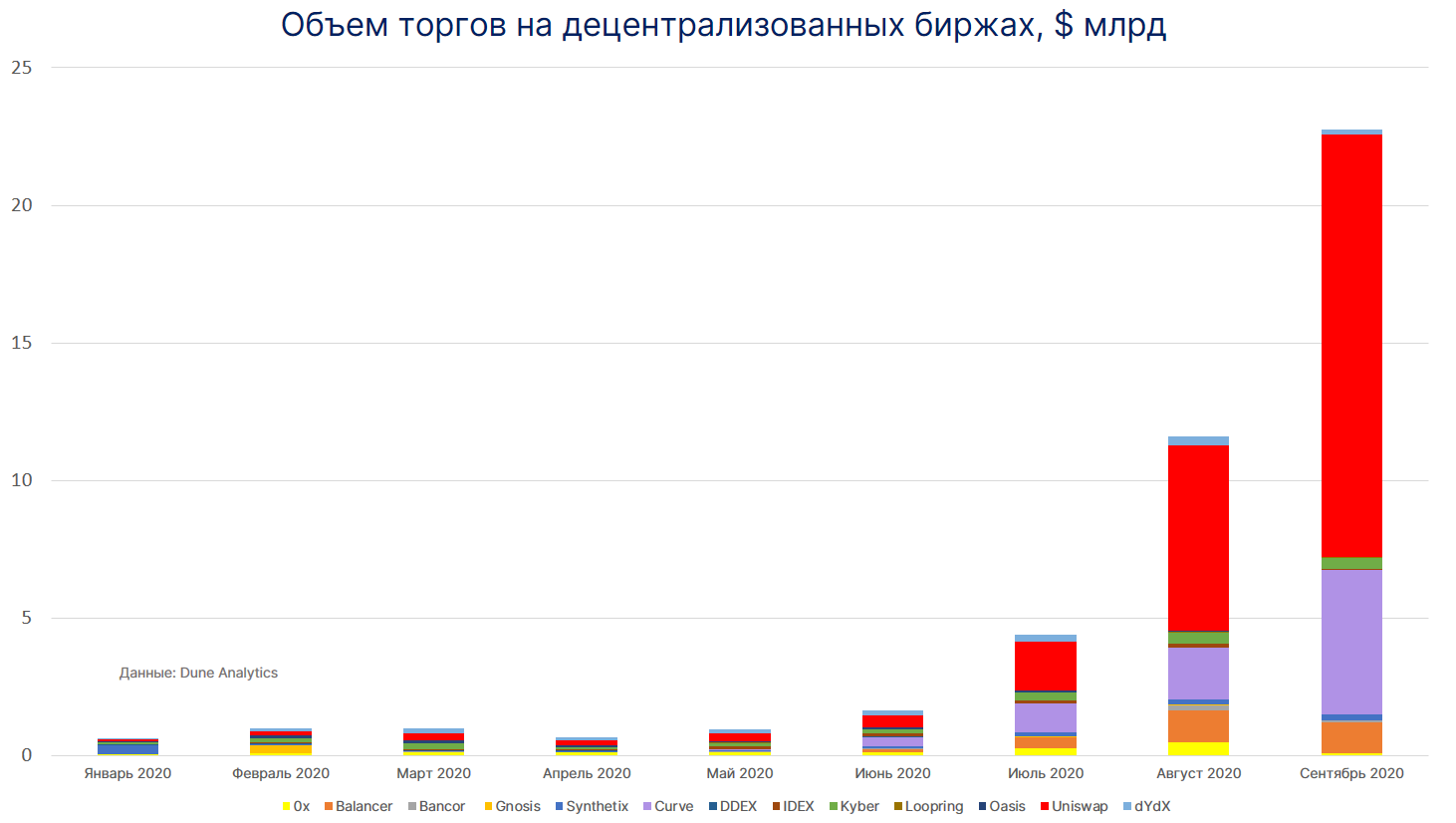
In September, the turnover of decentralized exchanges surpassed $23.5 billion. The rise from August was more than 100%.
In this segment Uniswap dominates outright — its share of total trading volume is close to 70%.
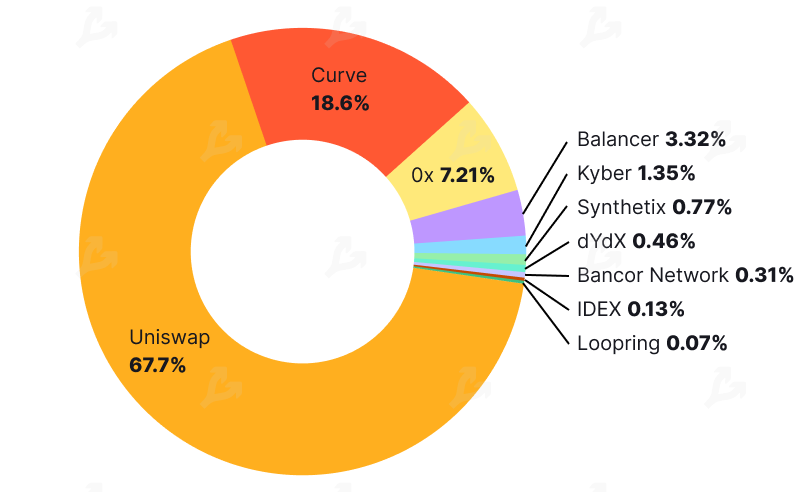
Competition between the two fundamentally different categories of trading venues is tightening. At the end of August, Uniswap’s daily turnover surpassed the trading volume of Coinbase, the largest U.S. crypto exchange.
Some experts believe the rapid growth of activity in the DEX segment is temporary. For example, FTX founder Sam Bankman-Fried believes that volumes on them will evaporate as excessive incentives are exhausted. He regards the hype around so‑called yield farming and the demand for governance tokens as example of such incentives.
Governance tokens exist for many DEXs, including Uniswap. The UNI token issued by the exchange proved to be listed on the listings of leading centralized exchanges and entered the top 50 projects by market capitalization.
The success of Uniswap and similar DeFi platforms is being attempted to be replicated by other projects. Many market observers see a parallel with the ICO craze of 2017.
What I worry the Uniswap success will start is that companies without a proper business model will now all be releasing “valueless” governance tokens. This will just dilute the market, exhaust investors even more and eventually the market could look just like in 2017
— Larry Cermak (@lawmaster) September 19, 2020
“You’d have to be a fool not to start using DeFi protocols and infrastructure apps that don’t have a native token, given that they may follow Uniswap’s example.”
Nevertheless, given the segment’s growth pace and the overall unpredictability of the crypto industry, everything could change in the mid-term.
Subscribe to ForkLog news on Telegram: ForkLog FEED — full news feed, ForkLog — the most important news and polls.
Рассылки ForkLog: держите руку на пульсе биткоин-индустрии!