



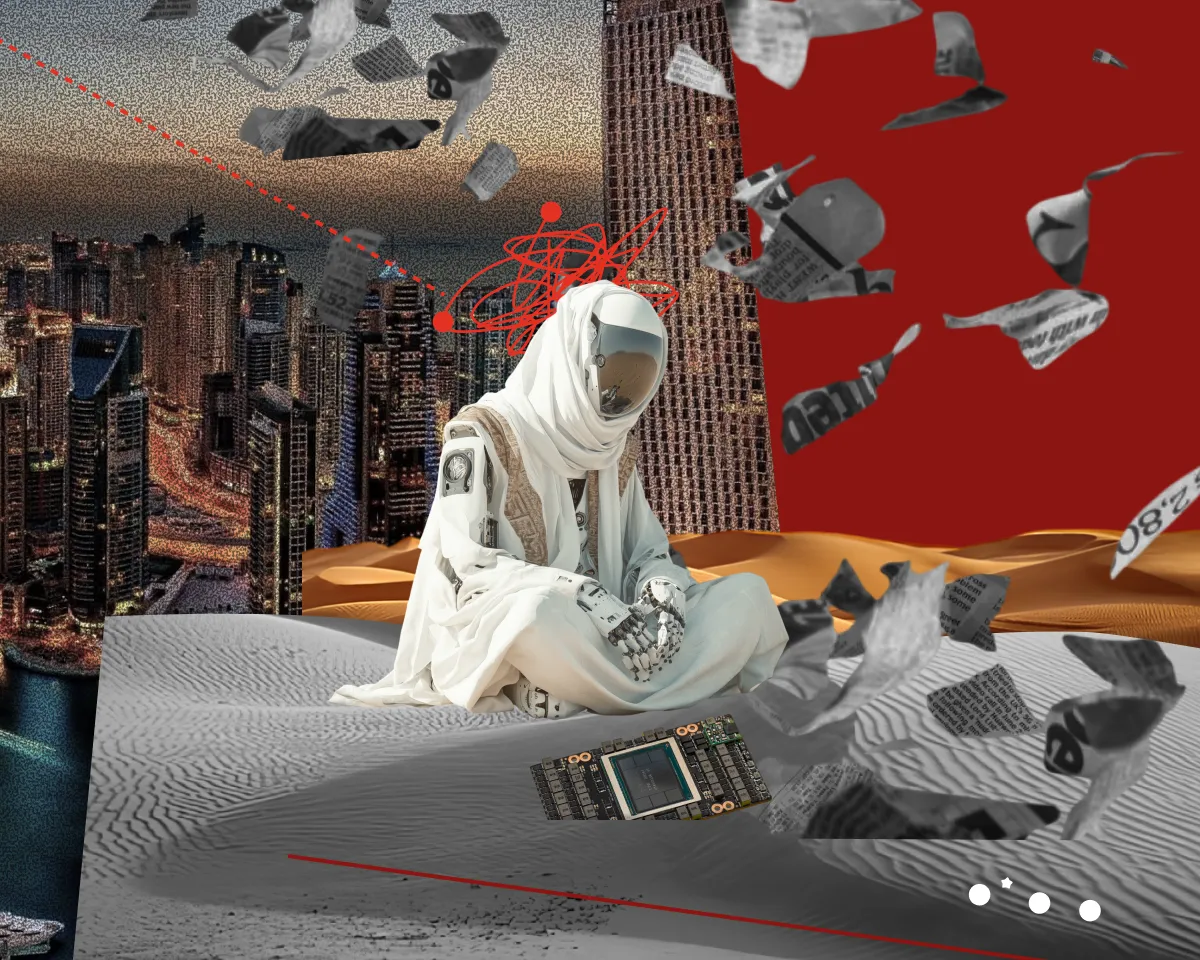
While the world watched Dubai’s regulatory sandboxes, the Gulf states moved from experiments to grand construction of the future. The UAE and Saudi Arabia are pouring hundreds of billions of dollars into a new economy built on artificial intelligence and Web3.
This is not merely shopping for technology but building an end-to-end pipeline: buying cutting-edge hardware, poaching top minds, developing home-grown neural networks and weaving blockchain into megaprojects such as NEOM. ForkLog examines how this ambitious plan is put together.
The new oil is silicon and data
Cold calculation sits at the heart of the UAE’s and Saudi Arabia’s tech race. The strategies of Saudi Vision 2030 and UAE Centennial 2071 are not glossy decks but road maps for weaning their economies off oil. Leaders across the region are funnelling vast sums into a new foundation.
Rather than diversifying into familiar industries, they are betting on the highest value-added sectors: artificial intelligence, biotechnology and the data economy. These fields demand enormous compute, and the Gulf monarchies have taken a radical tack — buy the best kit on the market.
In 2023 it emerged that Saudi Arabia and the UAE were buying NVIDIA H100 accelerators in bulk for training large language models (LLMs). According to Financial Times, the Saudis, via the research centre at King Abdullah University of Science and Technology (KAUST), bought at least 3,000 such chips at roughly $40,000 apiece, for a total of about $120m.
In May 2025 Nvidia and Saudi Arabia concluded a partnership to build large-scale infrastructure in the kingdom. The centrepiece is a fleet of “AI factories” with up to 500 MW of power, to be equipped over five years with hundreds of thousands of GPU. The first phase will deploy a supercomputer with 18,000 of the latest GB300 chips, while the Data and AI Authority (SDAIA) will add up to 5,000 Blackwell GPUs. The aim is to turn the country into a leader in artificial intelligence under the Saudi Vision 2030 strategy.
The UAE is acting on a similar scale. The country has become a pivotal partner for American AI firms. Abu Dhabi’s G42, chaired by the UAE’s national-security adviser Sheikh Tahnoun bin Zayed Al Nahyan, collaborates with Cerebras Systems. Together they are building a series of nine Condor Galaxy AI supercomputers. The first, CG-1, launched in the United States, already ranks among the world’s top 50 most powerful machines. The rest will be deployed in both the US and the UAE.
In July this year, WSJ reported that the United States had paused a deal to sell Nvidia and other chips to the United Arab Emirates, owing to concerns that semiconductors could end up in China. According to the paper, the risk of smuggling was also discussed when the agreement was struck. At the time, representatives of the UAE and Saudi Arabia assured Washington that safeguards were in place.
“Silicon fever” is not merely a chase for raw power. It is a strategic gambit to secure “digital sovereignty”. With their own advanced compute clusters, Gulf states reduce dependence on foreign tech giants such as Amazon Web Services or Microsoft Azure and can train AI models tailored to regional needs.
A battle for brains: a reverse brain drain
Hardware without talented people is dead weight. Aware of that, the UAE and Saudi Arabia have launched an unprecedented drive to attract human capital. The goal is not just to hire expatriates but to forge a global talent hub to rival Silicon Valley.
The main instrument is “golden visas”. In the UAE, a 10-year residence permit могут получить outstanding scientists and technologists, researchers, programmers and Web3 entrepreneurs. The visa lets holders live and work without being tied to a specific public or private employer, bring their families and enjoy tax advantages.
Saudi Arabia запустила the Premium Residency programme and offers similar terms to attract foreign professionals.
Pay is another magnet. AI engineers and blockchain developers in Dubai or Riyadh can expect compensation on a par with, or exceeding, offers in America and Europe — and there is no personal income tax.
The region is not limiting itself to “buying” ready-made expertise. Billions of dollars are going into building its own scientific schools. A standout example is the Mohamed bin Zayed University of Artificial Intelligence (MBZAI) in Abu Dhabi, the first university in the world dedicated entirely to AI. It offers free tuition, stipends and housing for top students globally, luring them with access to leading professors and state-of-the-art compute.


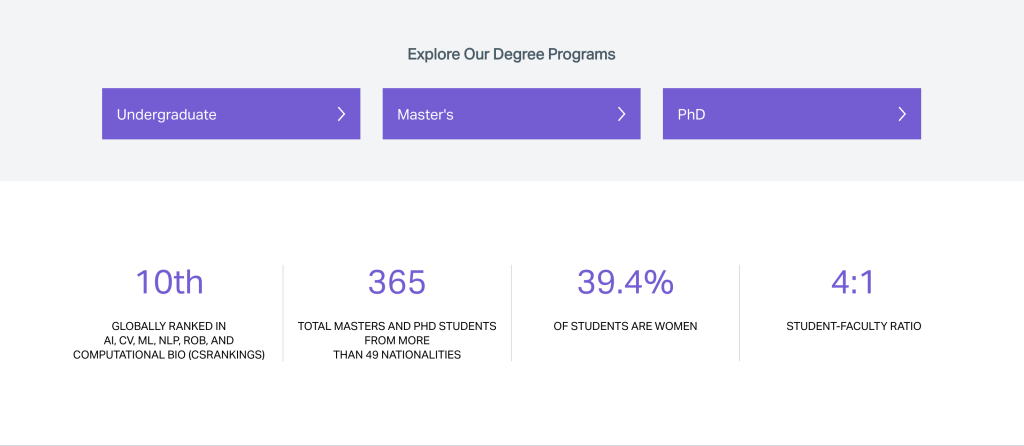
Saudi Arabia is developing KAUST into a centre for fundamental research, lavishing funds on its laboratories and providing grants for breakthrough projects.


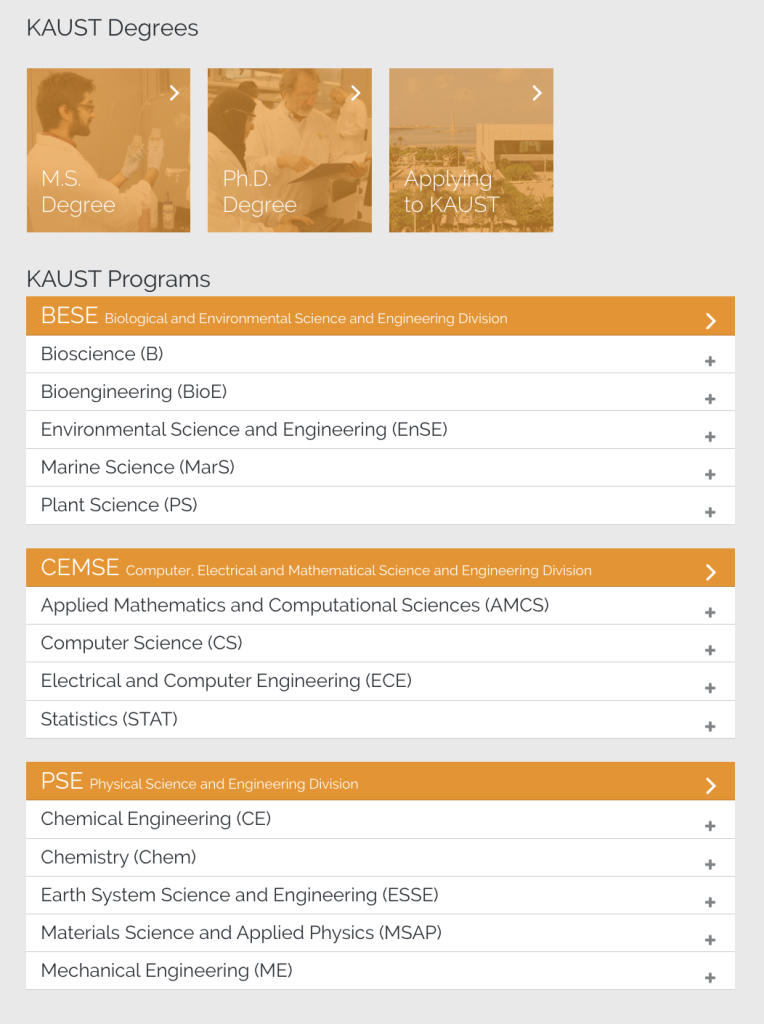
The aim is simple: to create an environment in which the best minds can not only work but also create — launching start-ups and seeding a new technology ecosystem from scratch.
From Falcon to NEOM: a national technology stack
The Gulf strategy is to build a full technology stack — from fundamental research to practical deployment in gigantic infrastructure projects.
Its apex in the UAE is the development of a home-grown large language model, Falcon, built by the Technology Innovation Institute in Abu Dhabi. On release in 2023, Falcon-180B outperformed Meta’s Llama 2 on a number of benchmarks and competed with OpenAI’s GPT-4. Crucially, Falcon was made openly available for commercial and research use — a canny move in the global AI contest, showing that the UAE can create, not just consume, cutting-edge products.
In Saudi Arabia the main test bed for tomorrow’s technologies is the $500bn NEOM megaproject.

It is designed as a “cognitive city” in which the physical and digital worlds are fully fused. A subsidiary, NEOM Tech & Digital, is building the XVRS metaverse. This will be the city’s digital twin, enabling residents to interact with services through AR/VR interfaces.
AI and blockchain sit at the core. Artificial intelligence will run urban infrastructure — from autonomous transport and power grids to personalised medicine and education. Blockchain will underpin secure digital identity for every resident and a transparent data-governance system.
The UAE has similar initiatives. The Dubai Metaverse Strategy aims to create 40,000 virtual jobs and add $4bn to the emirate’s GDP by 2030. It envisages integrating Web3 technologies into tourism, education, retail and public services.
Blockchain as the rails for a new economy
In the Gulf, cryptocurrencies and blockchain are less speculative instruments than an infrastructure layer for the economy of the future. Governments in the region were among the first to recognise the technology’s potential to solve real problems and open new markets.
A key focus is RWA. Dubai already hosts projects to tokenise property. A pricey asset — say, a floor in a skyscraper — can be split into thousands of tokens. Investors worldwide can buy such tokens to gain a share of the real asset and a slice of rental income. That makes the PropTech market more liquid and accessible.
To police the space, Dubai created a dedicated agency — the Virtual Assets Regulatory Authority. Its job is to set clear, transparent rules for crypto companies, draw global players to the emirate and protect investors.
Another important use of blockchain is transparency in vast construction and logistics schemes. In NEOM and in new districts of Dubai, blockchain is used to create an immutable registry of every operation: from the delivery of building materials to the performance of contractors. Each action is written to the chain, deterring fraud, cutting costs and easing oversight of projects worth hundreds of billions of dollars.
New financial markets are taking shape. For example, the фондовая биржа Абу-Даби is actively piloting distributed-ledger technology for issuing digital bonds and other securities.
This technological overhaul is not a frenzied shopping spree but a deliberate, lavishly funded strategy. By betting on AI and Web3, the UAE and Saudi Arabia are building on their sands a new global technology centre of gravity — one that could in the coming years rival today’s leaders.