



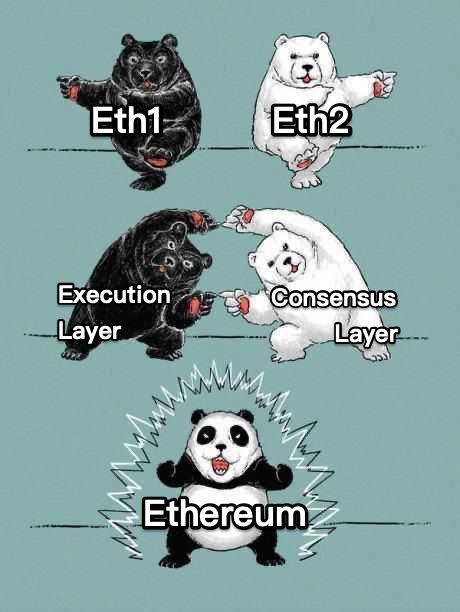
The team behind the second-largest cryptocurrency has abandoned the terms ETH1 and ETH2 in favour of the ‘execution layer’ and ‘consensus layer’ respectively.
We’ve removed all uses of ‘Eth2’ terminology on https://t.co/v9gxnMUQFz
Find out why 👇 https://t.co/84uJXSD4q1
— ethereum.org (@ethdotorg) January 24, 2022
Both components form a single Ethereum ecosystem.
In the view of the developers, the term ETH2 creates an ‘incorrect mental model’ for new users. They mistakenly believe that ETH1 will cease to exist after the transition to ETH2.


«As the network’s roadmap evolved, Ethereum 2.0 became an imprecise representation of the process. Caution and precision in the choice of definitions will allow a much wider audience to understand Ethereum», the statement said.
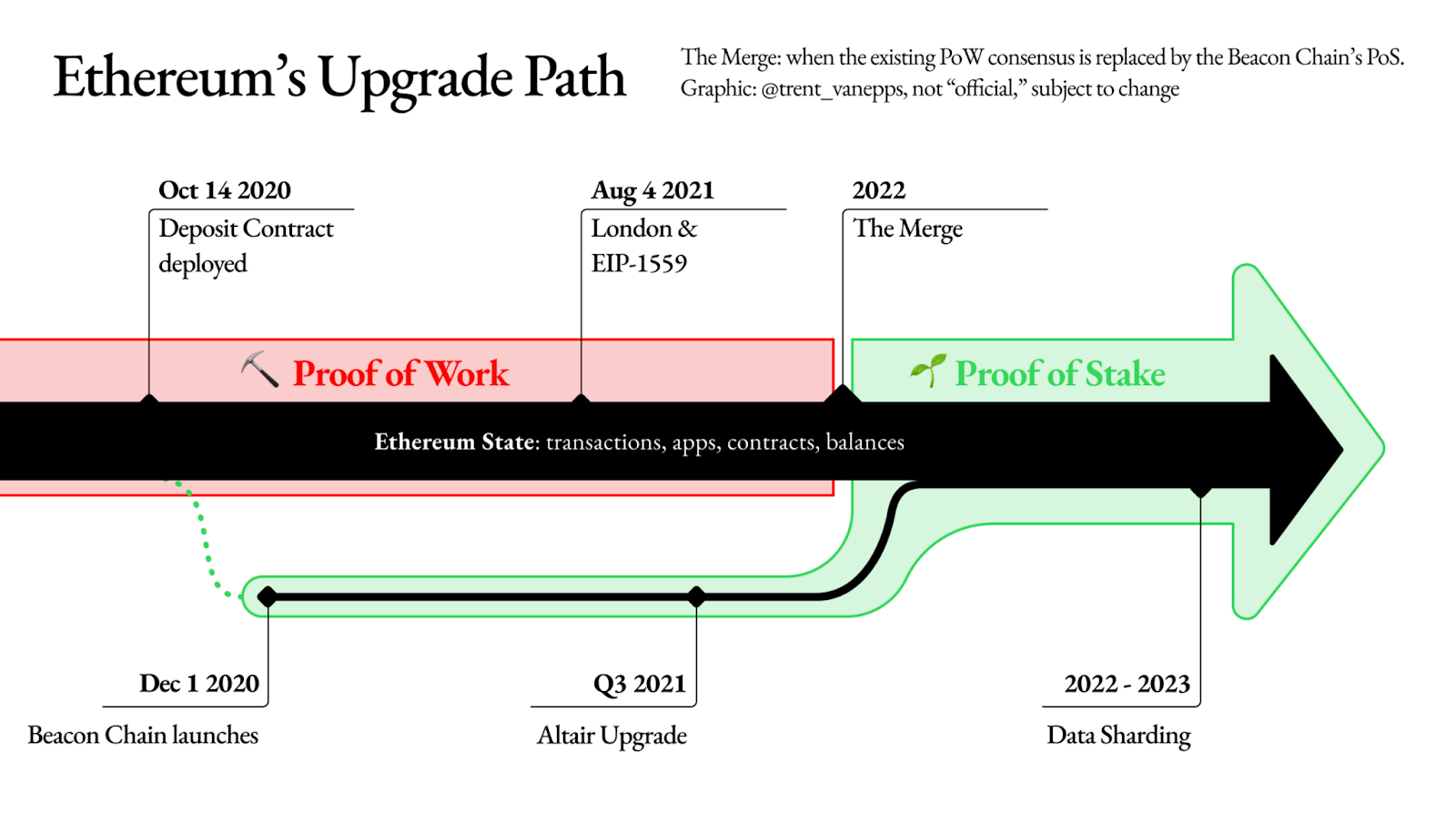
The team noted that in 2018 its work on scaling the blockchain and moving to the Proof-of-Stake consensus algorithm was brought together under the umbrella theme Ethereum 2.0. However, after the Beacon Chain began development, it became clear that a full implementation would take several years.
The drive to make the Ethereum network based on Proof-of-Work sustainable in the long term, alongside the understanding that the Beacon Chain would be ready before the other ETH2 components, led to the proposal of an ‘early merge’. Under this framework, it is envisaged that the existing blockchain would enter Ethereum 2.0 as a ‘zero shard’, the team noted.
Subsequent research into Rollups as a viable and secure means of scaling Ethereum proved promising.
«Rather than waiting for a complex, uncertain solution over several years, we could shift focus to scaling via Rollups rather than via sharding», the specialists said.
As a result of these developments, by the end of 2021 the lead developers abandoned ETH1 and ETH2 terms and urged the community to do the same. They argue that Ethereum’s roadmap remains unified.


The change in terminology should also help prevent scams in which attackers offer users to swap their ETH for non-existent ETH2 in light of the forthcoming transition, the team added.
Earlier, Ethereum co-founder Vitalik Buterin told how ZK-Rollups can help scale the cryptocurrency’s network.
Subscribe to ForkLog news on Facebook.