




The leading cryptocurrency has an 85% chance of reaching a new all-time high within the next six months, driven by several factors. This was stated by Lucas Outumuro, head of research at IntoTheBlock.
“Given the recent momentum, market participants are wondering when the ATH will be reached. […] There are five main catalysts that could lead Bitcoin to all-time highs before summer. Namely: halving, ETFs, easing [inflation], [US] elections, and treasuries,” he wrote.
Halving
The reduction of miners’ rewards by half—from 6.25 BTC to 3.125 BTC per mined block—is scheduled for April. As the income of the first cryptocurrency’s miners will decrease by 50%, the network’s hash rate is also likely to drop, according to Outumuro.
Research indicates that after the 2020 halving, the metric fell by about 30% over two weeks. However, after the mining difficulty adjustment, the hash rate rose to record levels.


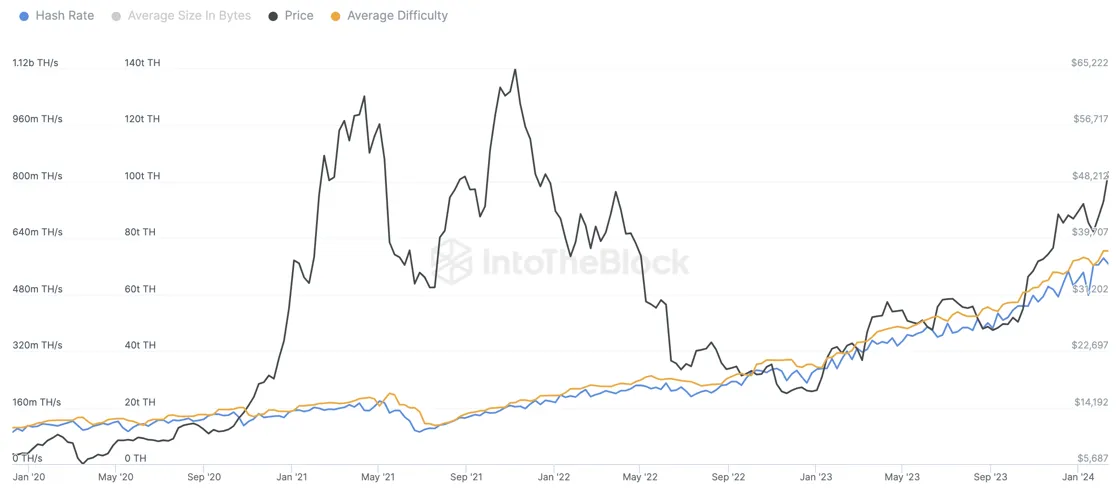
“Bitcoin is about to undergo its fourth reward reduction. It is quite likely that miners are more prepared than ever. For this reason, and due to advancements in cryptocurrency mining equipment, we predict that digital gold will reach ATH just a month after the halving,” added the expert.
Furthermore, Outumuro believes that the rapid recovery of the hash rate will help ensure blockchain security, and the reduction in miners’ rewards will lead to a decrease in sales volume.
Exchange-Traded Funds
The second catalyst for growth is likely the ongoing inflow of funds into spot Bitcoin ETFs, the analyst asserts. More than $4 billion has flowed into these products in the month since their inception.

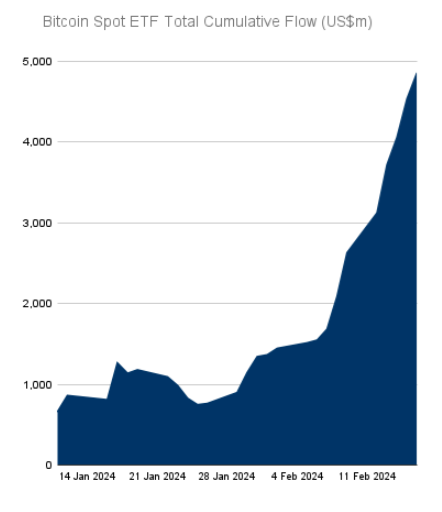
“Although the outflow from GBTC temporarily exceeded the inflow into new ETFs, the situation has changed. BlackRock’s IBIT recorded one of the most successful launches in ETF history in terms of assets under management,” added the analyst.
Outumuro clarified that it is unclear how long the strong inflow will last, but in the long run, a stable figure will help strengthen the price of the leading cryptocurrency by increasing demand.
Federal Reserve
The US Federal Reserve’s (Fed) tough stance on interest rates in 2022 laid the groundwork for a bear cycle not only in the crypto market but also in other risky assets, according to IntoTheBlock.
Outumuro noted that by 2024, inflation had decreased from 10% to 3%, so many expect a polar shift in Fed policy through a rate cut and a resumption of quantitative easing strategy.
“This expectation is likely the main driving force behind the recent rally in both Bitcoin and stocks. […] This time, the price movement of the leading cryptocurrency was more closely linked to traditional assets, leading to an increase in its correlation with Nasdaq and S&P 500 to two-month highs,” explained the expert.
According to Outumuro, the anticipated rate cut is already priced in by market participants, which is why growth is currently being observed.
Elections
The analyst added that the Fed’s bias towards the Democratic Party may prompt them to “further support the economy” to increase the chances of incumbent US President Joe Biden’s re-election.
Although the current head of state is generally against digital assets, candidates’ election campaigns positively impact the crypto market, Outumuro emphasized.
“The Polymarket prediction market currently gives Biden only a 33% chance of re-election, making Donald Trump, who is significantly more crypto-friendly, the most likely contender for victory,” the report states.
Accumulation
The most unobvious driver of Bitcoin’s growth, according to Outumuro, is treasuries and hedge funds.
He noted that in 2020, when Bitcoin recovered from the COVID-19 pandemic, traditional financial giants like Tudor Investment founder Paul Tudor Jones first recognized the potential of cryptocurrency. And with the launch of spot Bitcoin ETFs, hedge funds have the opportunity to “accumulate” a new asset class.
Growing demand from traditional investors could lead to greater adoption and acceptance of the digital asset market, the researcher is confident.
“In the US, this theory may be less applicable, but an increasing number of companies in Asia and South America are accepting Bitcoin as part of their treasury obligations,” explained Outumuro.
However, IntoTheBlock acknowledges that the scenario could change due to several factors. For instance, if the Fed does not ease its policy, Bitcoin could face a 10% correction.
Geopolitical conflicts also negatively affect the digital gold’s rate. Experts do not rule out “unexpected selling pressure” in the event of potential bankruptcies of major players.
Earlier, QCP Capital predicted that Bitcoin would reach ATH in March. This is evidenced by the active formation of call option positions with strikes from $60,000 to $80,000, as well as the frenzied demand for ETFs.
Back in February 12, early cryptocurrency adopter Tur Demeester suggested that by 2026, the coin would reach $600,000.