


Five metaverses you can explore today
Key points
- Since about 2020, metaverses—virtual sandboxes built by users—have taken off.
- To join a metaverse you need a browser-based crypto wallet and, typically, to pass verification.
- Unlike a conventional game, a metaverse features a full-fledged internal economy enabled by cryptocurrencies and NFTs. This makes metaverses decentralised: users, not just developers, create spaces and events.
- Metaverses are set to grow in importance over the coming years. McKinsey forecasts the market could reach $5trn by 2030.
- Below is ForkLog’s selection of metaverses you can join today.
Decentraland
Decentraland is a sprawling project where users trade plots of land and build on them, effectively creating their own micro-worlds with bespoke rules, quests and items. Creators can monetise their work.
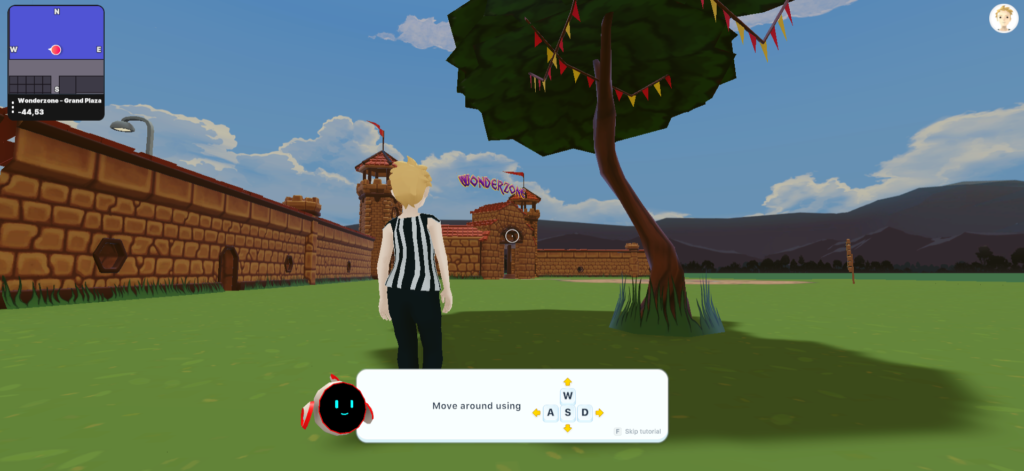
The Decentraland metaverse was launched on Ethereum by Argentines Ari Meilich and Esteban Ordano. It is currently browser-only. A demo runs without a crypto wallet. After connecting a wallet, you can customise an avatar and start roaming the world. There is plenty to do: attend NFT exhibitions, race, go to parties, hatch a dragon from an egg or spend time in a casino.
The system includes more than 90,000 land parcels, each an ERC-721 NFT called LAND. Parcels are grouped into districts that differ in size and content. Each district has its own theme, from gambling to fashion. Districts are governed autonomously with their own rules, led by one or more managers as decided by the community of parcel owners. Avatars move freely between districts and interact with each other.
With LAND Estates you can manage multiple parcels, unify them under one theme, create districts and form communities. The Agora system enables voting on new features and events in individual districts and across the project.
The native token is MANA. At the time of publication, it traded at $0.7. MANA is used to buy and sell assets, invest in buildings and earn yield from them, and to vote on Agora.
Axie Infinity
Axie Infinity is a metaverse built around a blockchain game that follows a play-to-earn model. The Vietnamese studio Sky Mavis launched it in 2017. The app runs on PC (Windows and macOS) and on iOS and Android. In Russia it can be played only via VPN. The metaverse runs on an Ethereum sidechain called Ronin.
At the heart of Axie Infinity are Axies—characters owned outright by players via NFTs. You can buy, breed and pit them against each other, and furnish their lives by buying land and other items. Axie stats can be boosted with “charms”.
Each Axie has a unique set of six body parts. Battles are card-based: a pet attacks depending on the cards chosen. You can build combinations and tune damage dealt to an opponent. There are two modes: Adventure, where players explore the map and fight NPCs, and Arena, where they battle randomly matched players.
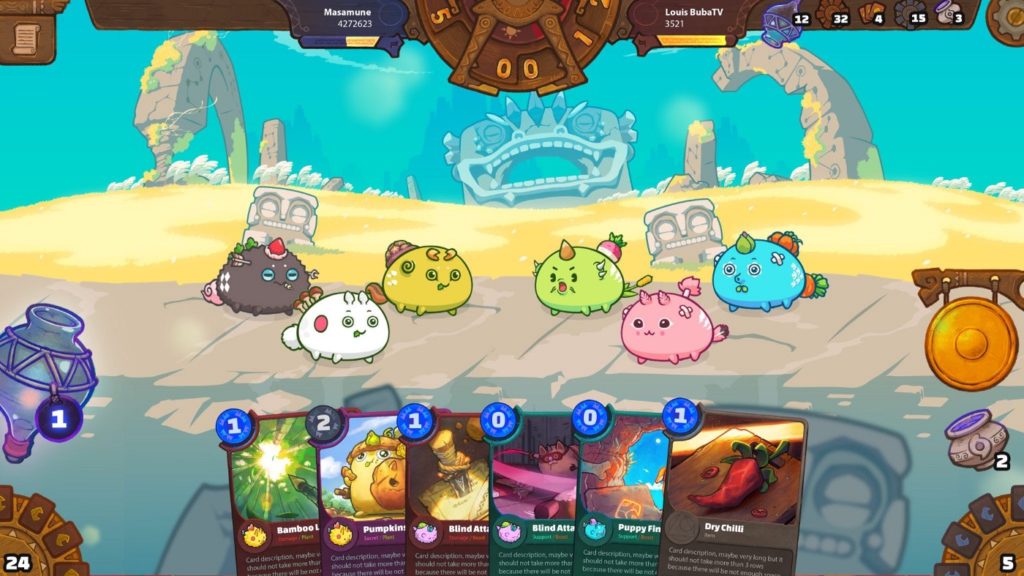
To start playing you need a Ronin Wallet. Then create an account, complete verification and buy three Axies—the minimum to begin. The lowest price for one Axie is 0.002 ETH ($3).
The metaverse token is Axie Infinity Shards (AXS), an ERC-20 standard token. It is the in-game currency used for operations and pet upgrades. AXS also carries governance rights.
There is another asset: Smooth Love Potion (SLP), awarded for quests and victories. Earnings depend on arena rank and the number of pets. SLP’s main function is to pay for breeding new Axies. The higher the creature’s level, the more SLP is needed. Some users profit from breeding and selling pets.
The Axie Infinity map is divided into digital land plots, also NFTs, on which players can build bases with various structures for their characters.
My Neighbor Alice
The My Neighbor Alice metaverse was launched by Antler Interactive. The project is often dubbed “Animal Crossing on blockchain”. Users can create their own islands and build structures, chat and interact with neighbours, harvest crops and earn crypto by completing missions and competitions. The project is due to arrive on Steam soon.
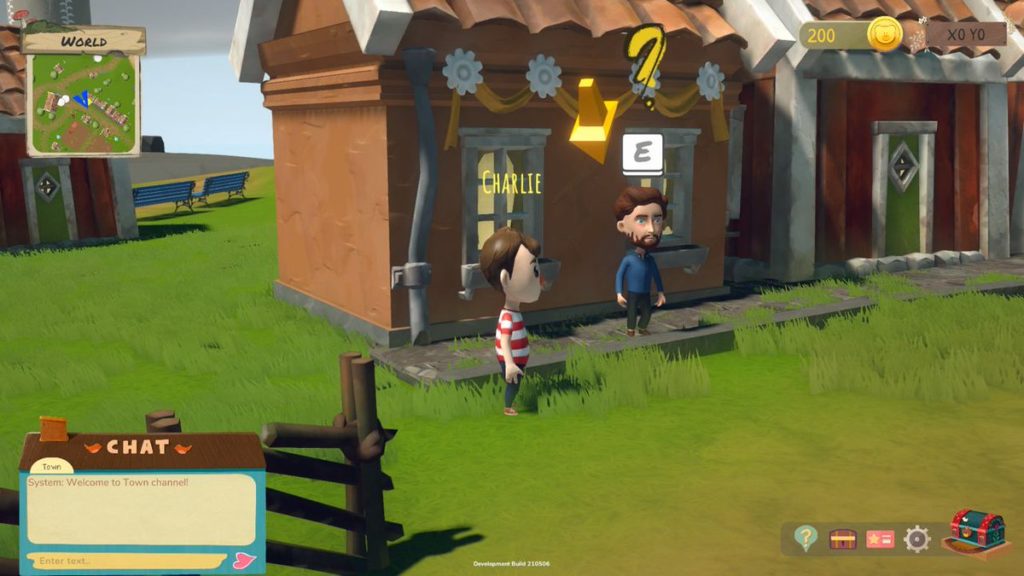
In the story, Alice is a town resident and the player must build a new life. True to “Happy Farmer” traditions, you can pick a trade you like: keep bees, fish or run a homestead on your plot.
The native token is ALICE. You can earn and spend it by raising and trading pets, completing other players’ tasks, exporting resources, growing crops and renting land.
To register, you must deposit 20 ALICE and wait 14 days for a virtual land auction. Land is required to start. If you do not win, your tokens are returned and can be used in the next draw. Previously, three lotteries were held, offering 927 land lots. The system is meant to give equal purchase opportunities to all, not just the highest bidders.
Sandbox
The metaverse was launched by Pixowl. Like Decentraland, Sandbox is a multi-user sandbox on Ethereum where anyone can build a world with puzzles, quests, storylines and rules. Users create their own games inside the metaverse and meet others across territories. All this is enabled by the Game Maker software.
You can design a unique game or borrow a concept from existing ones. Creators retain ownership of their works and can monetise them. Visually, Sandbox is often compared to Minecraft.
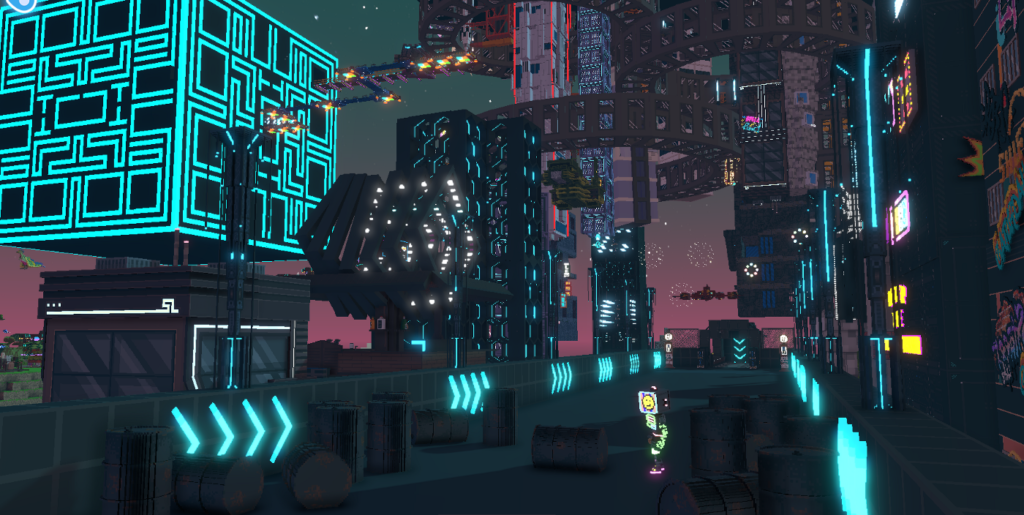
The core resource in Sandbox is land—NFT plots required to build user worlds. Gucci has bought parcels in Sandbox, Dubai’s crypto regulator has opened an office there, and the project recently announced a partnership with Renault Korea Motors.
There are three types of assets in Sandbox:
- SAND, the main in-game currency, an ERC-20 token used for transactions inside the metaverse.
- ASSETS, user-created objects as ERC–1155 NFTs.
- LAND, plots as ERC-721 non-fungible tokens. They can be bought, rented out, sold and aggregated into districts.
To start, go to the website and connect a MetaMask wallet. There is no conventional platform registration.
Users can earn by letting others complete quests in their games or by helping design quests and objects. Many find designers in-world and pay them in SAND.
Highrise
This social network–like metaverse runs on Ethereum and on a subnet of Avalanche called Highrise Blockchain. The developer is Pocket Worlds.
In Highrise you can buy NFT land, construct buildings and rooms, host events and create games, chat and make new connections. Character customisation is a highlight: you can design fashionable looks and buy clothing in the in-app marketplace. Everything users create becomes an NFT and can be sold on the internal marketplace.
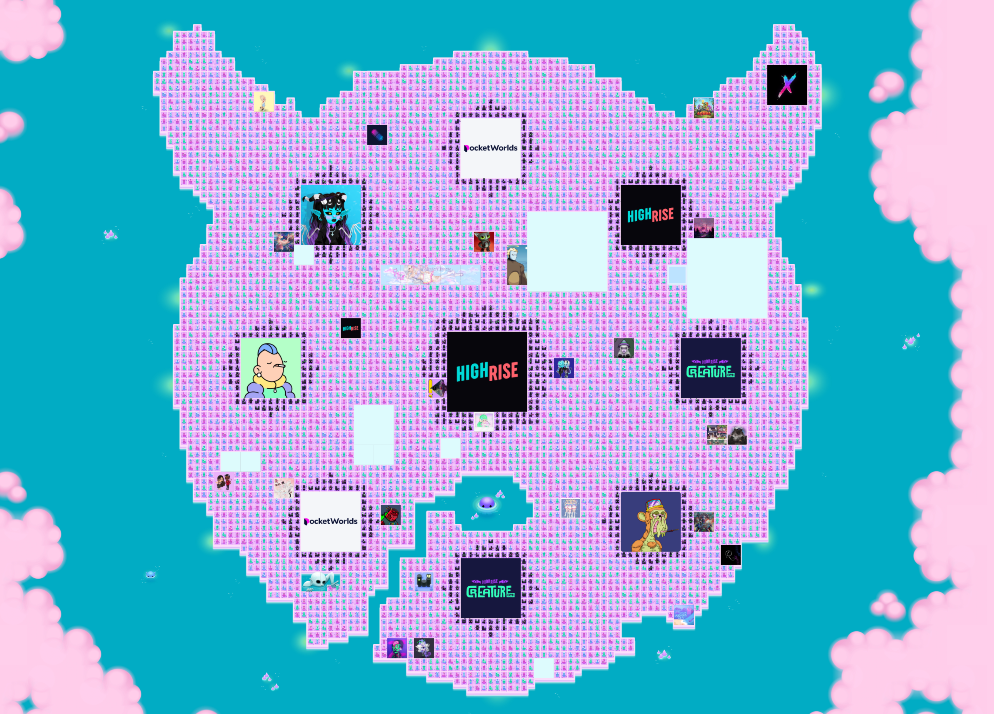
Highrise is anchored by a map comprising more than 160,000 land plots (parcels). Land is tied to NFTs and can be bought, including on the OpenSea marketplace, with prices starting at 0.165 ETH. Plots form districts and communities.
Land can also generate income: rent out rooms and plots, charge for games hosted there or simply for access.
The Highrise mobile app has over 10m downloads on Google Play—the easiest way to access this metaverse. After registration and avatar creation, the system assigns you a free room you can fully customise, down to floorboards and wallpaper colours. Furniture and other accessories can be won in a lottery or bought in marketplaces.
Highrise includes many social features: stories, a messenger and posts; a digital showcase displays your achievements and works.
Further reading
What are soulbound tokens and how do they differ from NFTs?
How to mint an NFT? Everything you need to know
What is NFT staking and how does it work?
What are sidechains and how do they work?
Рассылки ForkLog: держите руку на пульсе биткоин-индустрии!