



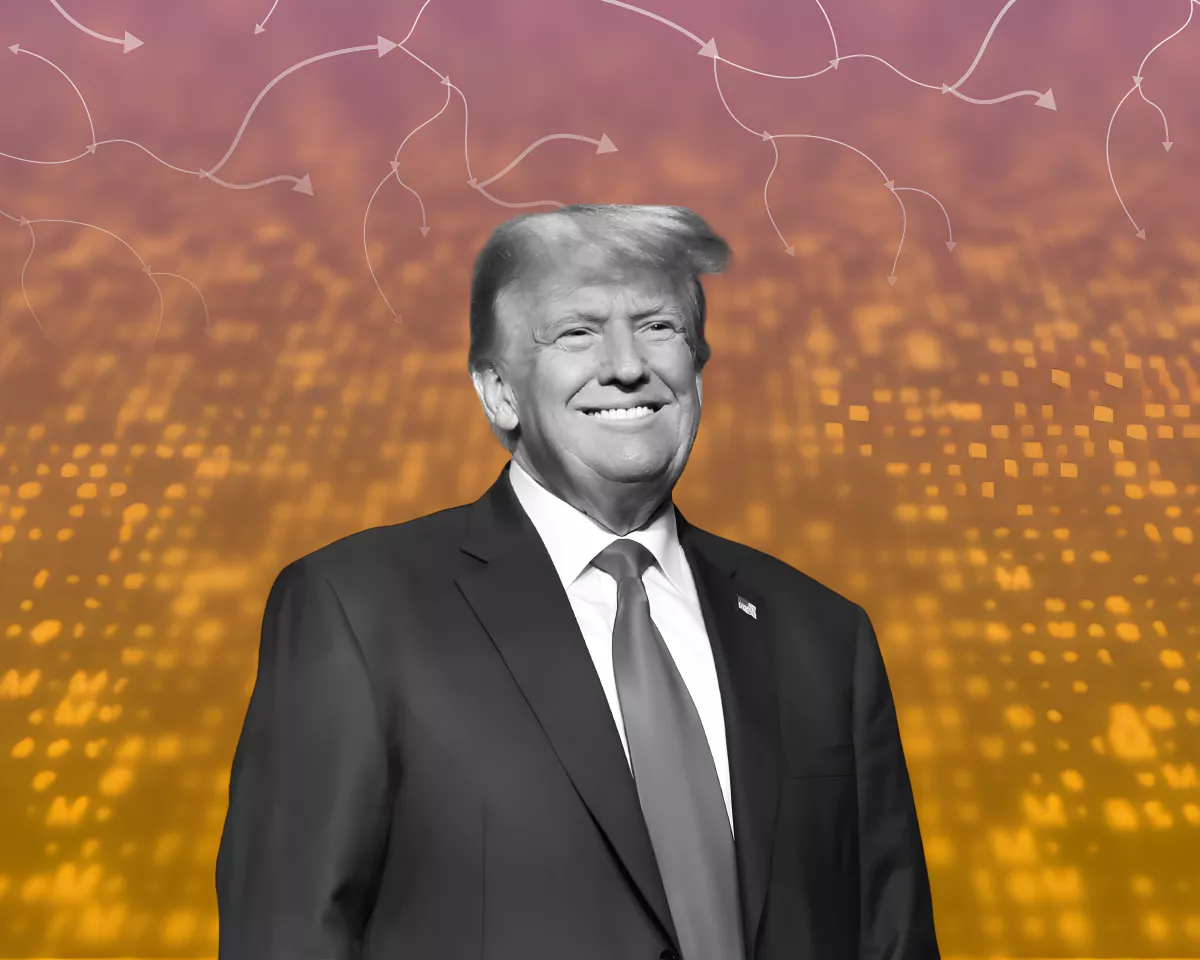
Lately, Donald Trump has increasingly raised issues facing the crypto community. Notably, only a few years ago the Republican Party’s current presidential candidate was an implacable opponent of bitcoin and other digital assets.
For ForkLog, Fedor Ivanov, director of analytics at “ШАРД”, examines how Trump’s rhetoric has changed, the role cryptocurrencies play in his campaign and where this could lead.
What came before
Back in 2019, then president Trump lambasted bitcoin. The American leader called cryptocurrencies ‘a disaster waiting to happen’ and ‘not real money’, emphasising their use in illegal activity.
Trump’s politics are succinctly captured by the slogan Make America Great Again, and America’s greatness rests to a large extent on the dollar. Five years ago, cryptoassets evidently looked to him like a threat to the national currency.
Over time his stance softened amid discontent in the crypto community and parts of finance with sitting president Joe Biden.
The chief target of criticism was pressure from market regulators — the SEC and the CFTC. Trump began to delve into the issues and, it seems, saw how to score additional political points.
Since 2022, the billionaire’s team has actively pushed his brand in the crypto world — for example, through the NFT collection Trump Digital Trading Cards. At present, the politician’s crypto assets are estimated at roughly $20 million.
Trump’s views shifted markedly as the campaign got under way. Lately it seems the Republican candidate has identified crypto supporters as one of his important voter groups.
Why Trump wants bitcoin
By the start of the campaign’s active phase his views had effectively reversed. He appears to have recognised the economic potential of cryptocurrencies, America’s role in the industry and its problems. The conclusion: they will not threaten American hegemony if the United States can control the market and set the pace.
This fits neatly with Trump’s political strategy: such positioning casts the current president and his administration as ‘weak’ and inattentive to an issue he deems important.
We now hear him raise crypto almost constantly. At a rally in May 2024 Trump said he was not against cryptocurrencies and wanted them to be ‘good and reliable’. He urged supporters of the digital economy to vote for him, criticising regulatory measures taken by the Biden administration.
Backing the industry has a clear advantage — it helps attract younger voters, who traditionally vote for Democrats.
Early in the summer, media chatter suggested Trump was consulting actively with Elon Musk on the topic. At an event in San Francisco on June 9 he called himself ‘the crypto president’, stressing that because of the current administration’s actions the United States risks losing to rivals in the battle for the market.
Today Trump’s line is that the United States must preserve technological leadership, and that every bitcoin should be mined in America. If he wins the upcoming election, he promises to resolve regulatory headaches, shield the industry from official pressure and create the world’s best climate for crypto business.
What Trump promises
Regulatory uncertainty persists in the United States, prompting giants such as Coinbase and Kraken even to consider leaving the American market. The European Union, Canada, Hong Kong, Singapore and Japan have long since put in place clear legal frameworks for cryptocurrencies.
America has yet to settle what exactly these assets are, while bills to regulate the industry have languished for years in Congress and the House of Representatives. On this Trump builds his rhetoric, presenting the status quo as critical.
By invoking cryptocurrencies, Republican Trump seeks to attract young people, liberal-minded entrepreneurs and immigrants. How well this strategy works will become clear when California and New York vote, where majorities traditionally back Democrats.
In sum, his campaign pledges boil down to ensuring U.S. leadership in every sphere, crypto included. Regulatory uncertainty depresses investment appeal and pushes companies towards jurisdictions with clearer rules.
If Trump prevails, expect his administration to move to reduce legal uncertainty. At a minimum, Congress is likely to consider more actively the bills already before it.
Any eventual framework is likely to focus on making cryptocurrencies accessible while tightening U.S. oversight of their circulation. Much less emphasis would go to investor protection, as that invites overregulation and imposes extra burdens on business.
It is also reasonable to expect the administration to step up oversight of all issuers of dollar-pegged stablecoins. The hegemony of the U.S. currency is one of Trump’s core issues. Thus the authorities will, on the one hand, not obstruct the issuance of such tokens and, on the other, do everything to ensure full control over them — at least over the largest players.