



With few catalysts and persistent selling pressure, bitcoin risks falling to $56,000–58,000, says Alex Thorn, head of research at Galaxy Digital.
— Alex Thorn (@intangiblecoins) February 2, 2026
Between January 28th and 31st bitcoin fell 15%, hitting a local low of $75,644. The sharp move triggered more than $2bn of futures long liquidations—among the largest such events on record.
Prices slipped below the average purchase price of US spot bitcoin-ETF shares ($84,000) and breached the cost basis of coins on Strategy’s balance sheet ($76,037).
January marked a fourth consecutive red month for the asset, a run last seen in 2018.
Thorn noted a “gap” in the distribution of coins between $70,000 and $82,000. A test of the lower bound looks likely.
If the decline continues, the next key supports are:
- $58,000 — the 200-week moving average (MA);
- $56,000 — bitcoin’s realised price (the average price of the last on-chain move for all coins).
“Historically these levels have marked market-cycle bottoms and offered an excellent entry point for long-term investors,” the researcher said.
At the time of writing the report, 46% of bitcoin holders were underwater. Thorn stressed that the current drawdown from the all-time high is 38%. Apart from 2017, 40% declines have always deepened to 50% or more within three months.
Outflows from ETFs add pressure. Over the past two weeks the funds have shed $2.8bn.
The analyst also pointed to the failure of the narrative of bitcoin as a hedge against fiat debasement. Against geopolitical instability and debt woes, investors have favoured traditional metals—gold and silver—over digital gold.
The only positive signal, he said, is a slowdown in profit-taking by long-term HODLers. Yet there are still no signs of meaningful whale accumulation.
Demand for bitcoin wanes
An analyst known as Darkfost said spot demand is drying up. On Binance, trading volume in the leading cryptocurrency has fallen from $200bn (in October) to $104bn.
🗞️ Spot demand Is drying up : Bitcoin enters its 5th month of correction
We are now entering the 5th consecutive month of correction for Bitcoin.
This correction has been largely driven by the October 10th event, which led to a massive destruction of liquidity, particularly in… pic.twitter.com/rX2keResNG
— Darkfost (@Darkfost_Coc) February 2, 2026
Metrics have fallen back to early-2024 lows.
Outflows of stablecoins from exchanges are also weighing. Their market capitalisation has dropped by roughly $10bn.
Justin d’Anethan, head of research at Arctic Digital, linked the current troubles to macroeconomics. Uncertainty around the policy of the Federal Reserve and the possible appointment of Kevin Warsh threaten a stronger dollar. That hurts risk assets.
Even so, d’Anethan called the market’s decline “a bitter but necessary medicine”. The correction will flush out excess leverage and cool speculation.
Joao Wedson, founder of Alphractal, thinks bitcoin has not yet bottomed. In his view, the turn comes when short-term holders realise losses below the realised price of long-term investors. That has not happened yet.
The Bitcoin price bottom only happens when…
✅ Short-Term Holders are in loss (this has already happened)
⏳ Long-Term Holders start carrying losses (this has not happened yet — this is when the real bottom forms))Additionally:
🔴 The bear market only ends when the STH… pic.twitter.com/xbuKAgem1O— Joao Wedson (@joao_wedson) February 2, 2026
Wedson warned that a drop below the $74,000 support could push bitcoin into bear‑market territory.
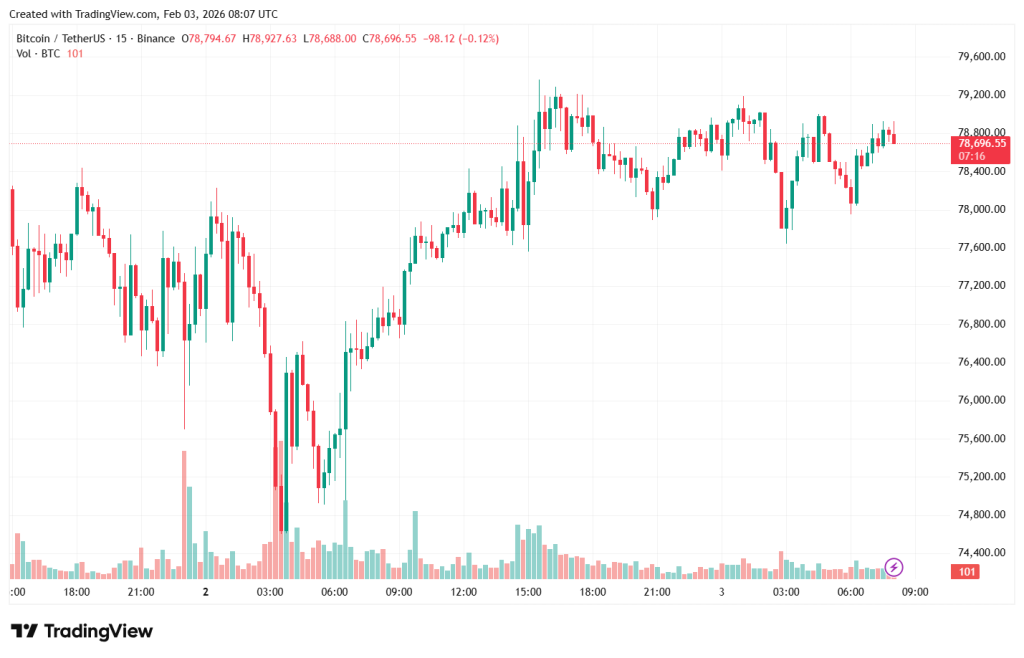
At press time the leading cryptocurrency traded at $78,696 (+2.5% over 24 hours).


In February, Bernstein analysts forecast a $60,000 floor for bitcoin.