



Tether has frozen the wallets of the Russian exchange Garantex, amounting to over 2.5 billion rubles. The platform has temporarily ceased operations and is seeking a resolution to the issue.
According to the Garantex team, all USDT in Russian wallets could be at risk.
Plasma founder Ilya Maksimenko suggested that P2P platforms “use real DeFi tools for the safety of their clients.”
He explained that the process is simple: a client deposits USDT, which is converted into aUSDT, and upon withdrawal, it is converted back into USDT. This can be implemented “in just 20 lines of code,” allowing for the management of deposits and withdrawals through the AAVE protocol.
Maksimenko emphasized that such a solution would not only enhance client security but also generate additional income for exchanges. For instance, assets in USDT yield an average of 4% annually, which could mean “a profit of $1.2 million” for Garantex.
Founder of the AML service BitOK and crypto investor Dmitry Machikhin declined to comment to ForkLog on whether the freeze of Garantex wallets was justified. He also did not express his opinion on the potential political motives behind the decision.
Regarding the connection between the freeze and sanction pressures, the expert confirmed that such a possibility exists. He noted that competitive rivalry cannot be ruled out, as Garantex holds a significant share of the cryptocurrency exchange market.
Machikhin stated that the Russian crypto market is large and actively interacts with neighboring countries, as well as with European and Middle Eastern markets. This makes its isolation complex, yet participants must be prepared for such challenges.
The expert also highlighted the importance of understanding AML mechanisms and finding ways to protect against them, as sanctions, in his view, negatively impact the development of the cryptocurrency ecosystem as a whole. Machikhin pointed out that such situations affect not only Russia but other countries as well, citing Iran as an example.
Concerning the risk of similar freezes spreading to other exchanges dealing with Russian users, the expert noted that this is becoming “the new normal.” He emphasized that the Russian crypto audience represents a significant portion of users — from 3 million active to 15 million including passive wallets. Therefore, such measures could affect other platforms working with Russian clients in the future.
Garantex published a list of frozen wallets. It includes 89 addresses, holding a total of $22.8 million in USDT.


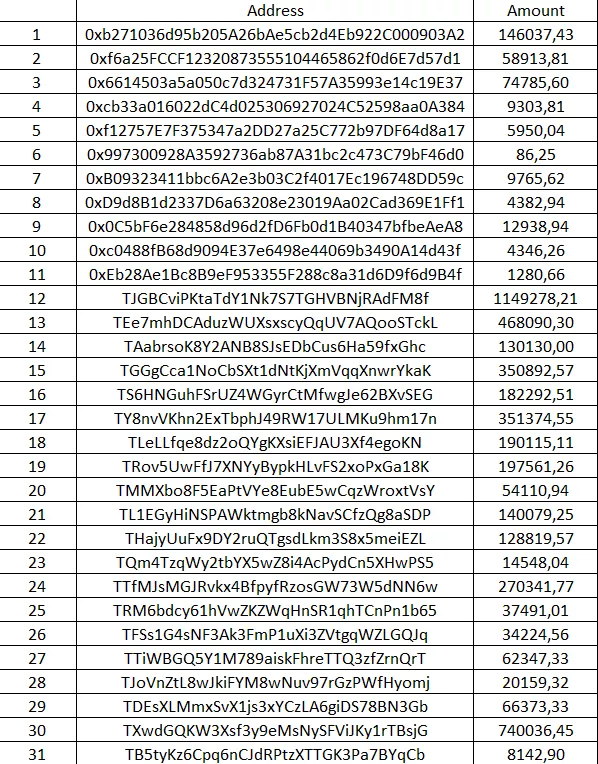
CEO of Exved Sergey Mendeleev believes that the freeze will affect not only the exchange’s users but also the conduct of foreign economic activities through cryptocurrency in Russia.
“This is precisely the reality I have been warning about for at least two years, but was unheard by neither the Central Bank nor the professional community. Were you waiting for a “black swan”? Well, here it is. Perhaps it’s time to listen and create mechanisms not susceptible to such freezes?” the expert stated.
On 24 February, the EU included Garantex in its 16th package of sanctions against Russia for aiding in circumventing restrictions.