



Glassnode: Bitcoin recovers from the fallout of the FTX collapse
Strong spot-market demand and January short-covering spurred Bitcoin’s biggest rally since October 2021. For the first time since the FTX collapse, futures moved into contango, and exchange outflows shifted to inflows.
#Bitcoin markets have seen the strongest monthly price performance since Oct-2021.
This rally is fuelled by both spot demand, and a sequence of short squeezes
We explore these dynamics across derivatives markets, and spot exchanges in our latest piece👇https://t.co/yNWSv2eI2A
— glassnode (@glassnode) January 30, 2023
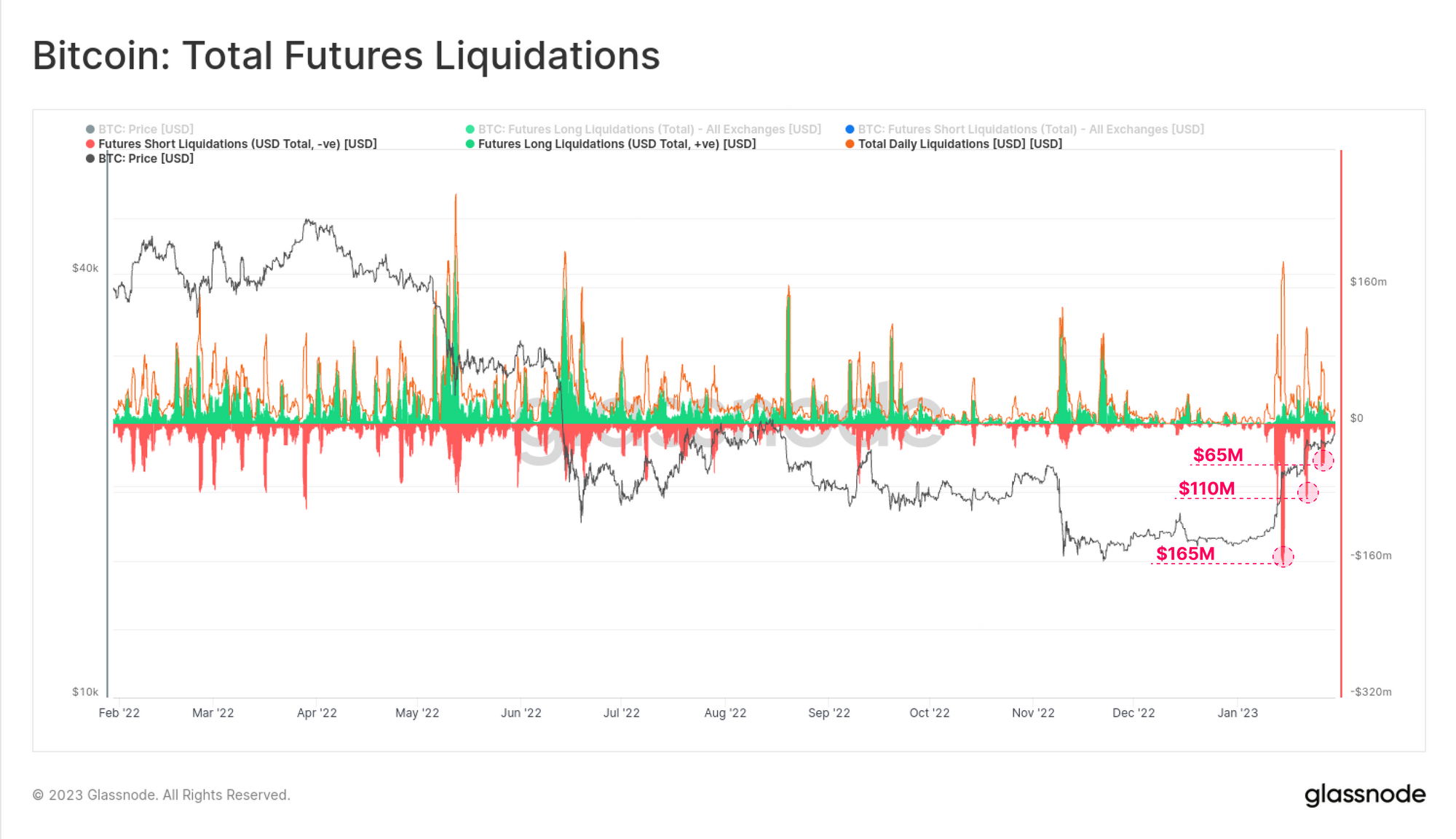
As Bitcoin moved back toward its August 2022 high, three waves of short-position liquidations on derivatives exchanges totalled $495 million.
Initially, many were taken by surprise — longs accounted for only 15% of forced liquidations at the time. By contrast, at the time of the FTX collapse, the figure stood at 25%.
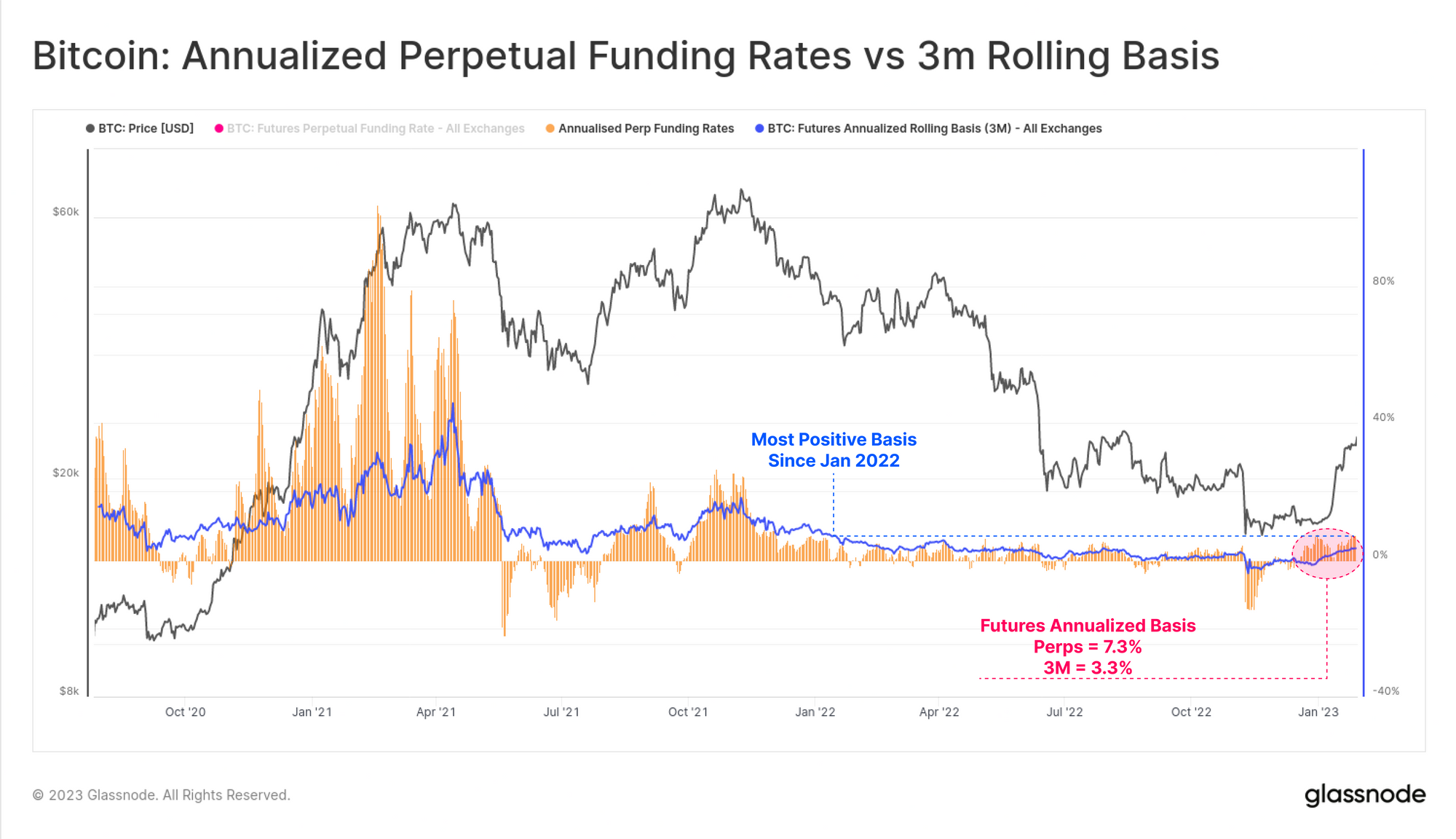
In perpetual contracts and in calendar futures, the basis returned to positive territory, at 7.3% and 3.3% year-on-year respectively. Previously, in November-December, backwardation was observed.
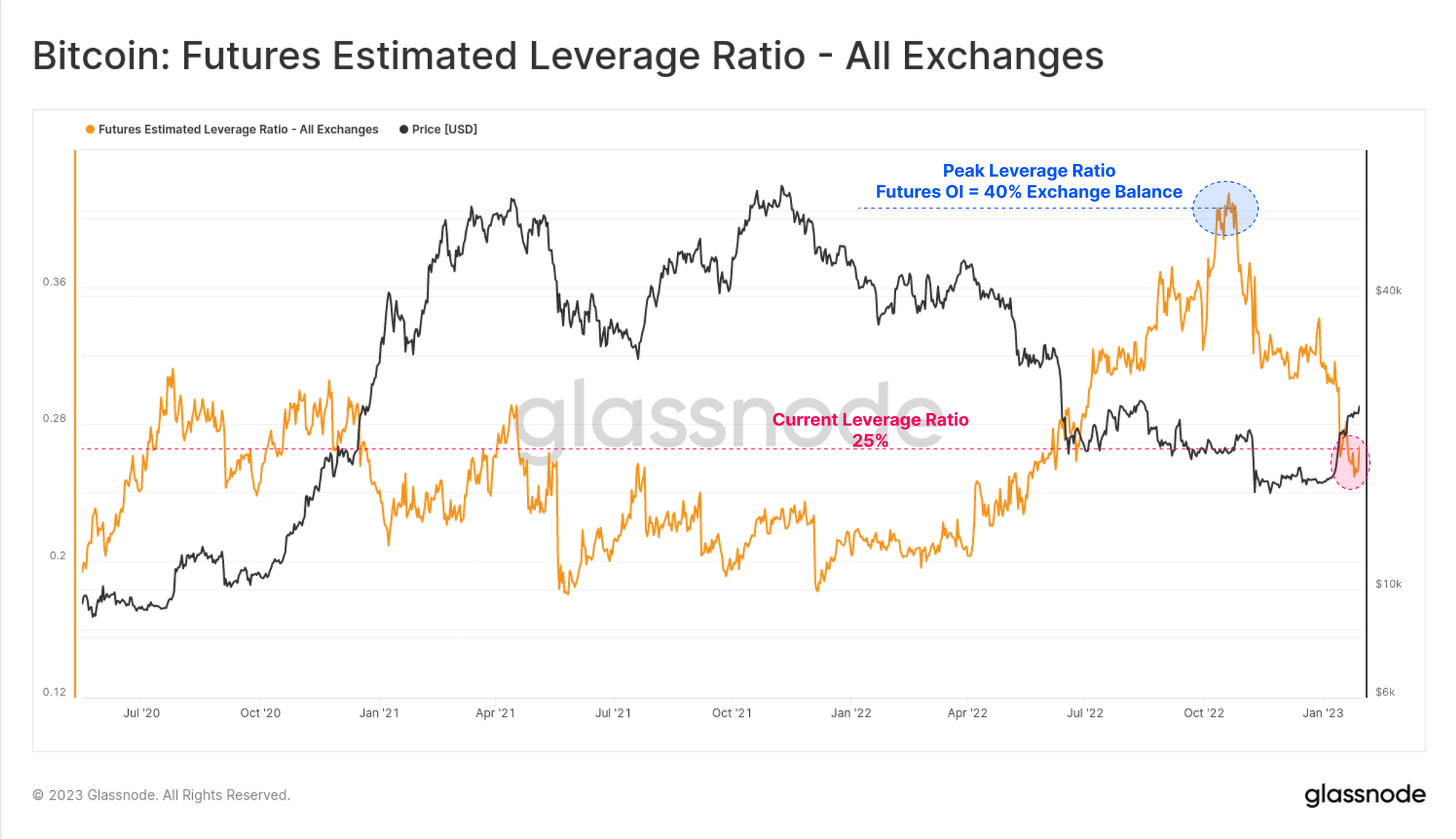
Liquidations led to a reduction in leverage across derivatives markets. Over the last 75 days, the share of open interest (OI) relative to spot-market exchange balances fell from 40% to 25%.
Measured in OI terms, it fell from 650 000 BTC to 414 000 BTC. Analysts noted that 95 000 BTC of the ‘lost’ were on the FTX exchange.
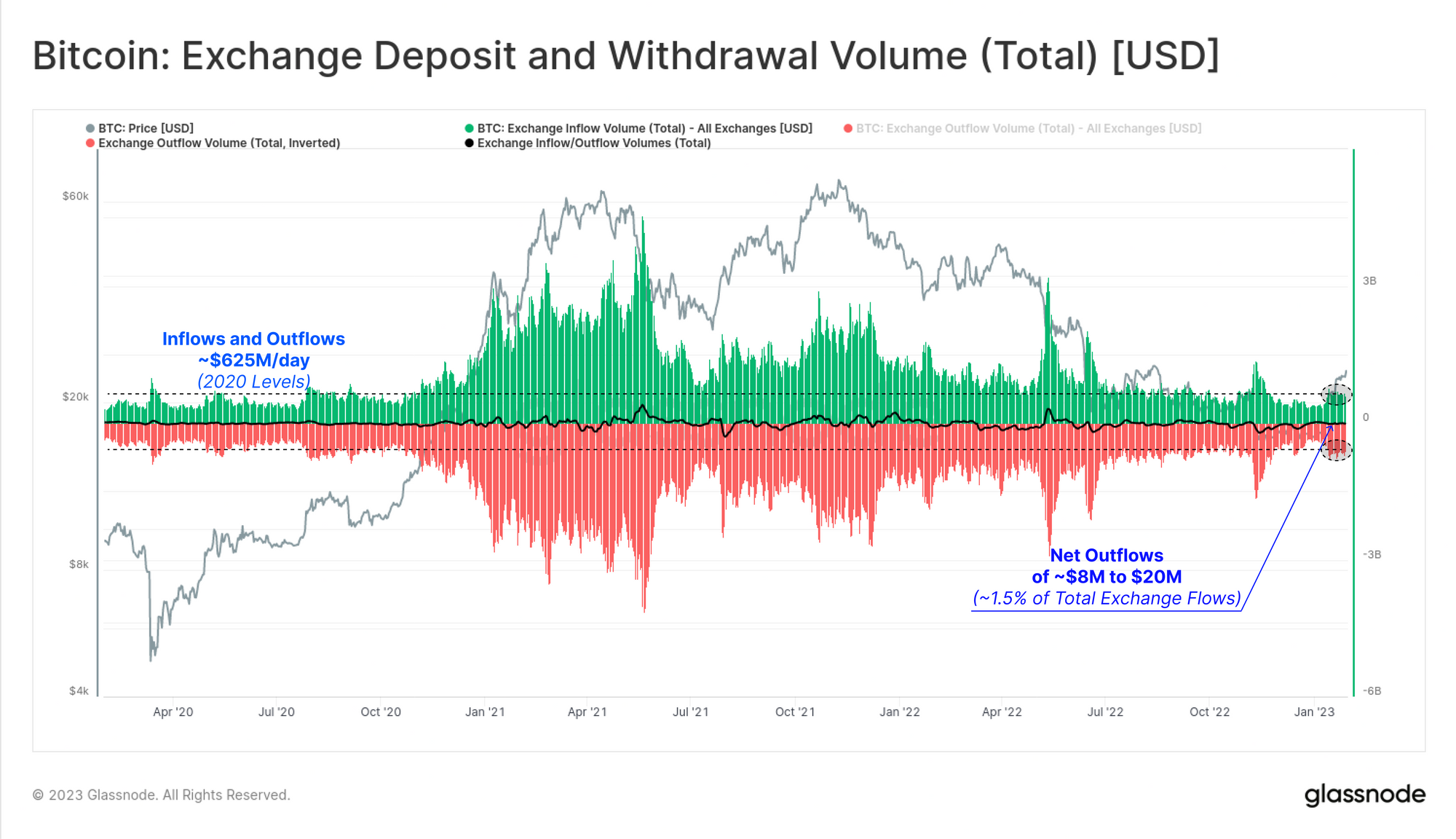
The share of bitcoins on wallets tracked by Glassnode platforms relative to the supply of digital gold fell to 11.7%, the lowest since February 2018. After net daily outflows of $200-300 million in November-December, January stabilised — with average daily inflows of about $20 million.
Between Jan 21 and Jan 27, crypto investment products flowed in $117 million — the strongest since July 2022.
Earlier, LookIntoBitcoin analysts suggested Bitcoin had entered the early stage of a bull market.
Рассылки ForkLog: держите руку на пульсе биткоин-индустрии!