




Following the capitulation waves of May–June 2022, Bitcoin’s price has traded below the Realized Price for a month. Other signals of a bottom formation have also emerged, according to Glassnode researchers.
#Bitcoin is testing the underside of the Realized Price, which has historically been associated with bear market bottoms.
With two deep, and historically large capitulation events in May-June, could a genuine bottom now be forming?
Read our analysis👇https://t.co/jl67cj0yij
— glassnode (@glassnode) July 18, 2022
At the time of the report, Realized Price stood at $22,092, and the market price was $21,069. In other words, the average unrealized loss stood at 4.67%.
Historically, such a divergence pointed to a bottom in a bear market. The duration of this period ranged from seven days (2020) to 301 days (2015). Excluding the first episode, caused by a shock rather than fundamentals, the average duration of the signal is 197 days versus the current 35 days.


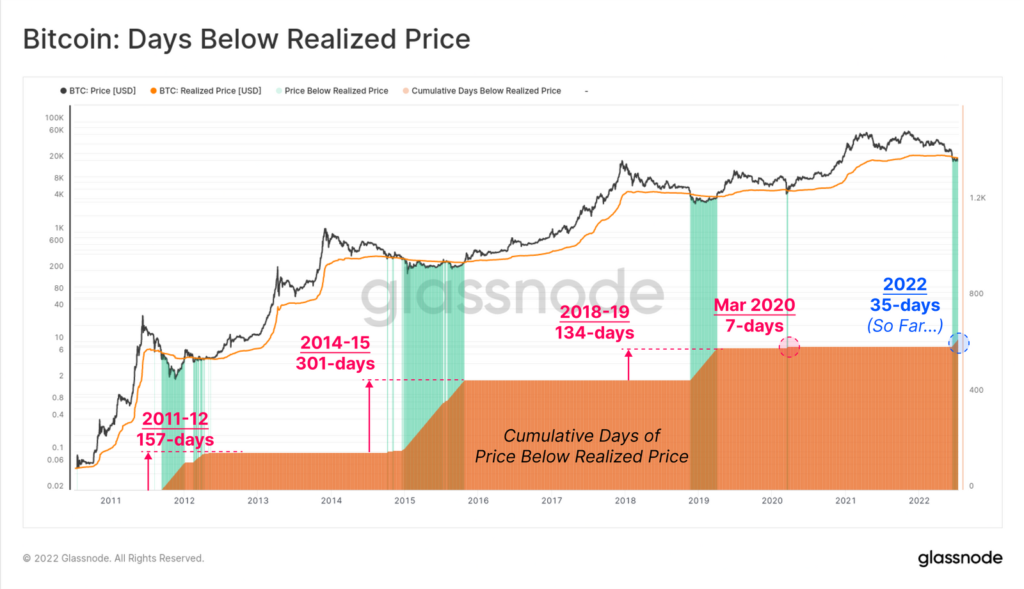
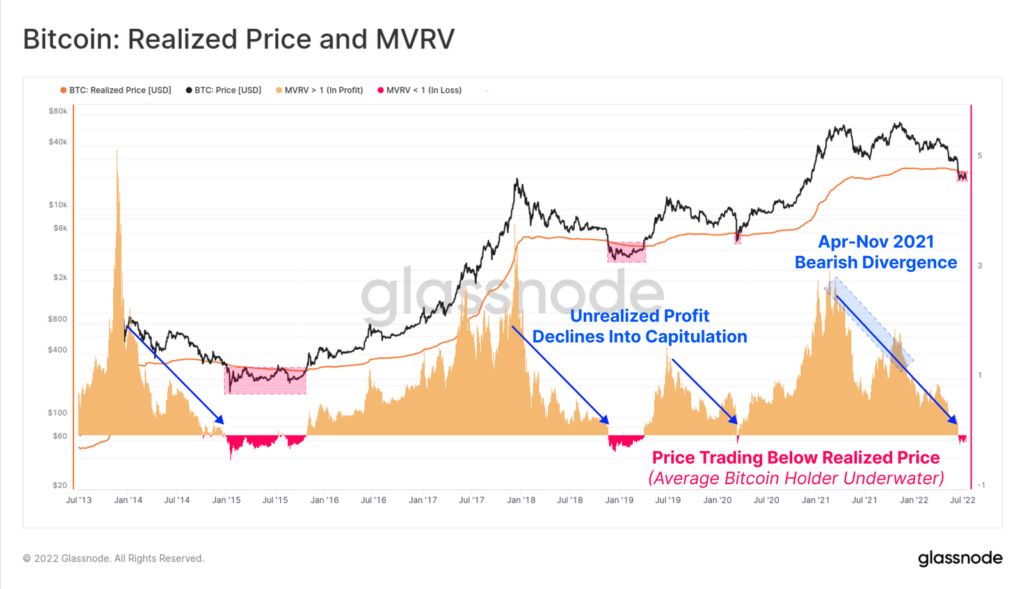
The MVRV indicator is at present not yet at levels typical of previous bear phases — 0.953 versus 0.85 (unrealized loss 4.67% versus 15%) — which leaves room for further price declines and/or more time for consolidation before the bottom is finally formed, the specialists warned. They added that such a situation could also imply greater investor support in the current cycle.
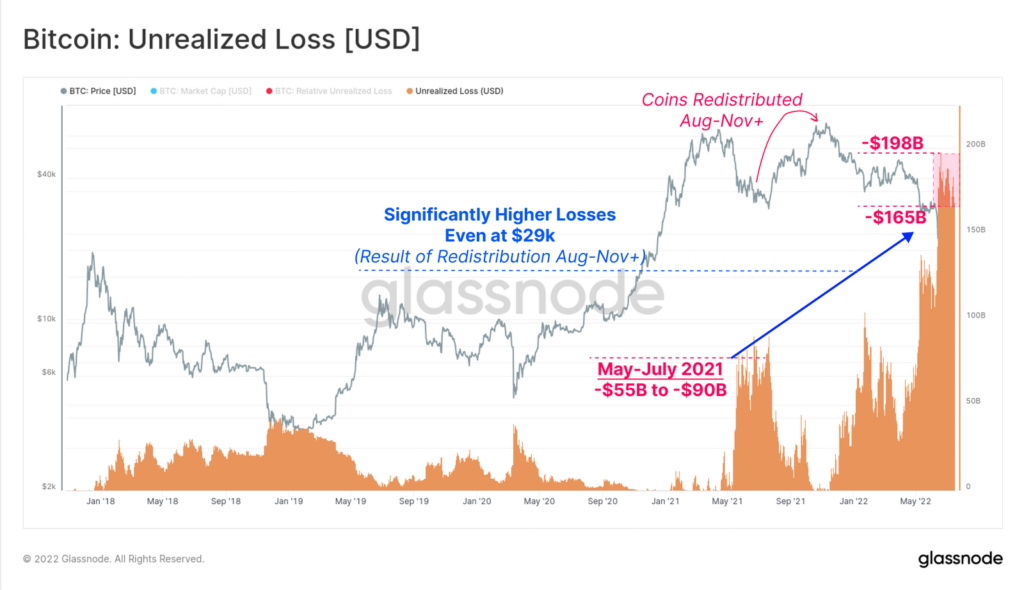
Analysts highlighted coins whose holders bear unrealized losses (those who bought during 2021–2022). In total it amounts to $165 billion to $198 billion, based on the market price range of $17,600–$21,800. This is equivalent to about 55% of Bitcoin’s market capitalization. The figure is higher than in March 2020 and comparable with the 2018 bear market.
A gradual decline in the indicator signals improving hodler profitability. This occurs during capitulations, when unrealized losses transition into realized losses — coins acquire a new lower cost basis with a new owner. When prices begin to rise, these newly acquired Bitcoins shift from unrealized losses to unrealized profits, usually re-igniting a bull cycle.


Analysts used the HODL-waves indicator, dividing held coins into two categories — up to three months (hot money) and longer than this period (hodler money).
They found that the first wave is in a downtrend and has fallen below 20%. From this, the specialists concluded there is strong hodler conviction not to part with coins, and/or a tendency among long-term investors to accumulate Bitcoin, moving them to cold wallets.
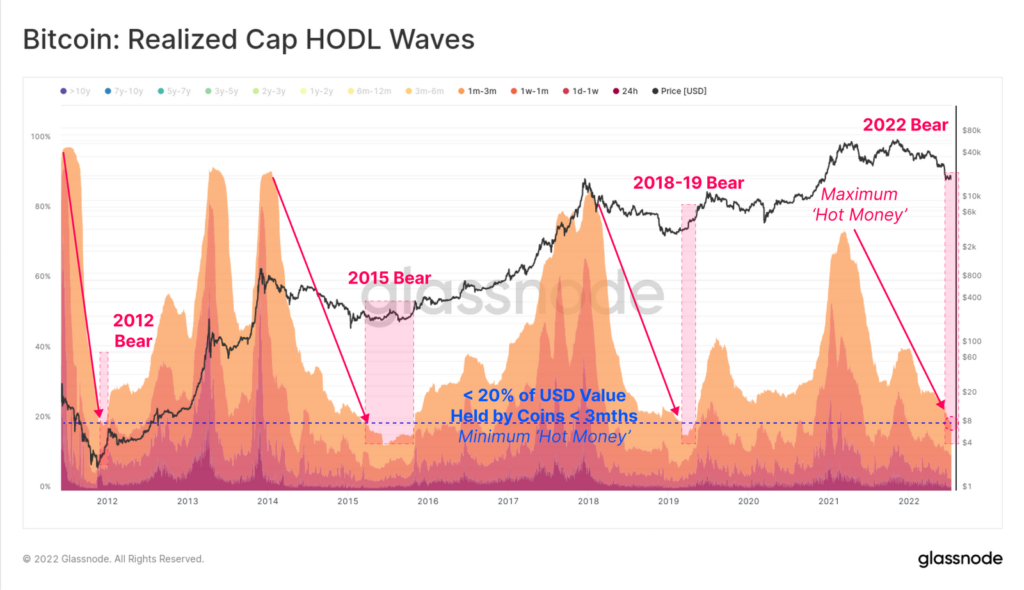
“This is another sign that the market is approaching a point of seller exhaustion”, the analysts concluded.
As noted, Grayscale’s analysts allowed for the end of the crypto winter by the end of March 2023.
In July, Bloomberg strategist Mike McGlone forecast Bitcoin’s rise over the next six months.
Earlier, Ruchir Sharma, head of Rockefeller International, noted that Bitcoin must shed excessive leverage to regain resilience.
Read ForkLog’s Bitcoin news on our Telegram — updates on cryptocurrencies, prices and analysis.