



The Ordinals phenomenon — a protocol for creating the first NFTs on the Bitcoin blockchain — has generated increased load on the network. Analysts at Glassnode disclosed this trend.
The digital asset market has experienced its first significant pullback of the year alongside news of SEC crackdowns.
Simultaneously, the emergence of Ordinals and Inscriptions on Bitcoin creates a new, unexpected demand for blockspace.
Read More Here👇https://t.co/reRjQrlX9H
— glassnode (@glassnode) February 13, 2023
The appearance of Ordinals in late January became possible thanks to the soft fork Taproot. The project uses satoshi serialization to record data in ‘witness’ part of the Bitcoin transaction.
The popularity of the novelty — by the time this overview was prepared there were more than 69 000 NFTs — led to an expansion of Taproot signatures (their share jumped to ATH in 4.2%).
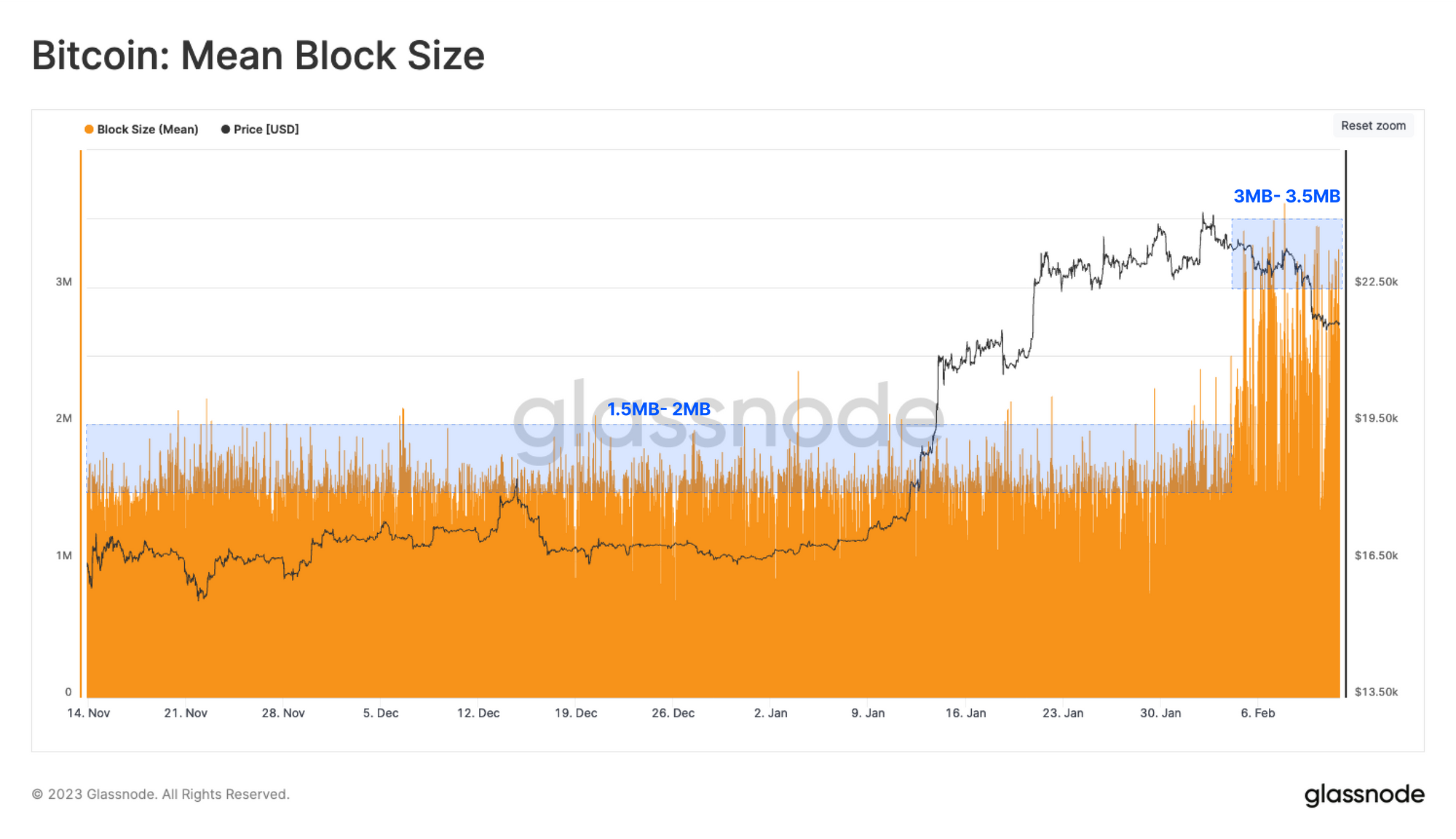
The average block size also rose from a steady 1.5-2 MB to 3-3.5 MB. Arbitrary data in the form of images can occupy space up to the 4 MB limit.


Early supporters of the first cryptocurrency saw the NFT project as an “attack on the network.” In anticipation of a new trend backed by the decentralisation of the first cryptocurrency, users began overloading the blockchain — with copies of Ethereum projects like pixel CryptoPunks and Rocks, audio files and other objects.
So @adam3us invented hashcash as a spam prevention mechanism.
Then satoshi utilized this in #bitcoin to solve double spending.
And now folks waste precious blockspace by spamming jpegs?!
Why creating the #lightningnetwork in the first place if the base layer allows this shit?! https://t.co/okytBt1uof
— Rene Pickhardt (@renepickhardt) February 8, 2023
A large inflow of low-fee transactions — from 0 to 1 satoshi/byte — (highlighted in purple) in the mempool qualitatively differs from the situation amid the panic following the FTX collapse. Back then, users overpaid for “accelerations” (orange).
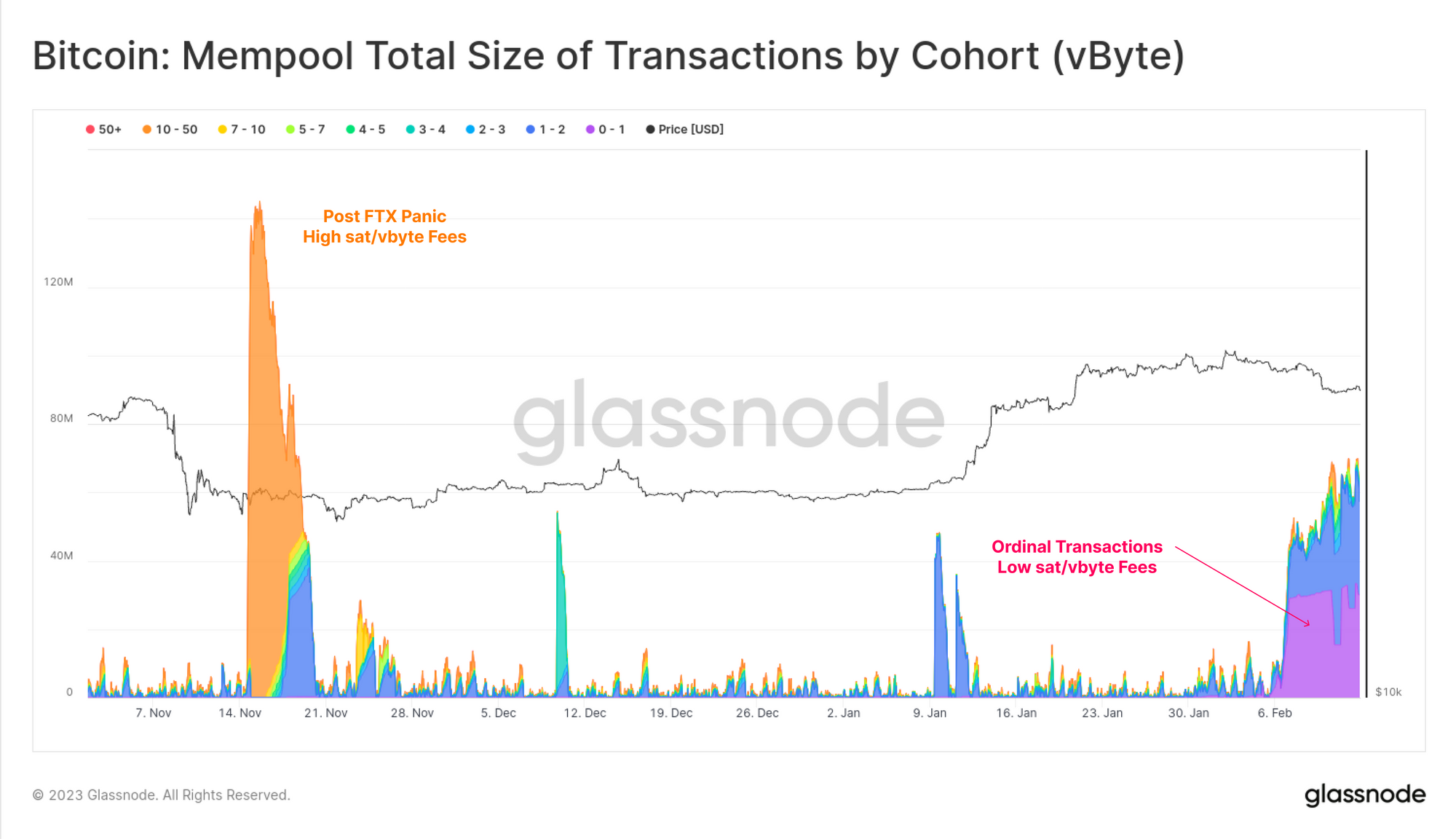
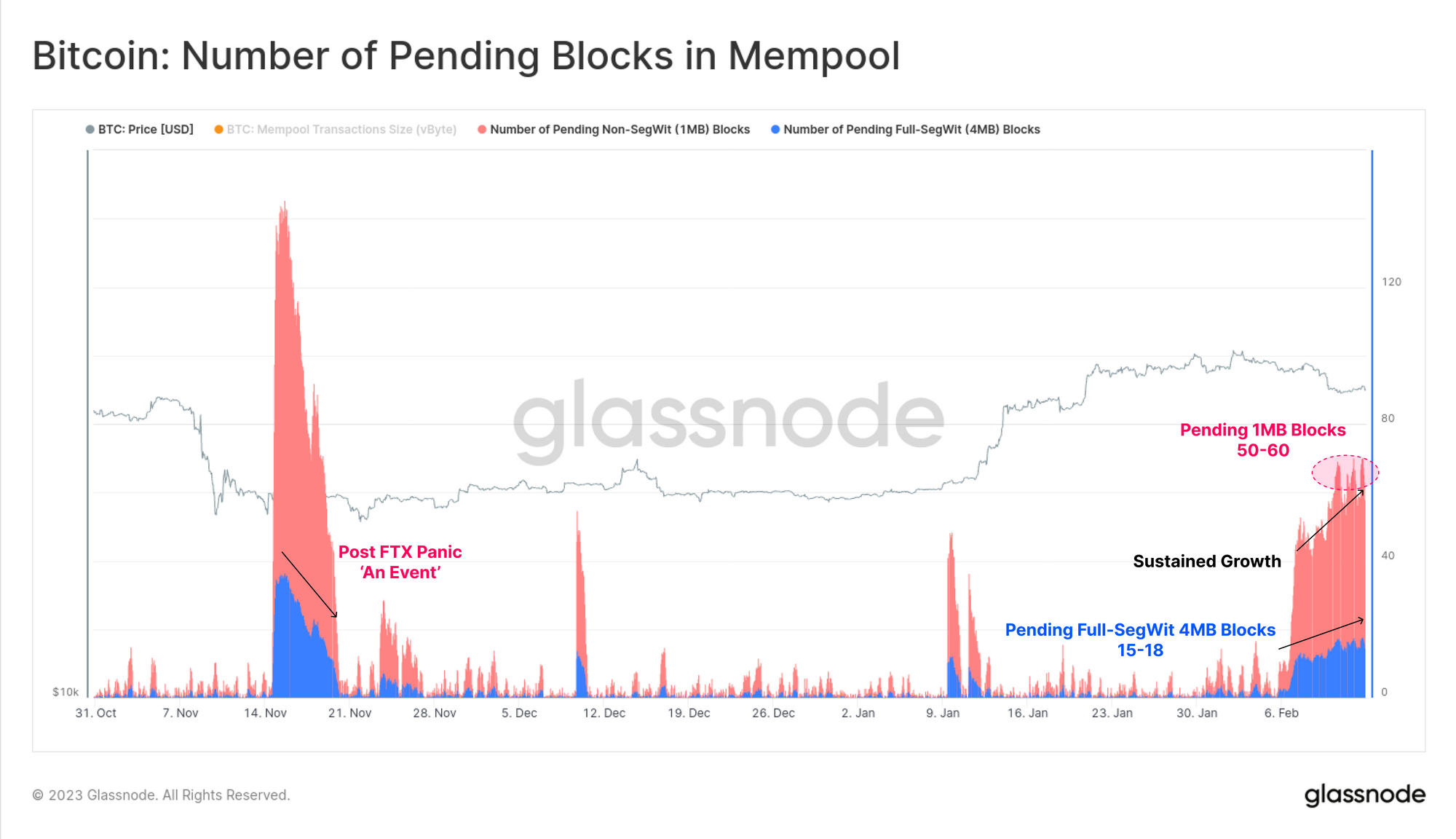
Analysts noted the persistence of the current mempool congestion trend.
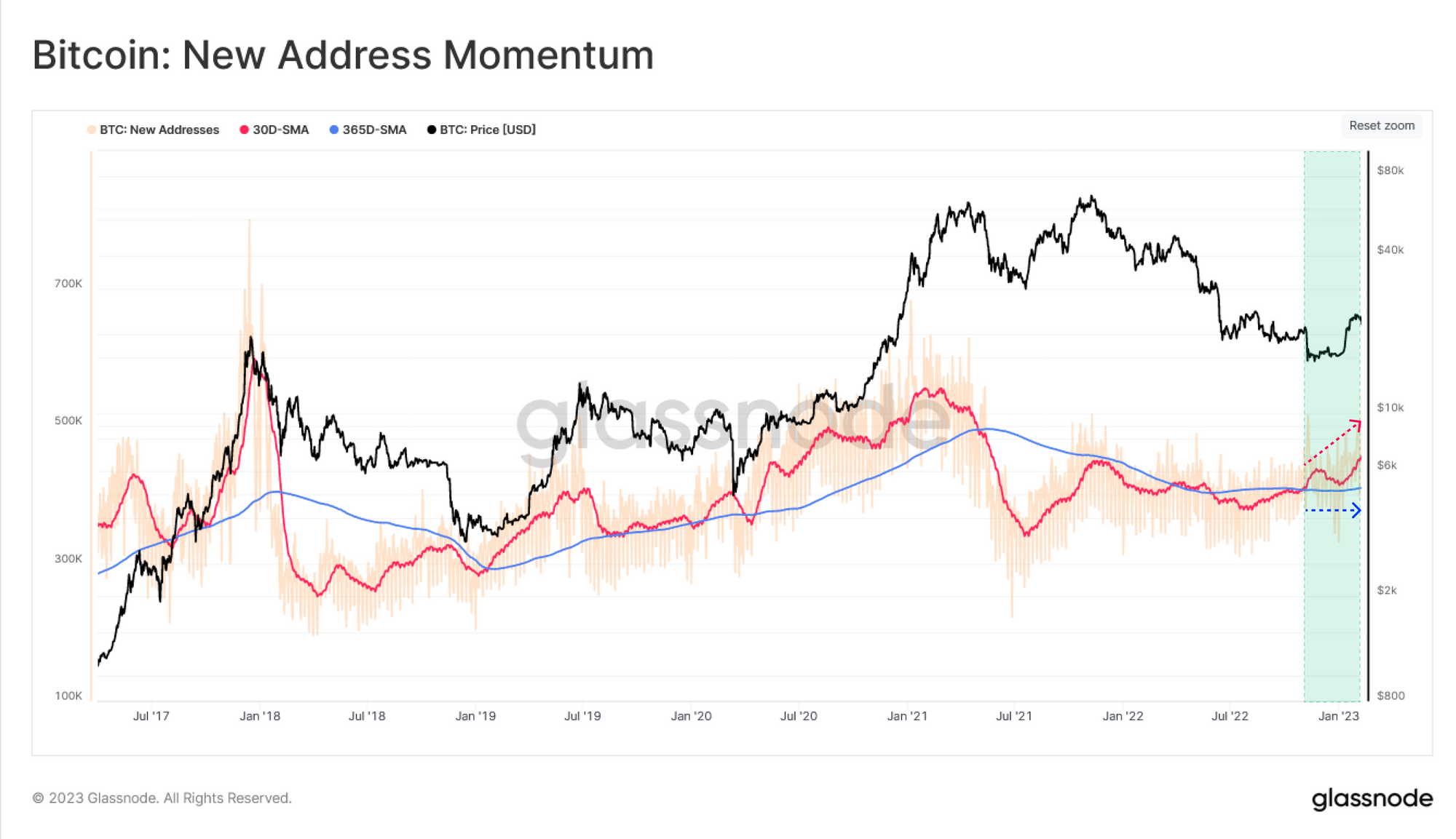
The protocol launch spurred a rise in new addresses. In the metric, for the first time since the FTX collapse, the rolling 12-month average exceeded the yearly average.

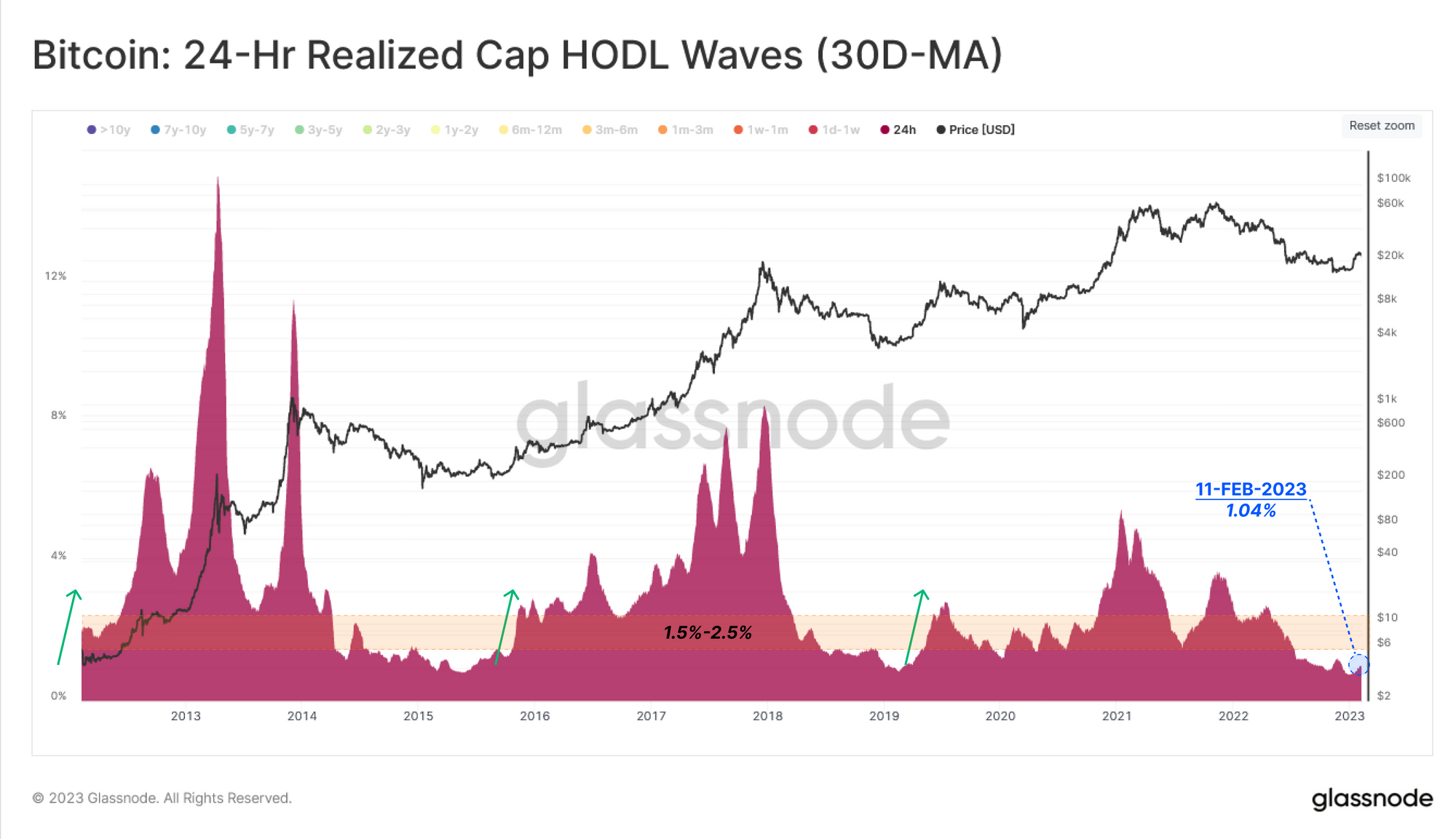
The surge in activity among Bitcoin users has had only a modest effect on the volume of BTC moved on-chain. The Realized Cap HOLD Waves indicator for coins aged up to a day rose to 1.04%, but did not breach the threshold range of 1.5-2.5%.
“Network activity is growing, but it has not yet correlated with a large overvaluation of coins bought at higher or lower prices. In other words, there is a low degree of Bitcoin changing hands in dollar terms,” the specialists explained.
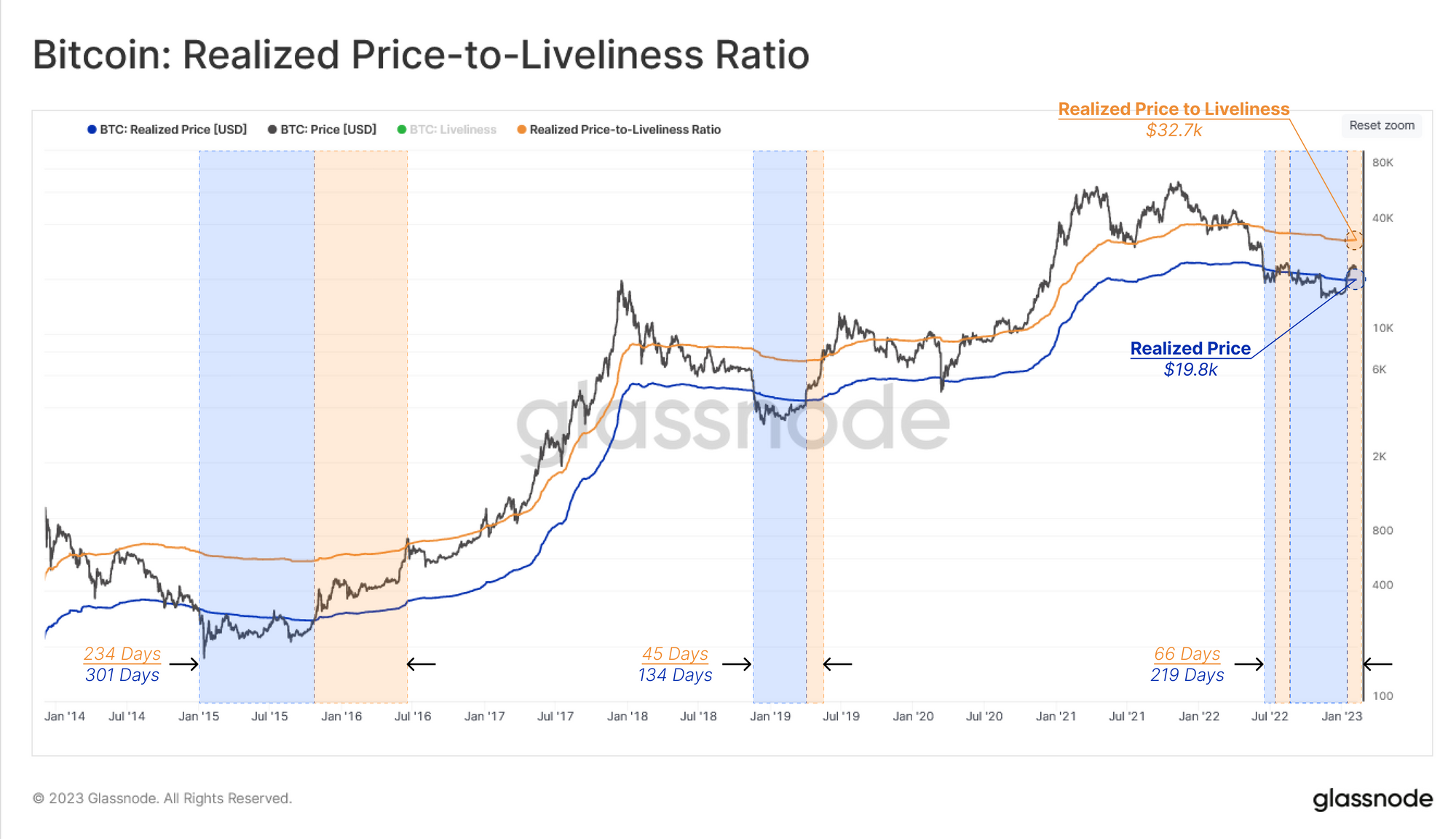
Experts noted the development of the transition phase of the first cryptocurrency from bear to bull after its market value surpassed its realized price.
The latest, at present, forms support around $19,800. The resistance is the ratio of realized price to Liveliness (the dynamism of hodlers) at about $32,700. The current situation clearly resembles the periods of renewed coin accumulation in 2015-16 and 2019, the analysts added.
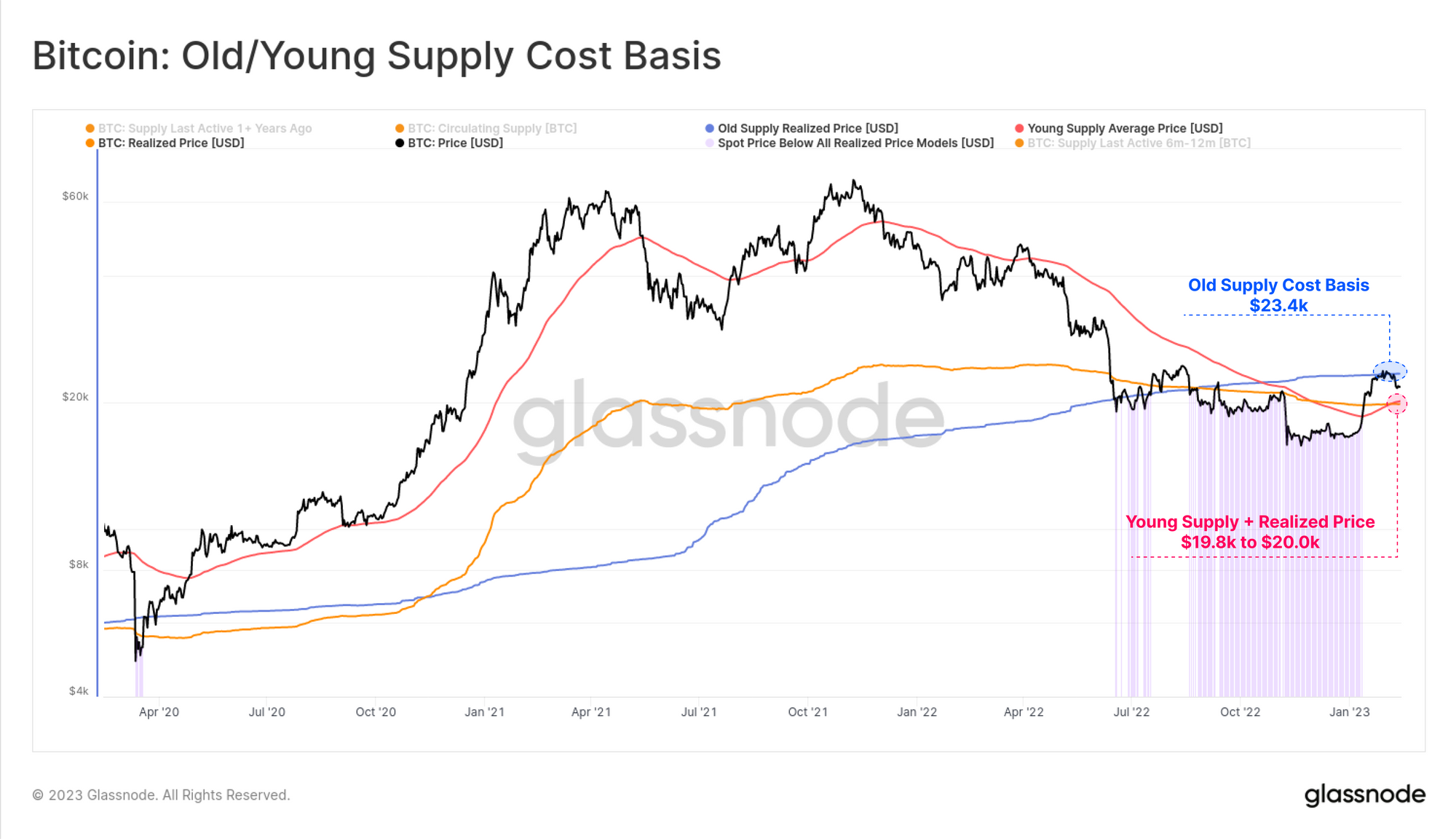
As additional guides, analysts cited the cost basis of older coins (aged six months) at $23,400 and the same metric for younger Bitcoins (purchases over the last six months) near $20,000.
Earlier on the daily chart, moving averages formed a “golden cross” — a precursor to a positive trend.
As noted by Adam Farthing of B2C2, for the rally of the first cryptocurrency to continue it must clear the important level at $25 000.