




The four-year-cycle thesis has broken down, giving Bitcoin a chance to set new highs in 2026, according to a Grayscale report.


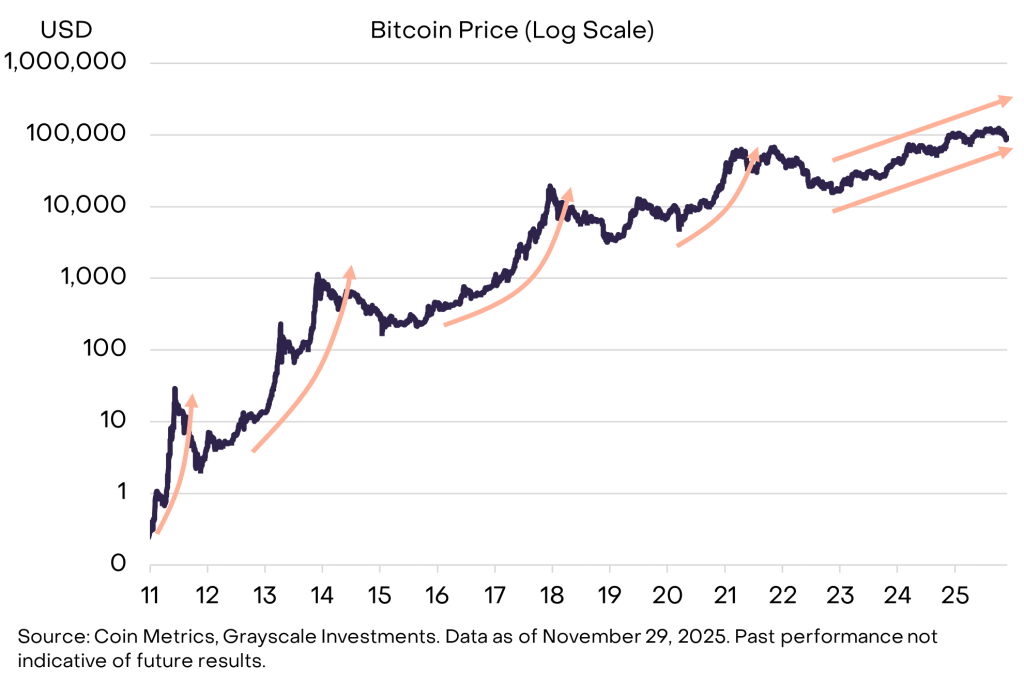
Bitcoin has been in a deep correction since October, but that does not imply the start of a multi‑year bear market, the firm’s analysts argue. Drawdowns of 25% or more are common in bull markets and are not necessarily a sign of their end.
To support the claim that crypto no longer follows “four‑year principles”, analysts offered three arguments.
- Unlike previous cycles, there has been no parabolic rise in bitcoin’s price that would point to an overbought market.
- The industry’s structure has changed: new capital is mainly entering via ETPs and treasury companies rather than retail exchanges.
- The overall macroeconomic backdrop remains supportive for riskier cryptoassets.


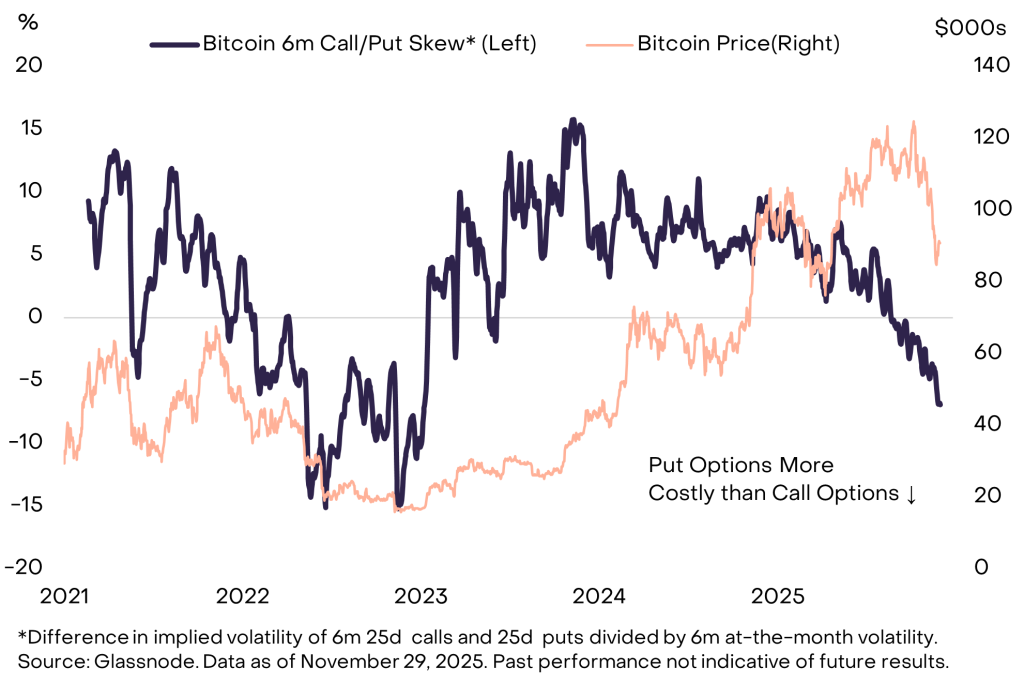
“There are already some signs that bitcoin and other coins may have bottomed. For example, the skew toward put options on BTC is very high, especially for three‑ and six‑month positions. This means investors have already actively hedged downside risks. The largest DAT also trade at a discount to the value of the cryptocurrency on their balance sheets, which may also indicate modest speculative positioning (often a precursor to a recovery),” Grayscale noted.
However, some indicators still point to “cool” demand:
- open interest in futures kept falling in November;
- flows into exchange‑traded products were negative through late November;
- early bitcoin holders increased selling.

A supportive macro climate
In many respects this year has been “exceptionally good” for digital assets, helped by regulatory progress, the analysts said. That has spurred a wave of institutional investment that is likely to underpin long‑term growth.
In the short term, the key driver will be the US Federal Reserve. The main event now is the policy‑rate decision at the meeting on 10 December.
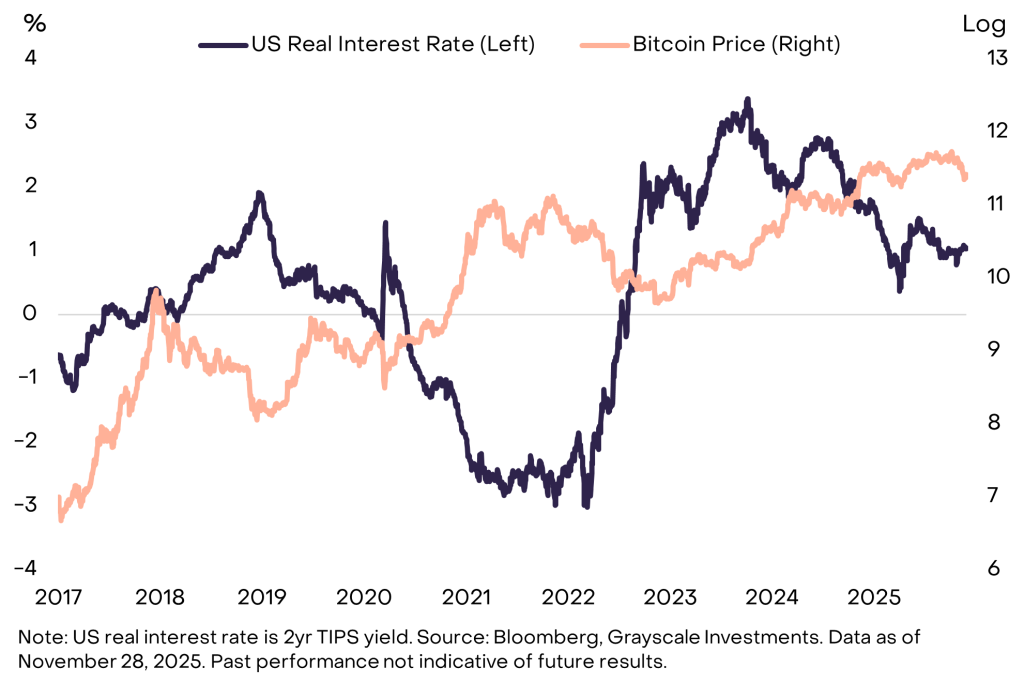
“All else equal, lower real interest rates should be considered negative for the value of the US dollar and positive for assets that compete with the dollar, including physical gold and some cryptocurrencies,” Grayscale specified.
Another potential catalyst could be further bipartisan efforts to craft US crypto market‑structure legislation, the experts added. If digital assets “remain a topic of discussion among policymakers and do not become a midterm‑election issue”, that could bring more institutional capital into the sector.
Earlier, experts dismissed a scenario of bitcoin falling to $35,000, but allowed for a drop to $55,000.