




At the start of the year, Solana accounted for over 50% of fees among L1 networks. By October, this figure had fallen to 9%, according to data from The Block.
During the same period, the share of Hyperliquid rose to 40%, while BNB Chain reached 20%. At the time of writing, Ethereum and TRON stand at 7% and 14%, respectively.
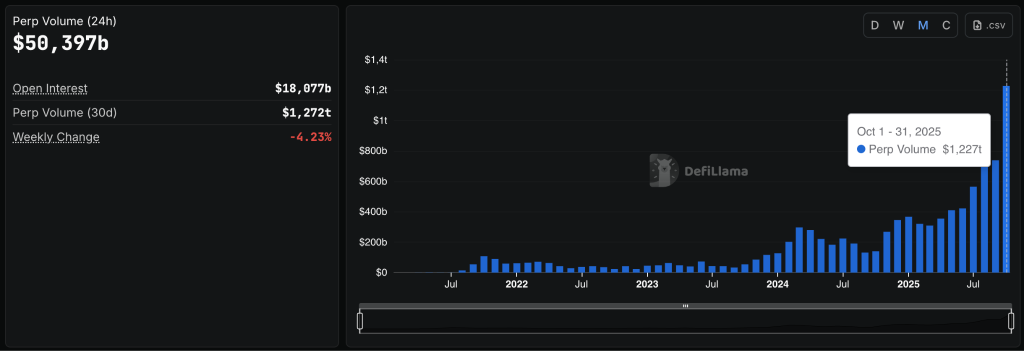
The surge in on-chain activity was driven by the excitement surrounding decentralized exchanges for trading perpetual contracts, which began after the launch of Aster in the BNB Chain ecosystem. The platform quickly became a serious competitor to Hyperliquid.
In less than a month, trading volumes on such platforms surpassed $1 trillion.


Can Solana Regain Its Leadership?
Solana ranks among the top three L1 networks by the volume of stablecoins in circulation. The capitalization of stablecoins on this blockchain exceeds $14.9 billion.


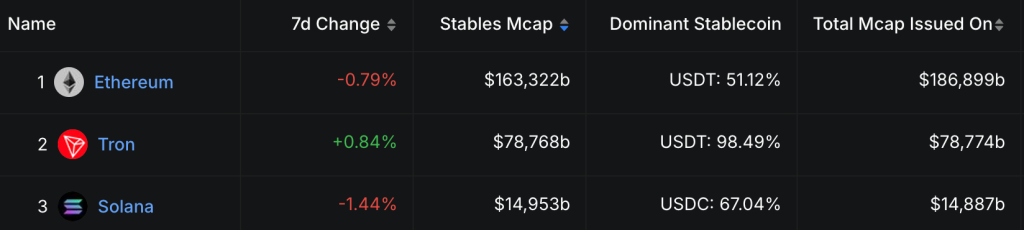
The ecosystem offers USDT, USDC, USDe, USDS, DAI, PYUSD, and many other assets. Solana attracts attention not only from private investors but also from institutional players, including government entities.
On October 28, it was announced that payment giant Western Union will issue the USDPT stablecoin on the network. The release is scheduled for 2026, with Anchorage Digital Bank serving as the custodian.
“Western Union will provide customers access to digital assets, allowing them to send, receive, spend, and store USDPT through a single platform with a seamless interface, utilizing the company’s global compliance and risk management systems,” the press release states.
Previously, the firm launched a pilot project for stablecoin settlements. Its CEO, Devin McGranahan, stated that Western Union was prompted to this decision by the adoption of the GENIUS Act in the United States.