




Laura Shin is an American journalist specialising in the crypto economy and host of the popular Unchained podcast. In 2021 she published The Cryptopians, about Ethereum’s early history, which is now available in Russian. ForkLog spoke with Laura about the lessons the community failed to learn from The DAO’s collapse, how Vitalik Buterin has changed over the years, her dispute with Cardano founder Charles Hoskinson, and more.


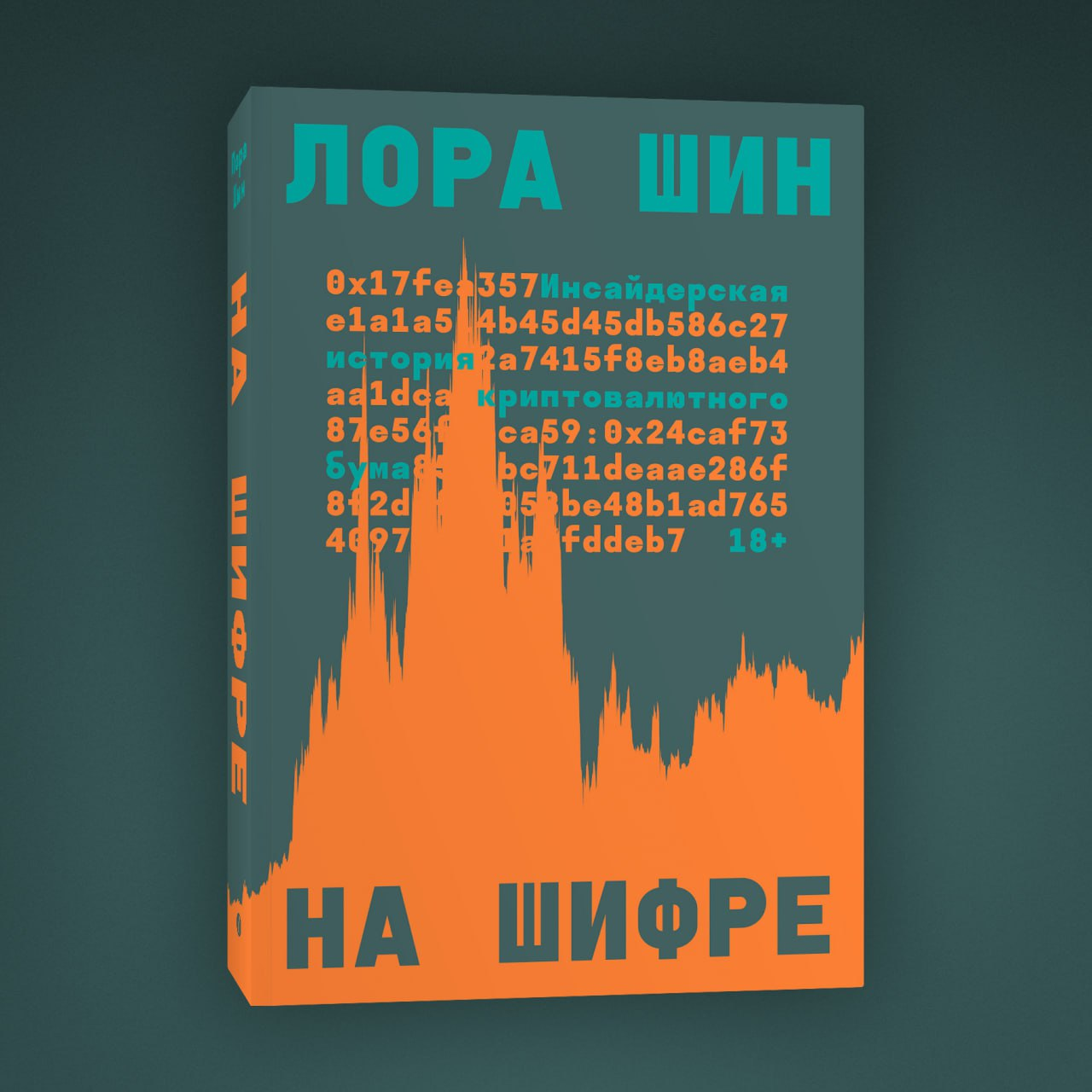
ForkLog: Laura, in your book you recount Ethereum’s early days. We are seeing another bull cycle, which means many newcomers will arrive. Why should they know this history?
Laura Shin: I think understanding Ethereum’s early history gives a good sense of what Ethereum is as a technology and how it differs from Bitcoin. People often speak of Ether as a cryptocurrency, but it is of course far more than a means of payment. Vitalik Buterin’s project is very different from Bitcoin and offers many more possibilities.
That is why so many crypto trends began on Ethereum. The ICO mania I cover in the book, with fundraising campaigns across the world, would have been impossible with “regular money”.
The mass fundraising campaign for Ukraine was possible thanks to blockchain technology. We first saw crowdfunding on that scale back in 2017. The next bull run, with the NFT frenzy, also started on Ether.
Ether has been the foundation for innovation in crypto, so the story of its creation helps to explain not only the technology but also its darker sides.
As I show in the book, many of those around Vitalik—who genuinely had an idealistic vision of helping people—were driven by self‑interest.
So yes, Ethereum’s early history helps explain both the hopes and the hazards of these technologies.
ForkLog: The human dimension is crucial in the book. You constantly show that imperfect people stand behind technical decisions. That offers a realistic picture of how the industry works.
Laura: And not only that—it is striking how quickly the technology changes people’s lives. I have covered blockchain for nine years and have accumulated countless stories of ordinary people suddenly coming into a lot of money.
One of the protagonists in my book is Taylor Monahan, who was doing graphic design for about $50 an hour. Then she became interested in Ether, half by chance joined a friend in the Ether crowdsale, and her life changed dramatically. Taylor and a friend started building a crypto wallet: I describe how they looked for a cheaper domain name and settled on MyEtherWallet, which cost them about $10. They are very wealthy today.
The reverse also happens all the time. Enormous sums are stolen; the industry is rife with scams.
People often talk about the neutrality of technology—it can be used for good or ill—and my book offers many examples of both.
ForkLog: Speaking of imperfect people. You write a lot about Charles Hoskinson’s early role at Ethereum. Did you have trouble with Cardano fans after publication?
Laura: I did. Charles Hoskinson wrote that my book is fiction. It is interesting he chose those words, because I interviewed around 200 people for the book, and many recalled fantastical stories Charles told about himself. For example, he hinted to some early Ethereum team members that he was in fact Satoshi Nakamoto. He did this both privately and in company; I heard it from several people.
There were other cases where he was not entirely truthful: he told many interviewers he had dropped out of a PhD programme. I verified such claims with the institutions he cited: one had no PhD programmes at all; at another he was enrolled as an undergraduate. I asked him for comment—we even scheduled a call to discuss all these points—but he did not show up.
Cardano fans still come into my comments, criticise me and try to troll me. Frankly, I find it surprising, because it is trivial compared with what I managed to uncover in the book.
ForkLog: Before the book you were already a well‑known journalist in the industry. How did writing it change your understanding of the space?
Laura: Honestly, I knew almost none of what ended up in the book—my understanding deepened in virtually every direction. First, on the technical side: earlier I could hardly have explained how Ethereum works.
I hardly knew Vitalik and had never done long interviews with him. And I learned a lot about people without big names who mattered in Ethereum’s early development. They did not hold lofty titles but had a significant influence on Ether, so I am glad I was able to include their stories.
ForkLog: Open data—Twitter and Reddit posts, chat messages, plus on‑chain analysis—play a huge role in your book. What is your favourite story you could tell thanks to on‑chain data?
Laura: The investigation into The DAO hack. Some context: a global fundraising campaign was launched to create The DAO—the largest in history. But there turned out to be a vulnerability in the smart contract that let the attacker steal 31% of the Ether sent to The DAO’s address—that was 5% of all existing ETH. This was probably the biggest crime in blockchain history.
I had nearly finished the book, with a list of suspects I planned to publish as such. Then a man from Brazil, who was working on recovering the stolen funds, contacted me. Brazilian authorities had opened an investigation into him, assuming he was the hacker, and he wanted to compile a report to prove his innocence. As such endeavours are expensive, he decided to reach out to me.
We traced all the hacker’s transactions. What happened was this: after the Ethereum fork two different coins appeared; on the new chain they essentially unwound Ether’s history up to The DAO exploit, while on the original chain the stolen funds stayed with the hacker. But because that chain was not very popular, there was little they could do with them. The hacker tried to convert the stolen Ether to bitcoin using platforms with no KYC.
We analysed the transactions and found an intriguing detail: I found messages the hacker had left. They were in very good English—it was clear the person spoke it day to day. The times when he tried to convert Ether to bitcoin pointed to Asian time zones—Australia, for example.
After receiving bitcoin, the hacker tried to obfuscate its origin using the Wasabi mixer, but we were able to trace transactions leading to several exchanges. I cannot say how I obtained this information, but the hacker then converted the bitcoins into the privacy coin Grin and sent them to his wallet, which had a human‑readable address—something like grin.toby.ai.
The person behind that handle was quite deeply involved in The DAO as a user. He wrote many posts on the topic and, most interestingly, he wrote to the developers about that very vulnerability, which they did not take seriously enough. I am confident he ultimately exploited it. I contacted him—he denied involvement, promising to reveal “certain details”, but eventually stopped responding to my messages.
ForkLog: Do you think The DAO incident was inevitable?
Laura: I think the idea of DAOs will ultimately be realised. But this implementation was awful. The ideal of decentralised autonomous organisations has yet to be realised; whales can easily manipulate votes. So we cannot speak of true democracy, and even the decentralisation is in doubt.
I do not believe in the maxim “Code is law”. Vitalik wrote about this the day after The DAO hack. His point was that if the code does not do what its creators intended, we should try to close that gap. The crypto community is working on this. But hacks still happen; vulnerabilities that were known and not fixed are constantly exploited.
So it is hard to say the lessons of The DAO have been learned. I would say the DAO idea was premature: we needed to solve many technical issues before decentralised autonomous organisations could function as envisaged.
ForkLog: In one interview you said your book is a coming‑of‑age story. It is not only about the industry’s maturation but also Vitalik Buterin’s. When this began he was very young and had no management skills. How did the events you describe affect him?
Laura: Yes, when Vitalik started he had a very naïve view—he did not really recognise when people were lying to him. Many I spoke with believe he is somewhere on the autism spectrum. Now, I think he understands himself much better and, importantly, has a circle of like‑minded people around him. Before, he was simply thrown into a world of people many of whom sought to use him. To be fair, many succeeded. So he had to spend a lot of time learning whom he could trust and whom he could not.
ForkLog: There is a common belief among early crypto enthusiasts that the industry has been corrupted—big money came in, regulation increased, as did centralised projects. Is there still room for idealism?
Laura: I think so. As I said at the start, the industry has many sides. It is like the internet: we have videos of people taking their own lives live on air; bad actors use the internet for doxxing or online bullying; there are many dark sides.
But if we look at blockchain’s origin, the Bitcoin white paper was published in the middle of the 2008 financial crisis. We also saw movements like Occupy Wall Street. And I think blockchain allows people to realise some of their ideas. I do not know how well that works in the US, given regulators constantly push the crypto world toward centralised structures. But even if the US is far from any crypto‑utopia, we see the technology’s positive effects in different corners of the world.
Americans are very privileged in this sense. The dollar is the global reserve currency, so it is easy to say Bitcoin makes no sense. But people in Argentina, Afghanistan or Zimbabwe understand well why cryptocurrencies are needed. They do not live in places where governments manage economies well; they lack first‑world financial services. I had two women entrepreneurs from Afghanistan on my podcast, one of whom entered the industry very early—in 2013. They ran small blogs and simply had no bank accounts to monetise their content. And even if they had, male relatives would have controlled them. So they received their payments in Bitcoin. One woman, in a toxic marriage, was able to save enough money to leave her husband.
There are countless ways blockchain can help people, but of course the technology must become more accessible—there is still a lot of work to do before it becomes mainstream.
ForkLog: Ethereum has, in fact, made blockchain significantly more complex for the average user. Today the Ethereum infrastructure looks like a vast technological stack that can overwhelm the uninitiated.
Laura: And not only the average user. It scares me too.
ForkLog: What do you make of the fact that we have not seen blockchain’s early promises fulfilled? A “decentralised Uber” never appeared. To what extent did The DAO’s collapse slow development in that direction?
Laura: It is a hard question. Indeed, after The DAO’s collapse the reputation of decentralised organisations was tarnished. But the initial fundraising success triggered the ICO craze—people realised they could raise vast sums in a very short time.
The original idea behind The DAO was to fund start‑ups like a decentralised Airbnb, with “door locks” opened by transactions on Ethereum. But after The DAO people began to understand that there are big issues with user experience—and that is a huge task in itself. And when you try to tie blockchain to real‑world things, everything becomes even more complicated. If so much scamming happens on‑chain, imagine what happens when you bring off‑chain things into it. I think it will take 10–20 years for everything to work properly.
The DAO’s collapse helped people understand how much more foundational work is needed before we can build cool, futuristic stuff.