


Researchers at the Massachusetts Institute of Technology (MIT) have developed an AI model to identify ambiguous results in medical images.
According to the developers, even with the use of neural networks for diagnosing diseases from X-rays or MRI data, there is always a risk of errors. This is due to the possibility of images being blurry or containing artifacts.
“Having a digital assistant can aid in decision-making. The mere detection of uncertainty in an image can influence a doctor’s conclusion,” noted MIT computer science candidate Marianna Rakich.
The method is based on segmentation—a process in which medical images are divided into separate areas and thoroughly examined to identify potentially dangerous sections.
Named after the Greek goddess of chance, the AI model Tyche employs Bayesian neural networks, which are capable of handling uncertainty. These networks are trained on a dataset of medical images labeled by expert physicians.


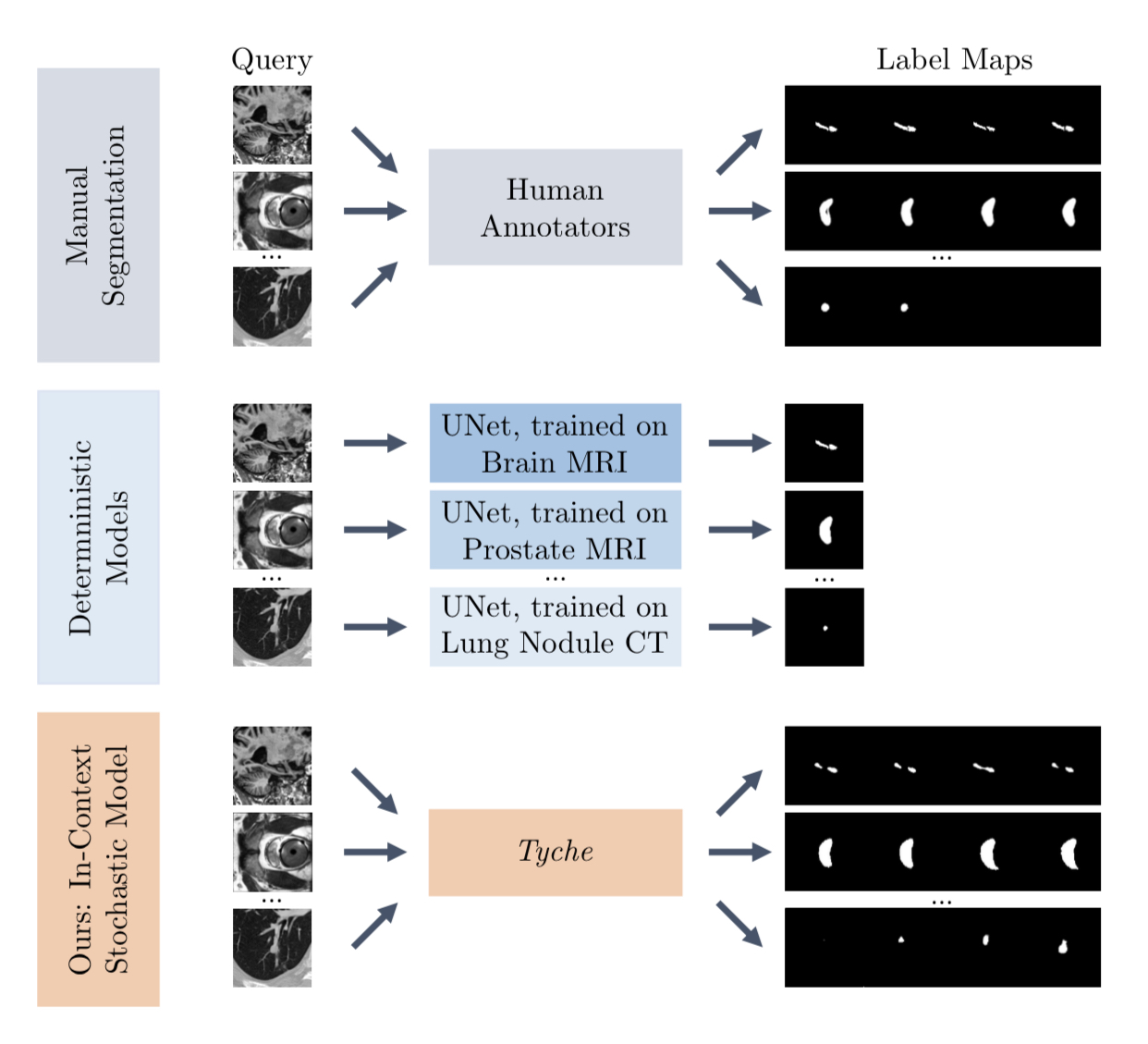
MIT’s neural network offers several advantages over other AI methods:
- it diagnoses diseases more accurately by accounting for uncertainty in images;
- it generates fewer false positives;
- it allows doctors to better understand how the AI reached its conclusion.
The new model could have numerous applications in medicine. It can assist doctors in more accurately diagnosing cancer at early stages and predicting disease outcomes, aiding them in making more informed decisions. Additionally, Tyche enables researchers to develop new treatment options.
Earlier, Google Cloud and German medical company Bayer announced the creation of an AI platform to help radiologists make diagnoses more quickly.
Back in March, scientists at the University of Ottawa reported the implementation of a neural network for detecting cardiovascular diseases in their work.