




The growing use of yield-bearing tokenised US Treasuries as collateral for margin trading is opening “new channels of risk transmission” between markets, Cointelegraph reported, citing Moody’s.
Experts say the trend also raises the likelihood of “cascading effects” in decentralised finance (DeFi).
Tokenisation converts real-world assets into digital tokens on a blockchain. In the case of Treasuries, such coins represent on-chain claims on government debt and can be viewed as an alternative to money-market fund shares. The combined capitalisation of tokenised securities is about $7.4bn.


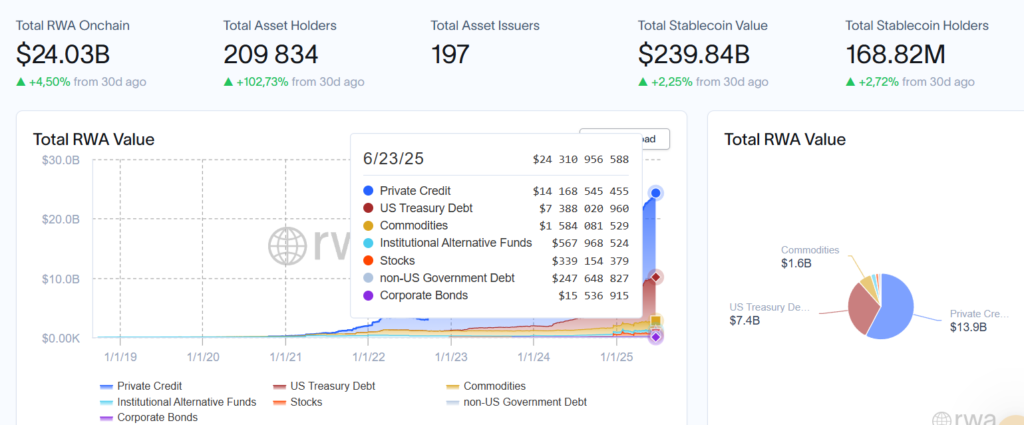
Most RWA assets have been issued on Ethereum:


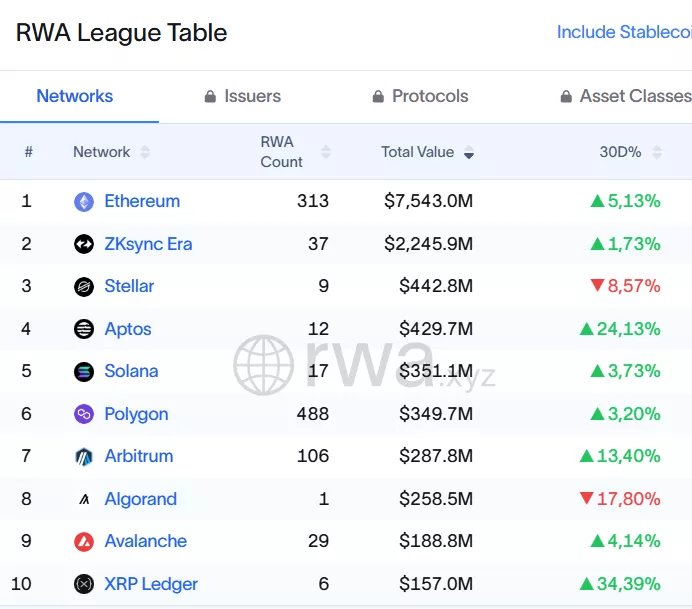
Moody’s June report notes that short-term liquidity funds are considered low-risk assets, but they are not entirely safe:
“Tokenised liquidity funds, in addition to the traditional risks inherent in short-term investment instruments and money-market funds—such as credit, interest-rate and liquidity risks—are subject to additional threats associated with the use of new technology.”
One such risk relates to margin trading, which uses the LTV ratio—the ratio of borrowed funds to collateral. If the value of the collateral falls below a set threshold, the position is either liquidated automatically or the trader is notified to post additional collateral.
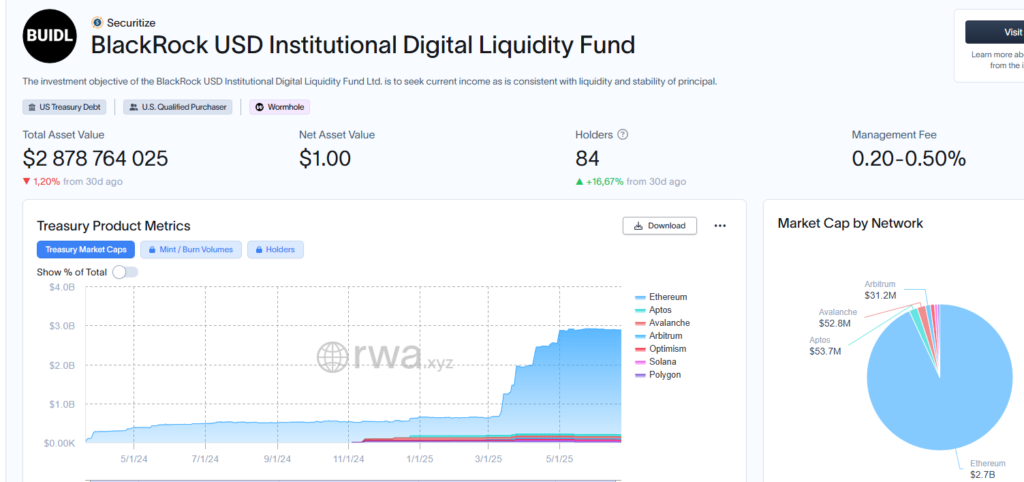
In June, exchanges Deribit and Crypto.com were among the first to begin accepting tokenised US Treasury funds as collateral for leveraged trading. Both platforms integrated BUIDL—a money-market instrument from BlackRock tokenised with the participation of Securitize.


In a presentation to the Treasury Borrowing Advisory Committee, US Treasury officials noted that tokenisation could become a channel for transmitting volatility to traditional markets as such assets grow. In stress, the “seamless interconnectedness of ledgers” could amplify negative effects—widespread sell-offs and deleveraging could “quickly spread to other asset classes”.
Holders of tokenised Treasuries face a number of additional risks, including de-dollarisation in foreign countries, changes in fiscal policy, potential liquidity issues, shifts in rates, and so on.
Zumo founder Nick Jones told the outlet that caution is needed to avoid systemic failures.
“Effective risk management, expected tightening of regulation and transparency will be key factors in reducing risks amid the convergence of traditional and decentralised finance,” the expert noted.
A new phase
Tokenised Treasuries are becoming a key instrument for institutional investors moving into on-chain finance. Yet, against growing risks tied to US fiscal policy and geopolitical instability, market participants are increasingly considering gold and property in RWA form as alternative stores of value.
Treasury yields jumped after US President Donald Trump announced “liberation tariffs”. Investors responded by selling government bonds.
“Ultimately, bond yields depend on the government’s ability to pay its debts. As its creditworthiness declines, yields rise,” said economist and author of the book “The Bitcoin Standard” Saifedean Ammous.
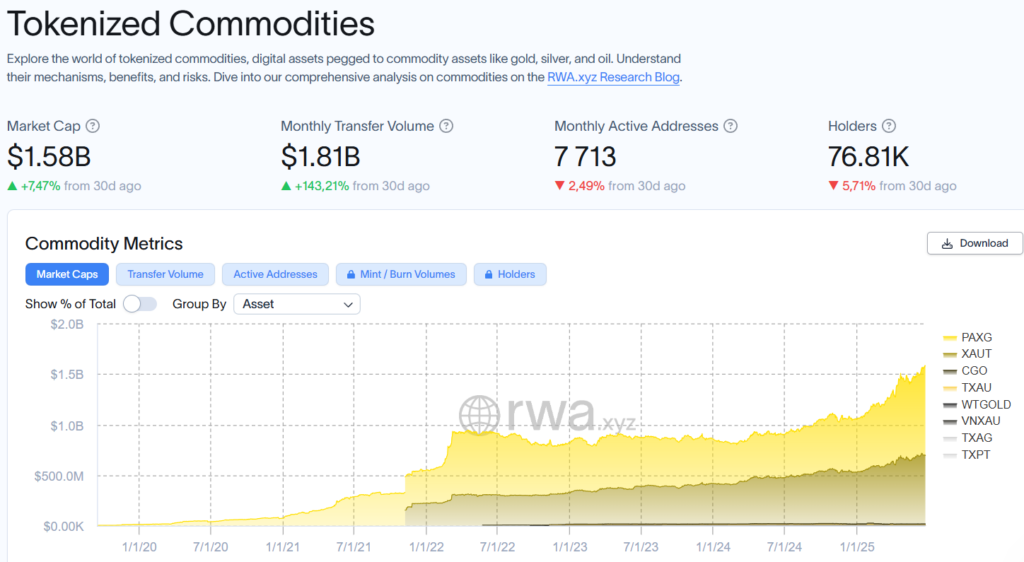
Inflation, geopolitical tension and growing doubts about US creditworthiness have strengthened demand for RWA backed by real estate, gold and other exchange-traded commodities.


“Tokenised Treasuries give institutions a way to deploy capital into low-risk, yield-bearing assets. However, that is not enough for investors in such funds,” said RAAC founder Kevin Rusher.
He also noted that the next stage of the RWA segment will be the tokenisation of physical assets. In particular, real estate can provide a stable cash flow.
Tokenised gold can be used to generate yield through lending mechanisms. Such assets also work as collateral for sourcing liquidity in DeFi.
Since the start of 2024, the capitalisation of the RWA segment has grown by more than $100bn.