




The Cambridge Centre for Alternative Finance presented the annual — the third — study of the global cryptocurrency market. The study gathered data on the operation of crypto services and their clients. They surveyed 280 companies across 59 countries.
Forklog publishes the key findings.
- Worldwide there are 101 million cryptocurrency users and 191 million accounts on crypto services.
- The overwhelming majority of cryptocurrency investors are retail.
- Over three years, the number of crypto services supporting fiat currencies has grown substantially.
- Among the main trends named by industry participants are staking, stablecoins and DeFi.
- Hydropower remains the main source of energy for mining.
How many cryptocurrency users are there worldwide
As in previous reports, the researchers offered their estimate of the total number of cryptocurrency users, based on data gathered during the survey. They estimate that in 2020 this figure stood at 101 million people (the number of accounts on crypto services being almost twice as high at 191 million). This is 189% higher than the year before (35 million), and 20 times higher than in 2016.


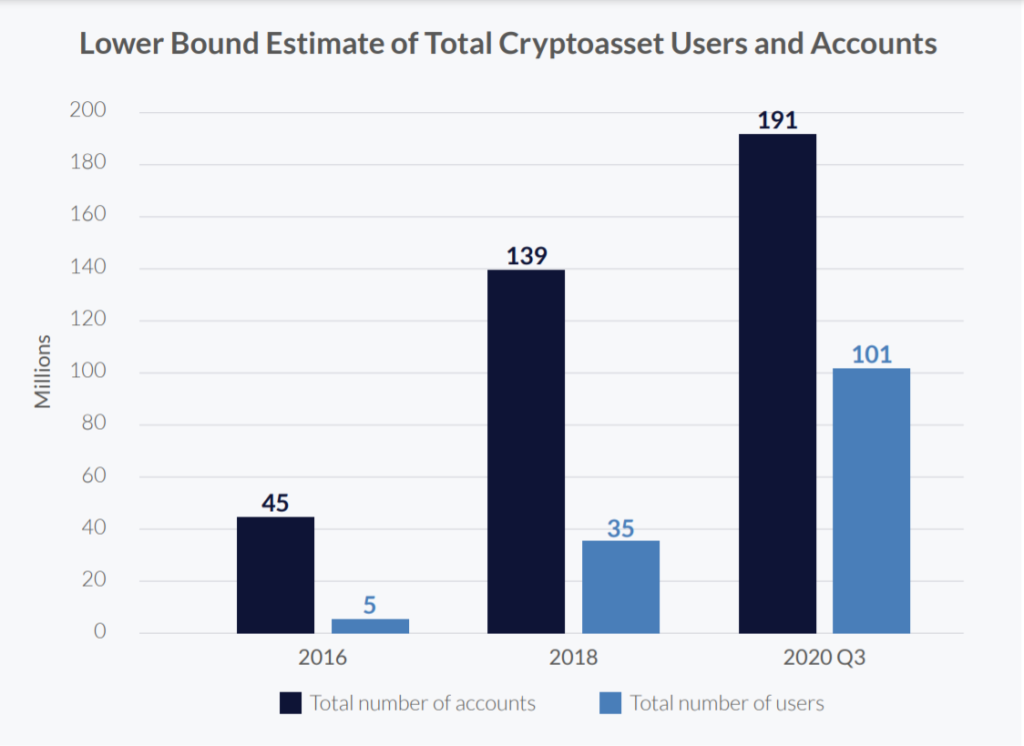
The figures are not precise. The study notes they represent a lower bound, the report authors emphasise.
Drawing on data from government agencies and regulators, they derived the average share of cryptocurrency users among the population: in developed countries it ranged from 2% to 9%. They also obtained data on users registered with services and who have passed KYC.
According to the researchers, their estimate aligns with findings from other studies. For example, отчету Управления по финансовому регулированию и надзору Великобритании (FCA), which showed a 78% increase in holders of digital currencies in the United Kingdom compared with 2019.
The Cambridge Centre for Alternative Finance is one of the few authoritative organisations providing information on the total number of users, albeit approximate. Other estimates are either relative or focused on particular segments.
For example, earlier this year Glassnode, using on-chain activity analysis, counted the number of Bitcoin holders — 23 million. A “holder” does not necessarily mean a single individual — it could be a group of people or an organisation.
Coinbase CEO Brian Armstrong, in the spring of this year, estimated the total number of cryptocurrency holders at 50 million people.
In conclusion: I think it’s still very much up in the air which blockchain will help get crypto from ~50M users to 5B. The chain that manages to ship some of these scalability, privacy, decentralized identity, and developer tool solutions will have a big leg up.
— Brian Armstrong (@brian_armstrong) March 4, 2020
The Cambridge researchers also noted a trend toward a rising share of cryptocurrency users who pass KYC/AML procedures.
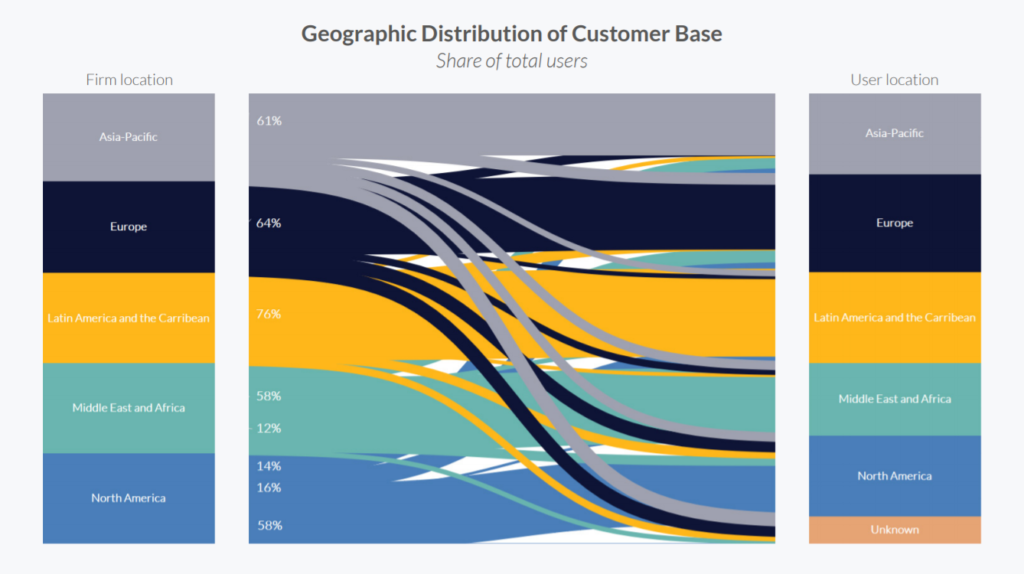
Geographically, crypto services are used by residents of the same country or region where they are located. The exception is North America, the Middle East and Africa. In the first case this is driven by the “success of an internationalisation strategy”. In the second and third — by the large diaspora from Africa and the Middle East to other parts of the world.


What attracts institutions to cryptocurrencies
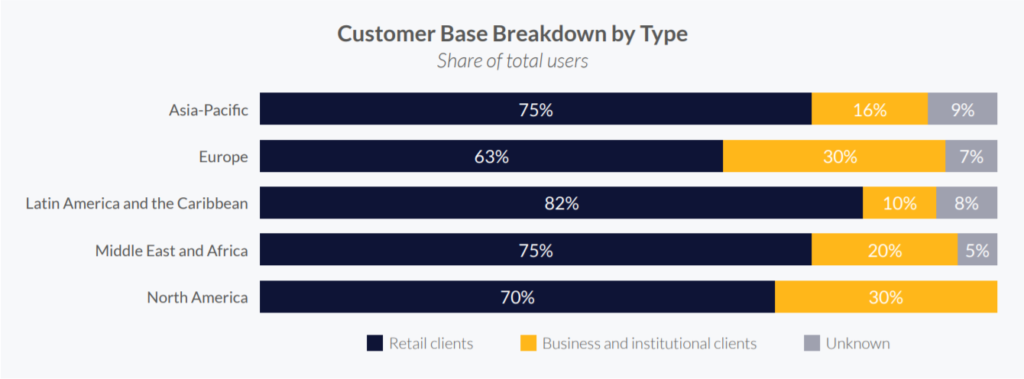
The majority of cryptocurrency users are retail, not institutional investors. The largest share of whales (30%) is observed in Europe and North America.


As noted, other studies show growing institutional interest in cryptocurrencies — for example, a blind survey by Fidelity Digital Assets found that 36% of large clients had already invested in Bitcoin, and three in five respondents would like to hold part of their investment portfolio in digital assets.
Despite the development of institutional financial instruments and infrastructure, crypto services largely serve retail clients (63-82% of the total):
‘Despite growing interest from institutional investors, conversion (from interest to investment) remains limited,’ say the researchers.
Two trends, the study says, are driving greater involvement of large investors in the crypto market:
- Increasing market transparency and the creation of clear rules via the adoption of KYC/AML procedures and standardisation of legislation. In countries that have adopted FATF rules for dealing with crypto-assets, the share of institutional clients выше.
- A narrowing of providers’ focus on whales, i.e., a move toward the structure of the traditional financial market. One indicator of this trend is the growth of the custodial-services sector for cryptocurrencies.
On crypto firms and the main trends
A separate section of the study is devoted to crypto services.
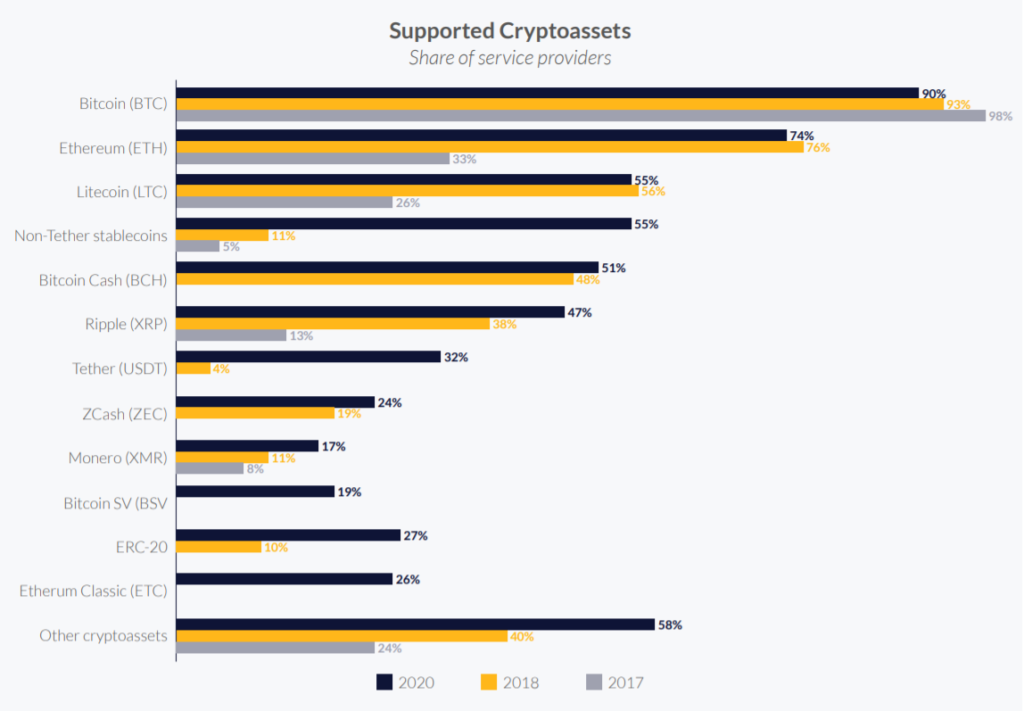
Since 2017, the composition of supported coins has changed only marginally: top cryptocurrencies dominate this list, led by Bitcoin (supported by 90% of services).
Over three years, Ethereum’s presence grew significantly (from 33% to 74%), as did Tether (from 4% to 32%) and other stablecoins (from 5% to 55%).
Additionally, the share of coins not in the Top 10 grew (from 24% to 58%), and ERC-20 tokens rose (from 10% in 2018 to 27% in 2020).


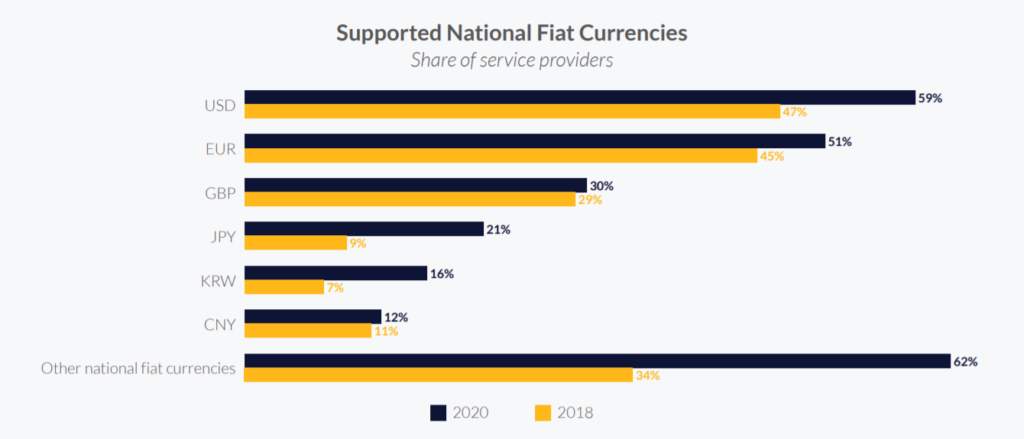
Another trend is the increasing support for fiat currencies. The share of applications with fiat support rose from 34% in 2018 to 62% in 2020.


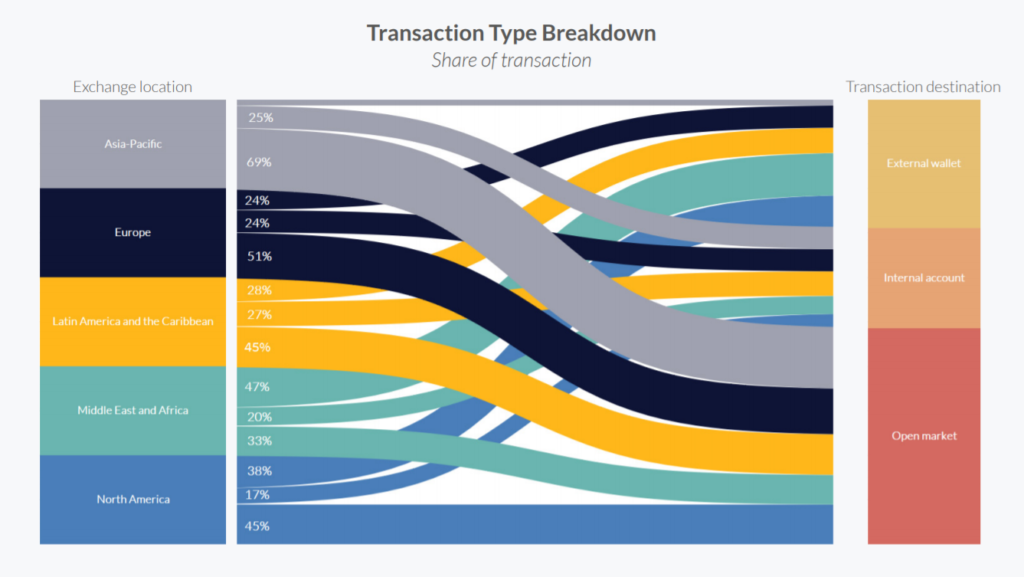
The study’s authors also touched on cryptocurrency exchanges. They note that trading platforms are primarily used to swap fiat for crypto (and vice versa). Only on Asia- and Europe-based exchanges are more than half of transactions directed to the open market (i.e., for trading on the platform via the order book or directly between users). In other regions, users more often leave purchased cryptocurrencies on hot wallets or transfer them off-platform.


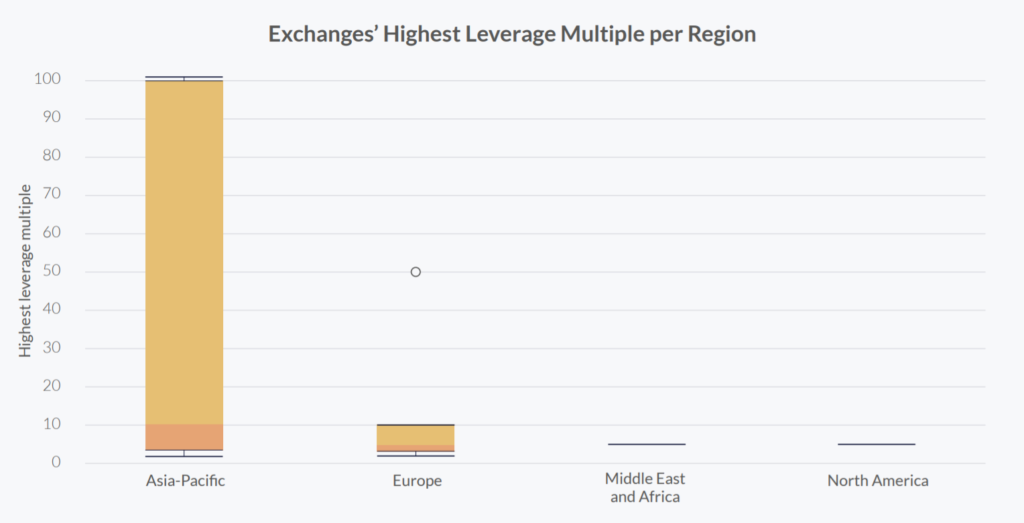
Moreover, Asian exchanges predominantly offer margin trading with leverage up to 110x (55% of all margin-trading platforms). Note that this refers to the Asia-Pacific region, which includes offshore zones, including the Seychelles, where BitMEX and Binance are registered.
Europe follows, where 30% of exchanges offer leveraged trading.


There has also been a shift in security. Thanks to measures such as cold storage and multi-signature wallets, the total value of crypto stolen by hackers fell sharply, even as the number of hacks rose.
This did not protect the KuCoin exchange from a large-scale theft in September 2020. Estimates of the loss range from $150 million to $280 million.
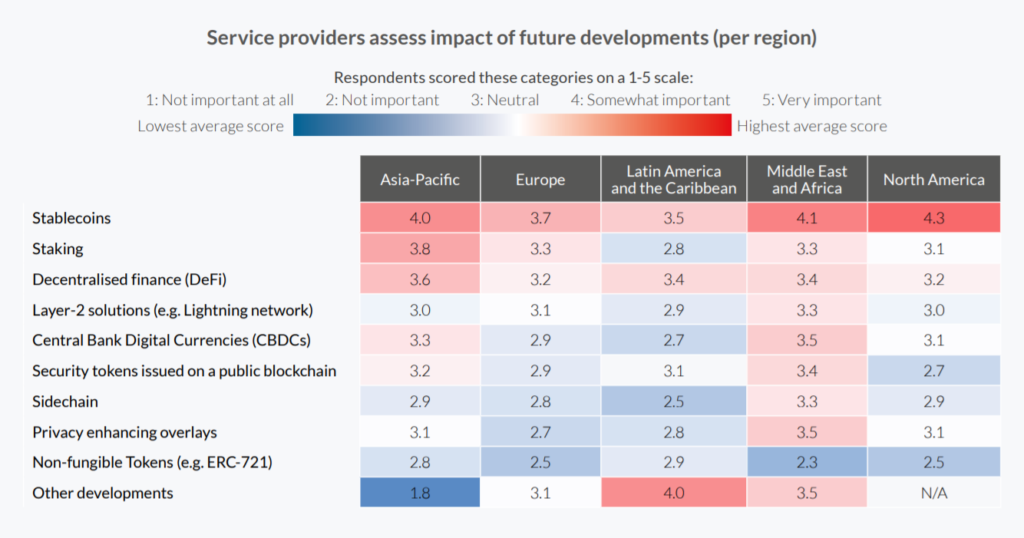
Respondents from crypto companies were also asked to name the most important trends for the coming years. The top three included stablecoins, staking and decentralised finance (DeFi).


On miners’ spending and risk hedging
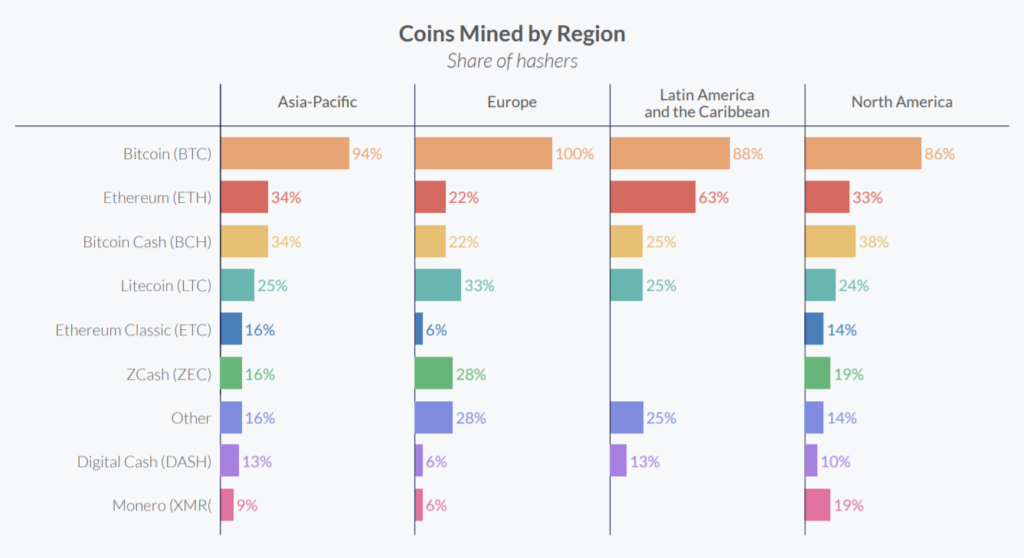
The researchers also spoke with miners. It turned out that, excluding Bitcoin, which is mined by 89% of those polled, the mix of mined coins varies by region.
For example, in North America they mine Bitcoin Cash (33% of respondents), in Latin America Ethereum (63%), and in Europe Zcash (28%).


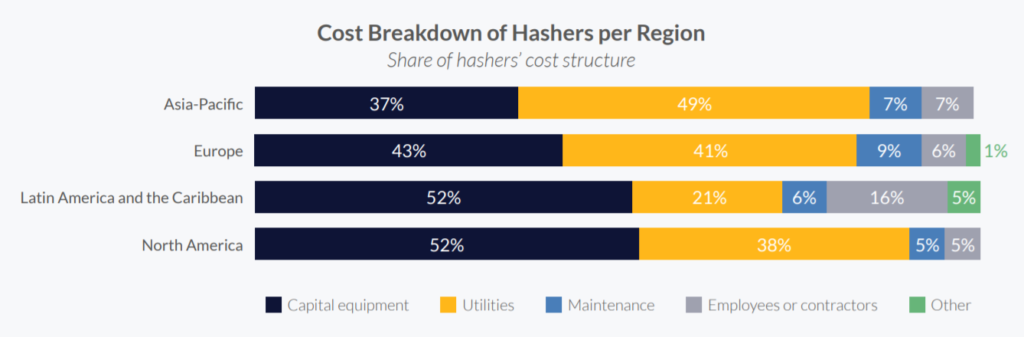
In the cost structure, operating expenses (maintenance, staff salaries, electricity) dominate — 55% of all expenses. Three-quarters of operating costs are electricity payments.
Another 45% of costs are capital expenditures (purchase and upgrading of equipment, infrastructure development, and so on).
In North America there are higher capital expenditures (52%), and in Asia electricity bills (49%). In China this is as high as 55%, reflecting differences in electricity costs.


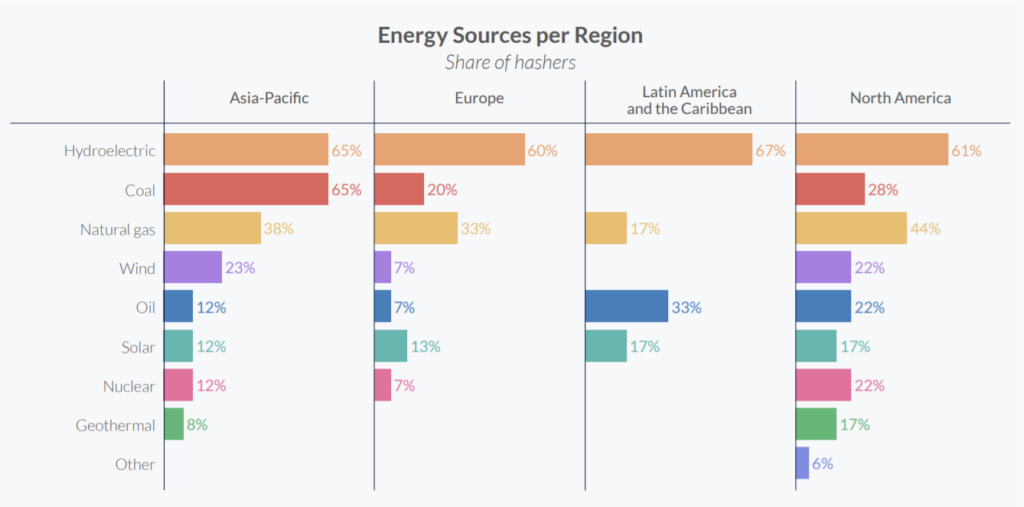
Across all regions, the most common electricity source for mining farms is hydropower. In Asia, coal is second (65%), and in North America natural gas (44%).


The study also notes a trend toward the financialisation of mining:
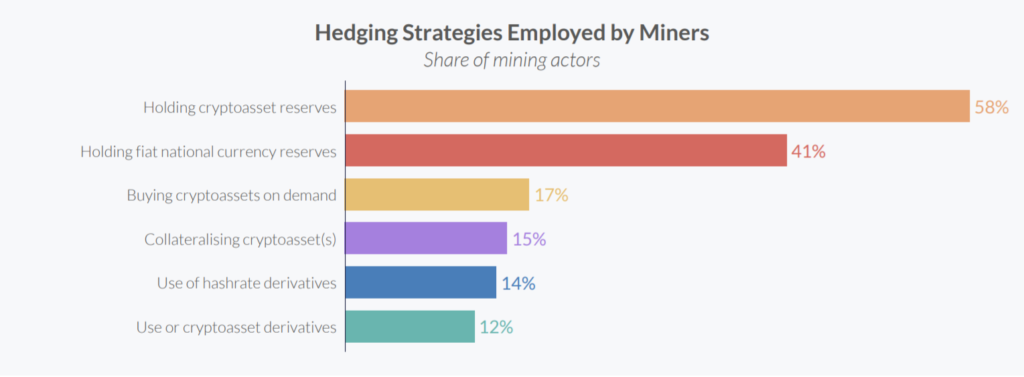
«The rising competition among miners and declining profitability have pushed them to use a variety of risk-management strategies and to create additional cash flows. In particular, the emergence of financial instruments aimed at miners, such as hash-rate forward contracts and mining-difficulty futures, has sparked active discussion in the industry».
The share using financial instruments remains small — most still hold cryptocurrency reserves (58% of respondents) or fiat (41%). Only 15% take loans collateralised by digital assets, 14% use hash-rate derivatives.


The Cambridge University researchers conclude that the number of cryptocurrency users is growing at a brisk pace, and services are serving residents of many jurisdictions, forming a global market.
3rd Global Cryptoasset Benchmarking Study by ForkLog on Scribd
Subscribe to ForkLog news on Telegram: ForkLog Feed — all the news feed, ForkLog — the most important news and polls.