


Mother of deceased former OpenAI researcher questions suicide ruling
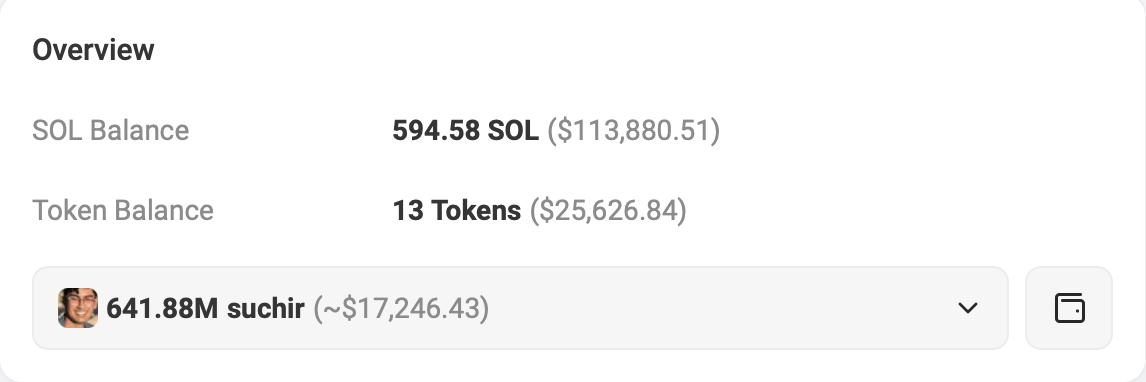
The mother of deceased former OpenAI employee Suchir Balaji has raised $140,000 in cryptoassets to fund an investigation into his death. Poornima Ramarao says her son was not suicidal.
Solana wallet address for raising funds for fighting justice for Suchir. We just signed a retainer with an attorney for 100,000$.
This is only beginning. Please support us in this battle.
Address for solana wallet
Q4eXHNPsnQoPvsRAdgH6TjT66eWEk7y6JniTd9ru4N3
Thank you…
— Poornima Rao (@RaoPoornima) January 6, 2025
Ramarao created a wallet on the Solana network and posted on X, asking to fund a “fight for justice for Suchir.”
At the time of writing, the address holds almost $140,000.
“[…] He was very happy when he spoke with the family on November 22 at 19:15 and was excited about his [vacation trip with friends]. The time of his death is a few hours after the conversation. We do not understand what happened in those few hours, which does not correspond to his happy mood and return from vacation,” — wrote she.
A private investigator hired by his mother found signs of a struggle in Balaji’s apartment.
Update on @suchirbalaji
We hired private investigator and did second autopsy to throw light on cause of death. Private autopsy doesn’t confirm cause of death stated by police.
Suchir’s apartment was ransacked , sign of struggle in the bathroom and looks like some one hit him…
— Poornima Rao (@RaoPoornima) December 29, 2024
“[…] Suchir’s apartment was ransacked; signs of a struggle were found in the bathroom, and judging by the bloodstains, someone hit him there. […] We demand an FBI investigation,” she added.
Journalist George Webb published a video from a walkthrough of Balaji’s apartment showing visible blood.
On 26 November, the 26-year-old Balaji, who had worked at OpenAI for four years, was found dead in his San Francisco apartment. According to police, no signs of foul play were found. The city’s chief medical examiner said the cause of death was suicide.
Balaji had previously criticised OpenAI for how it sourced data from the internet to train artificial-intelligence models.
He argued that chatbots like ChatGPT strip human-created content of commercial value. He discussed the issue with journalists at The New York Times, which last year filed a lawsuit against OpenAI, accusing the company and Microsoft of unlawfully using its content to train AI.
The startup led by Sam Altman denies the allegations, saying its model training relies on publicly available data under fair-use law.
Earlier, OpenAI asked a court to dismiss part of The New York Times’ copyright suit, arguing the newspaper’s staff had “hacked” ChatGPT to fabricate evidence.
Рассылки ForkLog: держите руку на пульсе биткоин-индустрии!