



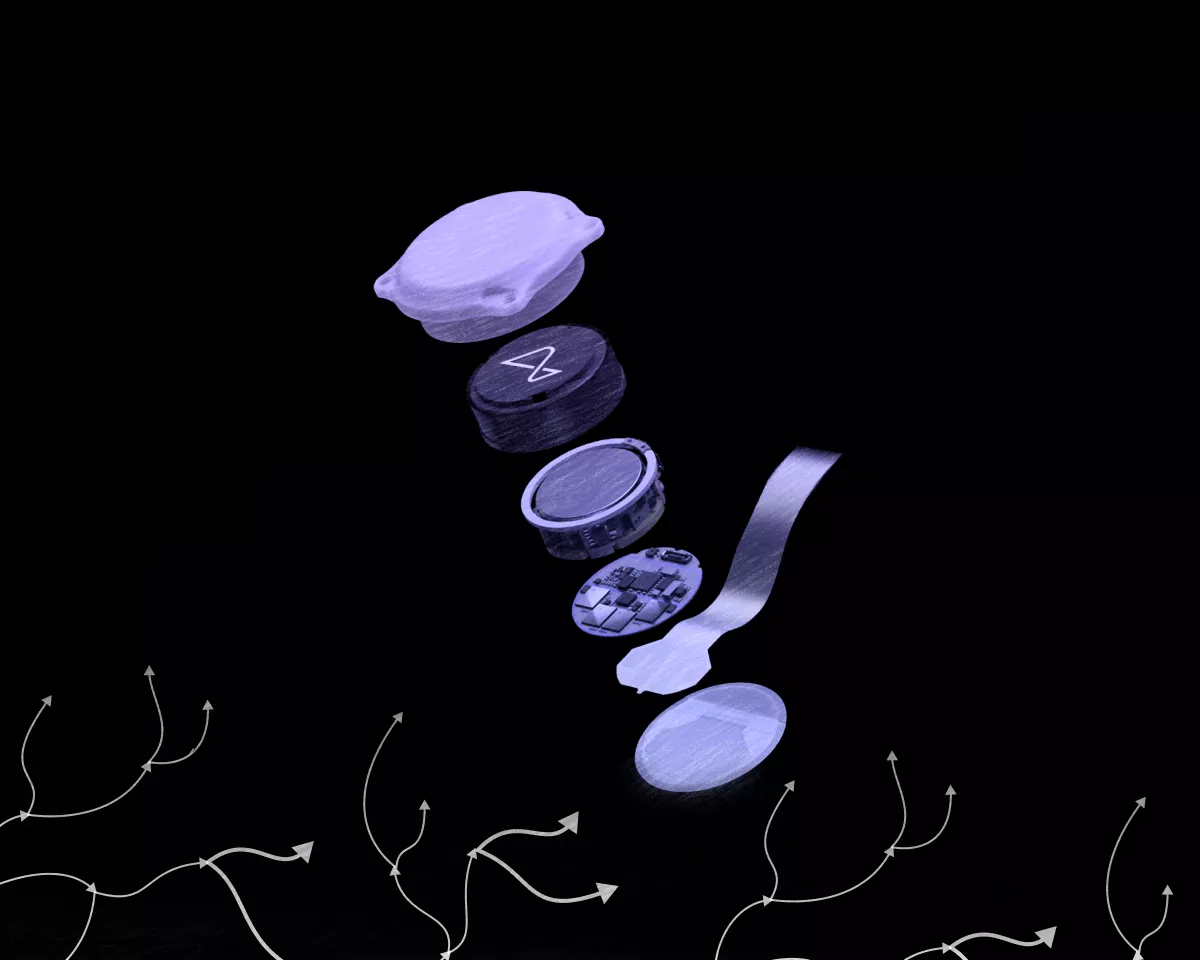
Neuralink’s second patient, Alex, has learned to play video games and use software for designing 3D objects just weeks after his surgery.
Early progress with our second participanthttps://t.co/uiFVAUZzvK
— Neuralink (@neuralink) August 21, 2024
In early August, Elon Musk announced the successful integration of a brain-computer interface (BCI), though he did not specify the date of the procedure.
“Last month, Alex, the second participant in our PRIME study, received a Neuralink implant (Link). The surgery, conducted at the Barrow Neurological Institute, was successful—Alex was discharged the next day, and his recovery is proceeding without complications,” the startup’s blog stated.
After connecting the Link to a computer, the patient began controlling the cursor with his mind in less than five minutes. Within a few hours, he broke the world record for speed and accuracy in mouse control using BCI, the company noted.
Alex continued to test the Link in the game Counter-Strike 2, combined with a Quadstick controller.

On the second day of practice with the neural chip, the patient began using Fusion 360 software for designing 3D objects. He developed a mount for his Neuralink charger, which was then 3D printed and integrated into the setup.


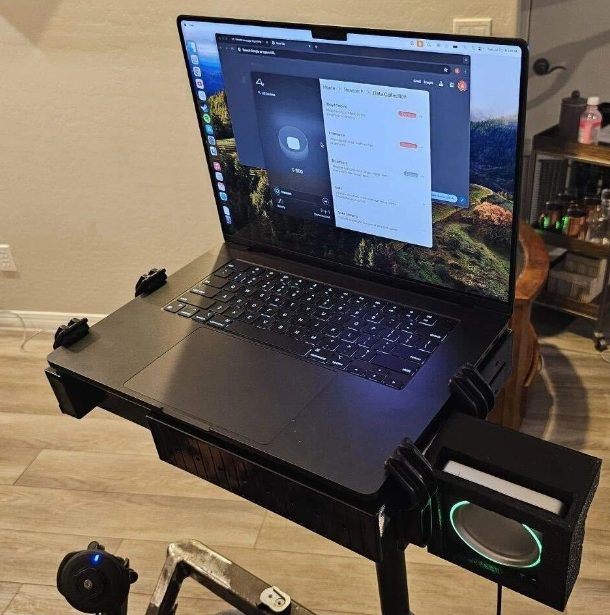
Alex continues to use the software to realize his design ideas. Before his spinal cord injury, he worked as a car mechanic, during which he learned 3D object design.

“When I take an idea, bring it to life, and get a finished physical product, I feel like I’m creating something again,” Alex noted.
Neuralink’s first patient, Noland Arbo, experienced some neural threads detaching from the brain about a month after surgery due to brain shifts during pulsation. To reduce the risk of retraction in the second patient, the startup took several measures, including reducing the gap between the implant and the brain surface and minimizing its movement during surgery.
Alex has not experienced any retraction.
Neuralink is working to enhance patients’ ability to control digital devices and aims to provide ways to interact with the physical world. The company seeks to enable paralyzed individuals to feed themselves and move using a robotic arm or wheelchair.
Update about the second Neuralink device in a human.
If all goes well, there will be hundreds of people with Neuralinks within a few years, maybe tens of thousands within 5 years, millions within 10 years, … https://t.co/opy1xj5JgF
— Elon Musk (@elonmusk) August 22, 2024
“If all goes well, there will be hundreds of people with Neuralinks within a few years, tens of thousands within five years, millions within ten years…,” commented Elon Musk.
In January, Neuralink implanted a brain chip in its first volunteer.
In May, Noland Arbo shared insights about the technology and changes in his daily life.