




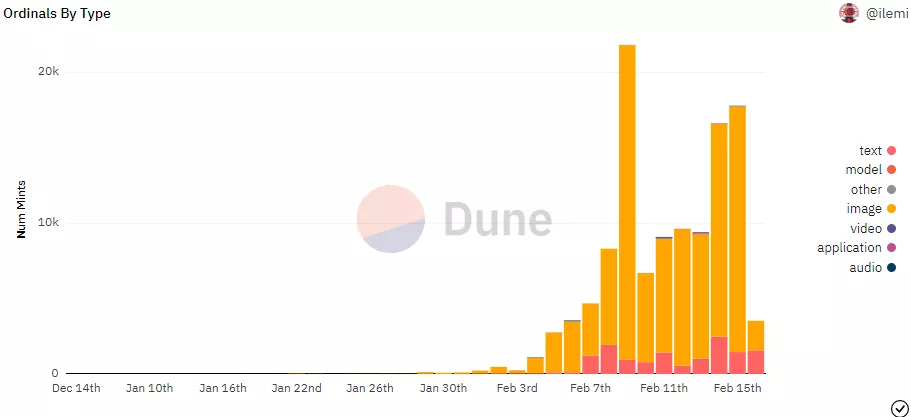
The number of NFTs on the Bitcoin blockchain issued via the Ordinals protocol has reached 116,450. Data from the dashboard by @dataalways on the Dune platform shows this.
The diagram shows that most of the deployed objects are images.


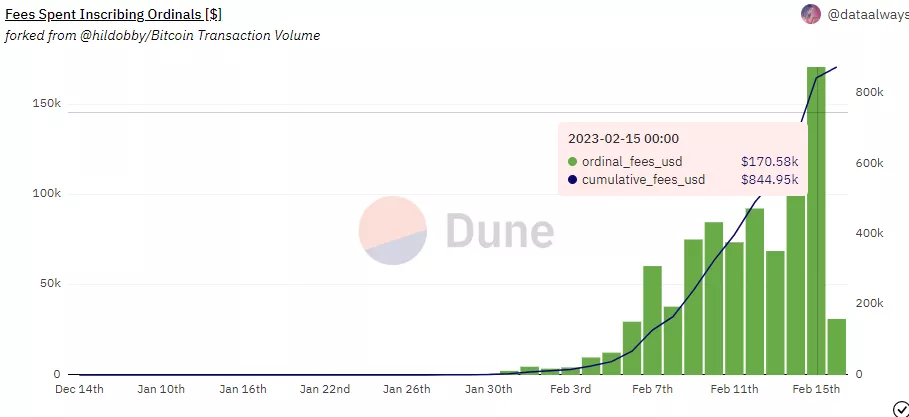
Below is illustrated the rapid growth in fees directed toward creating NFTs — the daily total has exceeded the $170,000 mark.


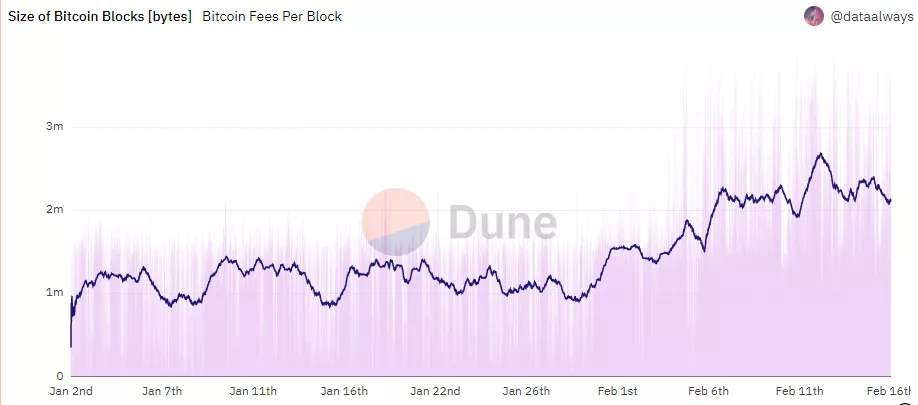
The popularity of the Ordinals project has positively affected the per-block fee volume. Consequently, miners’ revenues may rise.

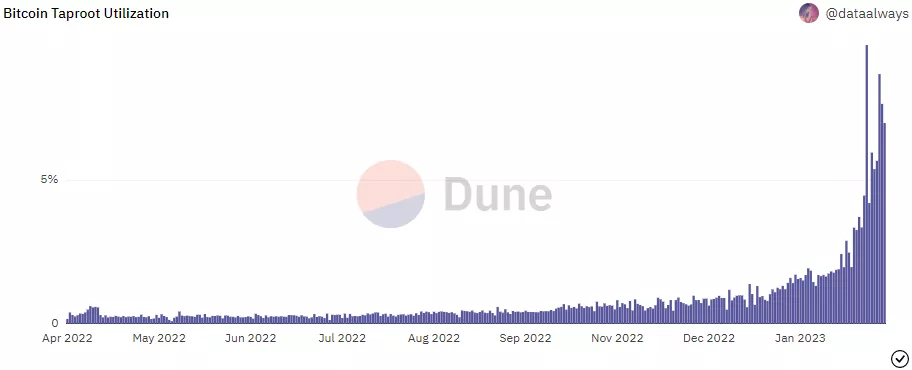
The appearance of Ordinals at the end of January became possible thanks to the soft fork Taproot. The project uses satoshi numbering (serialization) to record data in the “witness” part of the Bitcoin transaction.
Another consequence of the novelty’s popularity has been the expansion of the use of Taproot signatures.

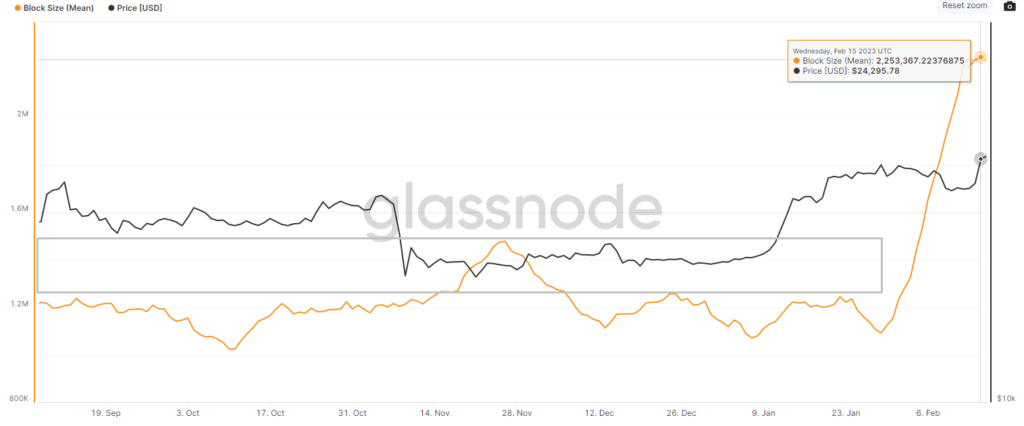
The average block size has also increased. Arbitrary data in the form of images and other objects can occupy space up to the 4 MB limit.


The Ordinals project is still in the early stages of development, but many community participants are actively working on building new infrastructure.
We’ve begun rolling out support to Hiro Wallet for Bitcoin, NFTs and Ordinals for a truly cross-protocol Bitcoin Web3 experience. https://t.co/OAVriTraFq
🧵 A thread with details… #bitcoin #web3 #stx #nfts #ordinals pic.twitter.com/SiWrIluFhk
— Mark Hendrickson | mark.btc | Hiro Wallet (@markymark) February 14, 2023
Earlier, Glassnode noted increased load on the Bitcoin network due to the appearance of a new NFT variant.