




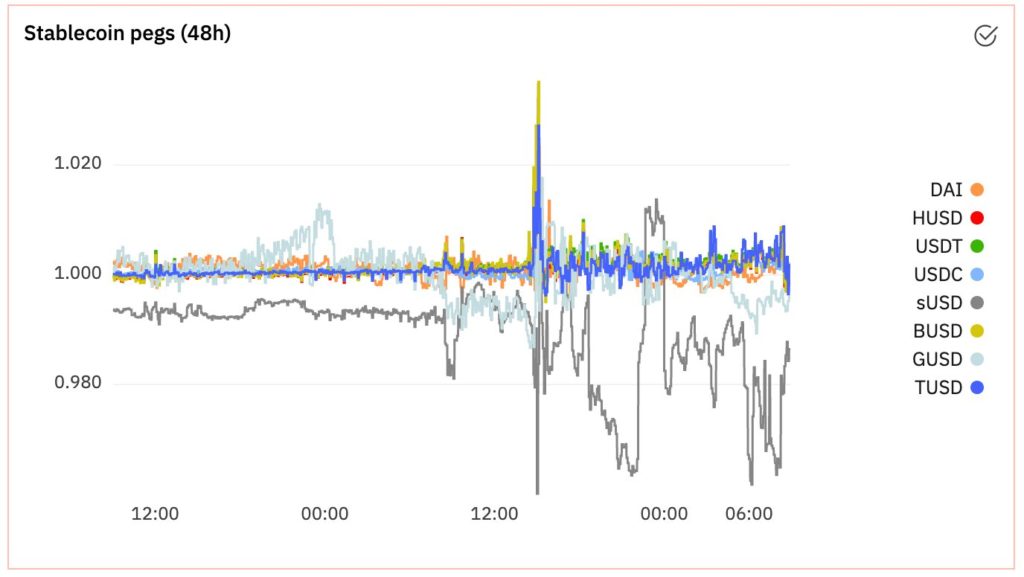
Decentralised finance (DeFi) is increasingly resilient to market volatility. Coinbase developer Elias Simos, using data from Dune Analytics, demonstrated the sector’s state in light of the dump on September 7.
7/ DeFi is getting better and better at stomaching aggressive volatility.
I put a dash together that displays the metrics above granularly (activity in the last 24h to 48h).
Let me know what else you’d like to see there! 👇https://t.co/JSfo4o8gK1
— Elias Simos (@eliasimos) September 8, 2021
At the onset of the Ethereum network gas-price crash, there was a brief spike to 1000 Gwei. After a few hours, a five-minute jump to 7000 Gwei occurred, after which the situation stabilised.


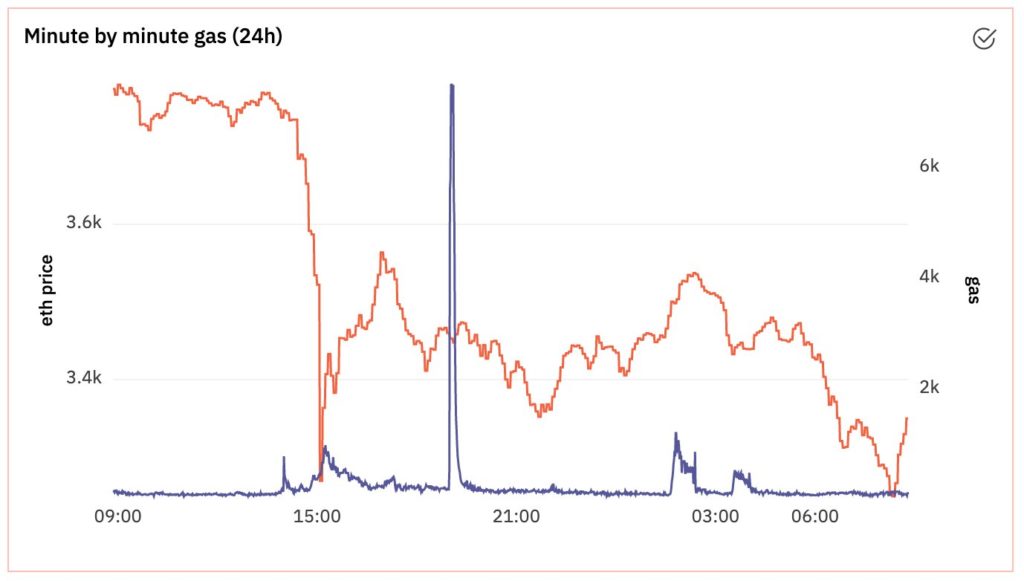
Сетeвая активность усилилась на фоне роста вдвое числа совершающих транзакции пользователей по сравнению с их средним значением за сутки до этих событий. На DEX объемы торгов в течение первых четырех часов после дампа подскочили до более чем $2 млрд.
По наблюдениям специалиста, цены на ETH на децентрализованных биржах оставались broadly устойчивыми за исключением несколько ярких выбросов.
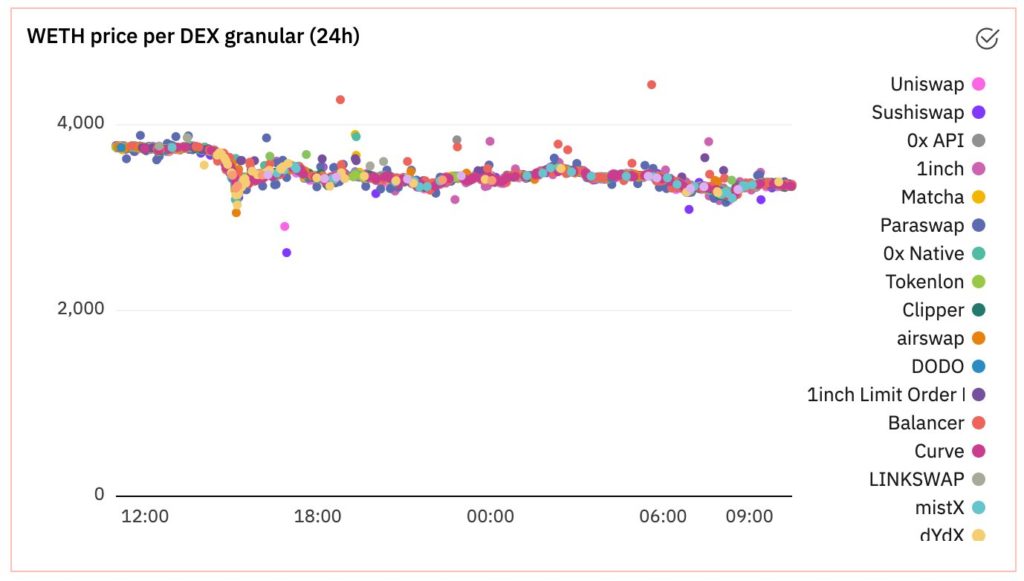
Цены ETH на децентрализованных биржах в целом оставались устойчивыми, за исключением нескольких заметных выбросов.


Ранее Forklog provided an assessment of the DeFi sector’s state by Glassnode analysts during the May 19 crash.
In August, the average network fee rose to May levels, approaching $40. London hard fork and the EIP-1559 upgrade, designed to reduce gas-price volatility, did not alleviate the severity of scalability challenges and the resulting high transaction costs.
Подписывайтесь на новости ForkLog в Facebook!