



PwC: 25% of Companies Anticipate Layoffs Following AI Adoption
- According to a PwC survey, more than half of companies have implemented AI or plan to do so, potentially leading to a reduction of at least 5% of their workforce.
- The IMF has also expressed concern over the technology’s impact on jobs, with about 40% of employees worldwide expected to feel the effects.
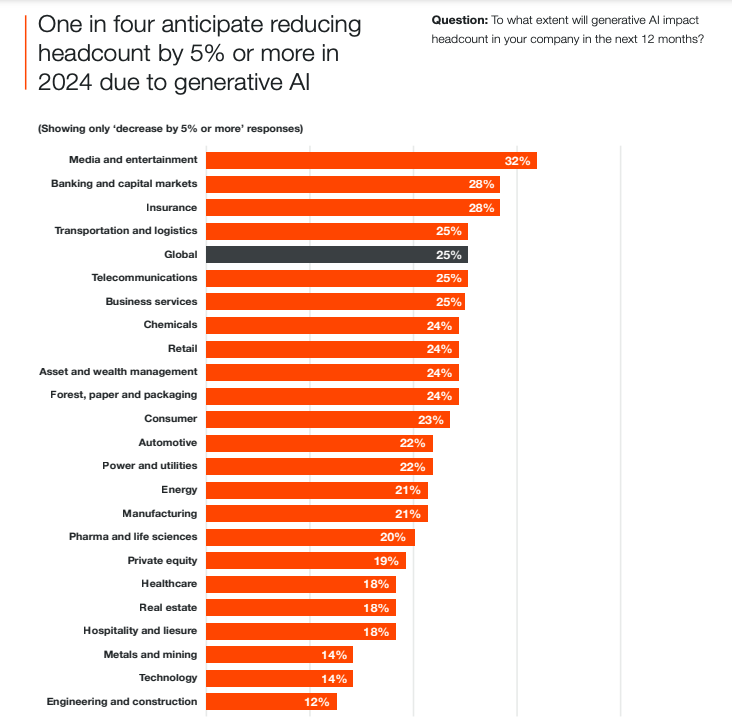
Approximately 25% of CEOs globally are convinced that the widespread adoption of generative artificial intelligence will lead to workforce reductions, according to a survey by PricewaterhouseCoopers (PwC).
The study involved 4,700 executives from 105 countries, with more than half leading companies with annual revenues exceeding $100 million.
Just under a third of respondents have already integrated AI technologies into their corporate environments.
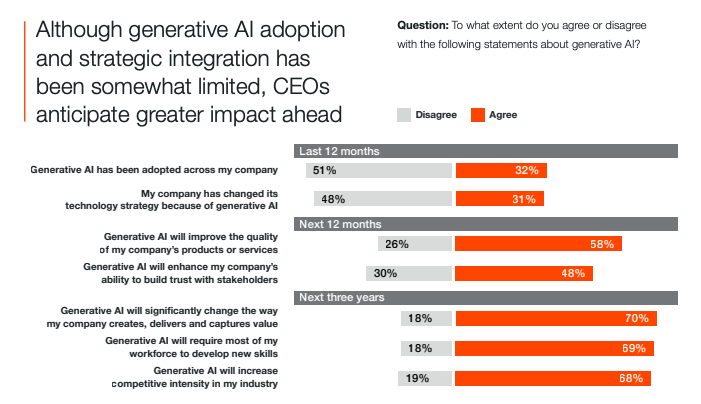
As the technology proves highly efficient, some CEOs predict layoffs of at least 5% of employees. However, PwC notes that anticipated reductions in some areas are already being offset by hiring specialists in artificial intelligence.
“While 14% of tech company heads expect workforce reductions next year due to generative AI, 56% also anticipate hiring additional staff in 2024,” the researchers noted.
The media, entertainment, banking, and insurance sectors are more likely to forecast layoffs.
About 70% of CEOs stated that within three years, AI will transform most companies’ business models and require employees to develop new skills.
IMF Warns of Risks
On January 14, the Managing Director of the International Monetary Fund (IMF), Kristalina Georgieva, shared a report indicating that 40% of jobs are exposed to artificial intelligence, and the technology “exacerbates inequality.”
“The rapid development of AI has taken the world by storm, causing excitement and anxiety, and raising important questions about its potential impact on the global economy. […] It is safe to say that we need to develop a comprehensive set of measures to safely harness the enormous potential of this development for the benefit of humanity,” she added.
Georgieva believes that historically, automation and information technology have impacted routine work, but AI’s main feature is its effect on highly skilled personnel.
Therefore, developed economies face greater risks. In such jurisdictions, artificial intelligence could affect 60% of employees.
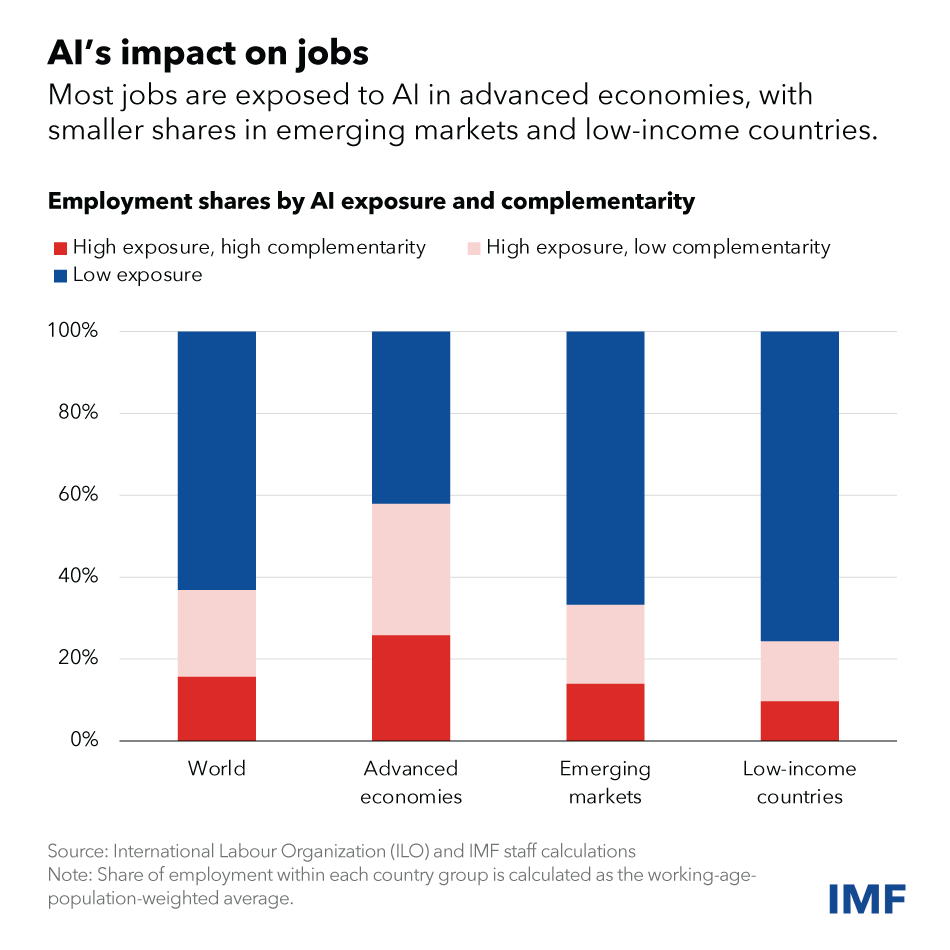
However, the IMF leader emphasized that in most cases, AI will not fully replace human labor but will complement it. She also believes that the introduction of the technology will create new jobs.
“Research shows that AI can help less experienced workers quickly increase their productivity. Meanwhile, younger employees may find it easier to leverage its capabilities, whereas older workers may find it harder to adapt,” the report states.
Additionally, artificial intelligence could significantly widen the wage gap—those who use the technology could substantially increase their earnings.
The IMF also assessed the readiness of 125 countries for AI adoption. Jurisdictions with developed economies and emerging markets showed the best results. Singapore, the United States, and Denmark received the highest scores.
Previously, Bill Gates predicted the “death” of Google and Amazon due to AI advancements, as well as a reduction of the workweek to three days thanks to the technology.
Back in December 2023, the head of the Roman Catholic Church, Francis, warned that the global community could fall into a spiral of “technological dictatorship” due to the potential unethical use of artificial intelligence.
Рассылки ForkLog: держите руку на пульсе биткоин-индустрии!