


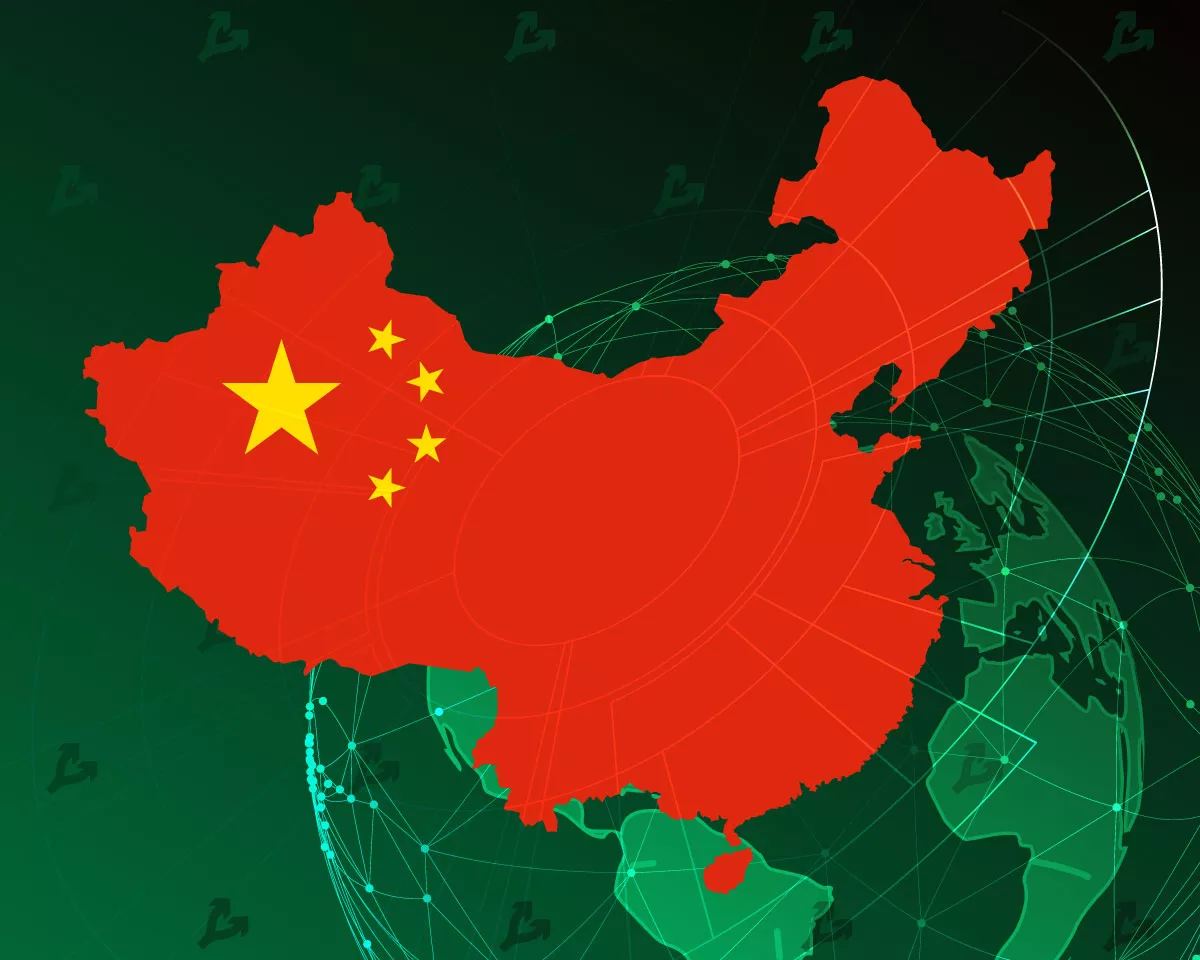
Ripple co-founder: US losing the financial battle of the tech cold war to China
Ripple co-founder and executive chair Chris Larsen believes the United States is losing the race for the global financial system to China, whose aim is to replace the dollar with a digital yuan. He outlined his view in an article for The Hill.
He noted that the dollar currently accounts for more than 88% of settlements in world trade, and the US controls the global financial infrastructure. But much of it rests on outdated technologies from the last century.
Fundamental changes are coming, driven by digital wallets, blockchain technology and cryptocurrencies, Larsen believes.
“For China, this is a once-in-a-century opportunity to do away with American leadership of the global financial system, including its ultimate goal of replacing the dollar with a digital yuan,” he stressed.
China has taken a series of strategic steps in this direction, Larsen noted. The country has achieved broad adoption of digital payments through tech giants Alipay and WeChat and is on the verge of issuing a digital yuan.
According to the Ripple co-founder, the Chinese government also subsidizes a large amount of electricity for mining, with no less than 65% of it concentrated in the country. This gives authorities the ability to control blockchain protocols, block or reverse transactions, Larsen believes.
The United States is losing this race, he says. Initiatives to issue a digital dollar remain absent, and regulation puts domestic blockchain companies at a disadvantage relative to competitors.
Larsen noted that the United States led the Internet revolution through clear and consistent policy. The same approach is needed for fintech and blockchain, he said.
In his view, authorities should view Silicon Valley as the centre of the financial technologies of the future and even move some federal regulatory agencies there.
Such steps would level the playing field with China, Larsen believes.
As reported, testing of China’s national digital payments system (DCEP) began in May with transport-subsidy payments to officials in Shenzhen, Suzhou, Chengdu and Xunyang.
Later, the central bank said that more than 20 companies had been brought into the DCEP testing in real-world conditions. The participation in the tests confirmed by the four largest state banks.
Recently in China announced an expansion of DCEP testing to large-scale commercial operations.
Subscribe to ForkLog news on Telegram: ForkLog Feed — the full news feed, ForkLog — the most important news and polls.
Рассылки ForkLog: держите руку на пульсе биткоин-индустрии!