




A user of the European branch of Bybit encountered issues during the KYC process while transferring their account, likely due to their Russian citizenship.
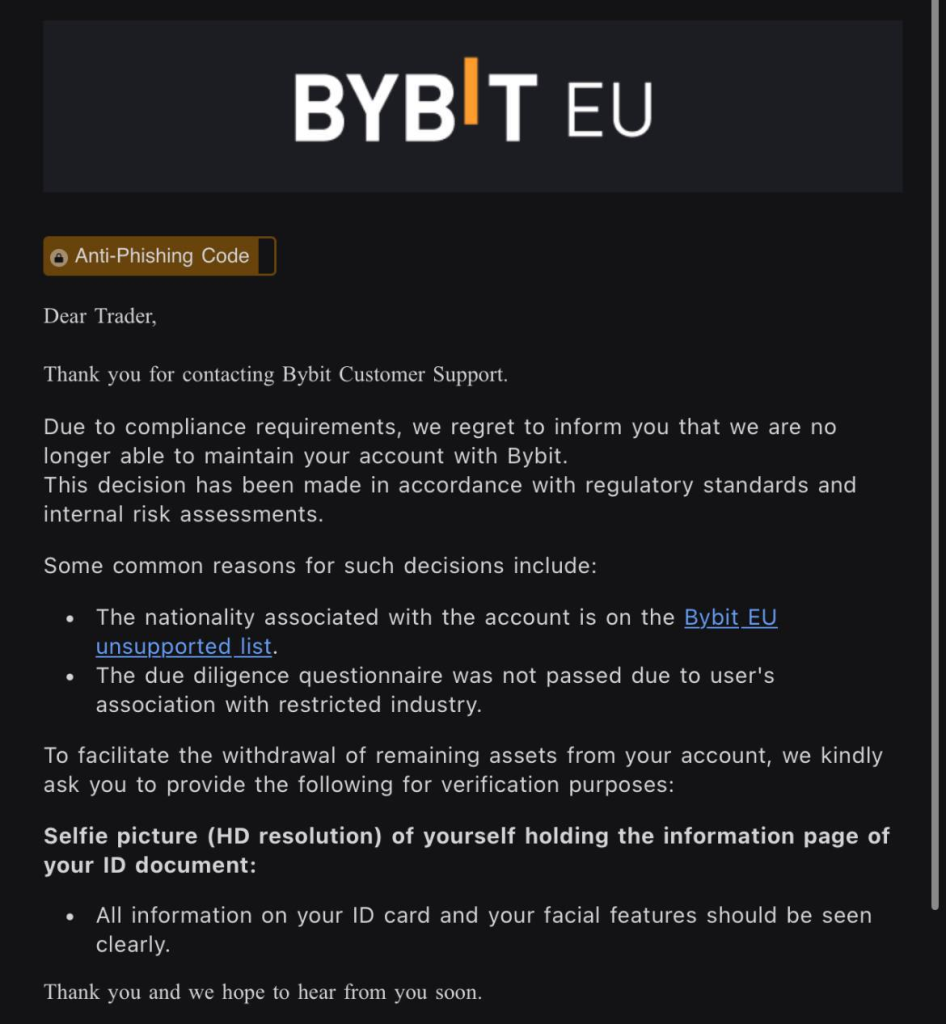
As reported by OhMySwift founder Andrey Avramenko, his source held a residence permit in the EU and was a client of Bybit NL (Netherlands), but the trading platform’s division later merged with the pan-European Bybit EU.
“I live in Europe, everything is above board. Recently, ByBit NL migrated to ByBit EU. They asked to redo the KYC. […] With the same documents I used for [previous verification], they refused,” the user described the issue.
In a letter, customer support replied that the decision was made based on “regulatory standards and potential risks.”


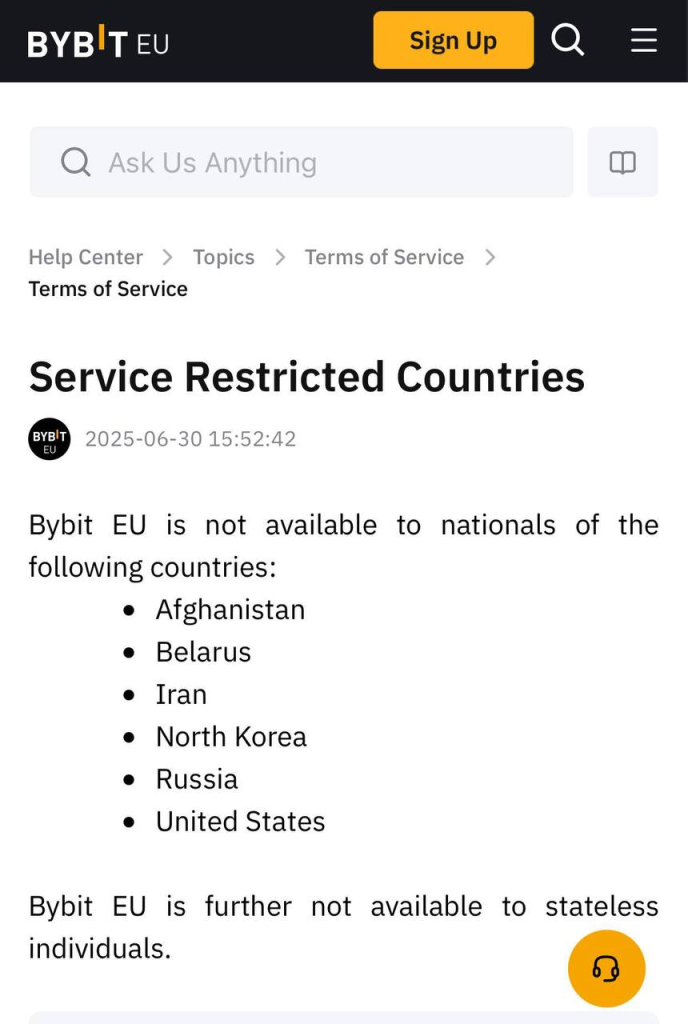
According to the policy of the European Bybit, the service prohibits registration of users with citizenship from Afghanistan, Belarus, Iran, North Korea, Russia, and the USA.


Although the situation is not related to Bybit’s global business, the new policy of the European branch may be based on the 19th package of EU sanctions against Russia. This is confirmed by similar cases with Revolut.
Online Bank Denies Services to Russians and Belarusians
According to sources from “Mediazona”, the British online bank Revolut has begun closing accounts of Russians living in the EU, citing new restrictions.


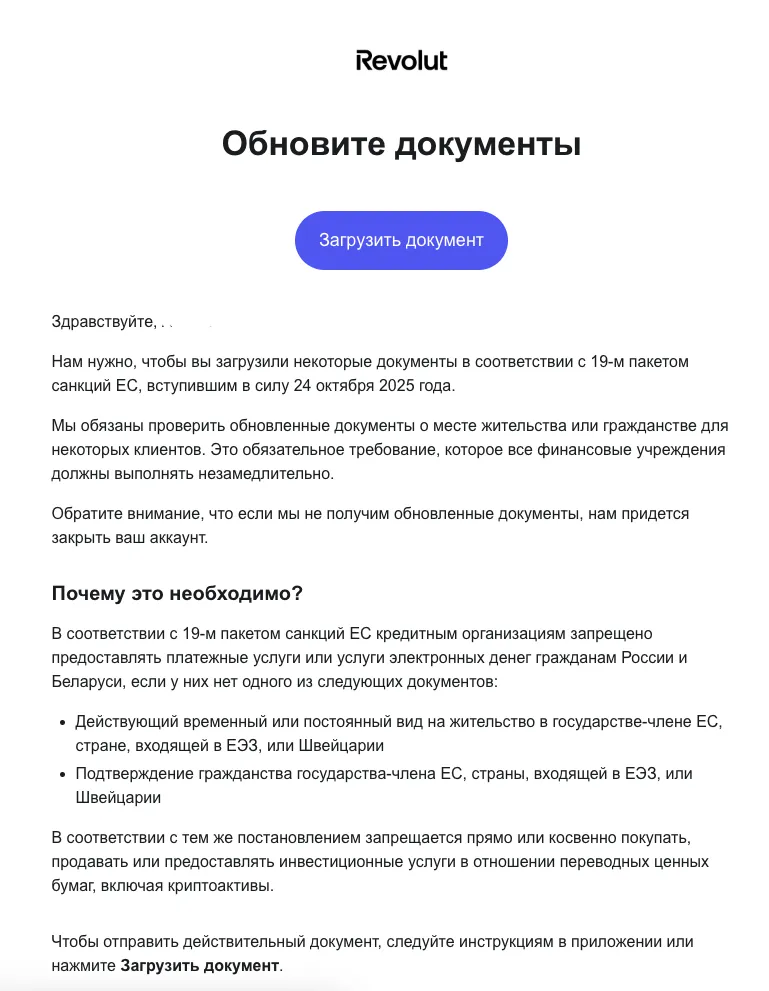
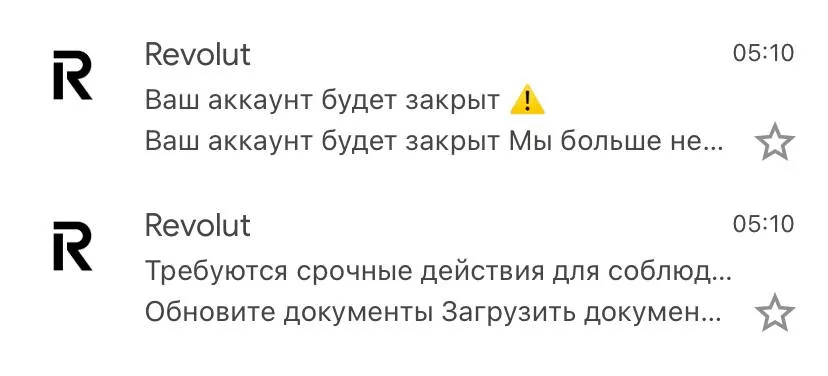
Previously, Revolut allowed Russian citizens with EU residence permits or long-term visas (type D) to open accounts. However, on November 1, such users received two letters: the first requiring data updates, and a few minutes later, a second notifying them of account suspension.

“Mediazona” is aware of at least five cases of account freezes. Former “Meduza” journalist Petr Sapozhnikov faced a similar issue.
“Revolut bank blocked my card a couple of hours ago — so tightly that you can’t even call a taxi (you can’t withdraw money, pay for anything, or transfer to other users). All because my residence permit is being processed,” he wrote.
Two similar stories involving Belarusian citizens were reported by “Zerkalo”. One woman with a residence permit in Lithuania had her account completely restricted overnight, with a demand to update her European document information.

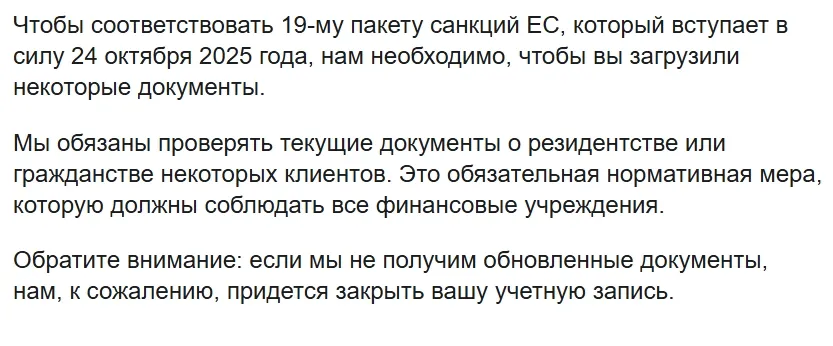
Another bank client used it as an additional account for storing cryptocurrency. She also received a message about the freeze.
Initially, all access was blocked, but later she managed to withdraw the assets.
“Somehow, all accesses in the app started working (even though I didn’t upload any documents — I don’t have them yet). I immediately sold everything, transferred the money to another account. Only then did I breathe a sigh of relief,” the woman recounted.
On Sanctions
On October 23, the EU introduced the 19th package of sanctions against Russia. In addition to import and personal bans, it affects cryptocurrency platforms and digital asset transactions.
According to European Commission President Ursula von der Leyen, all cryptocurrency transactions for Russian residents will be blocked.
The restrictions also affect foreign banks linked to Russian alternative payment systems and transactions with companies registered in special economic zones.
In an article on the new sanctions, ForkLog gathered expert opinions on the potential consequences of the restrictions.
In February, the European Union included the crypto exchange Garantex in the 16th package of sanctions against Russia.
In March, Reuters discovered that Russian oil companies use cryptocurrencies, including Bitcoin, Ethereum, and the stablecoin USDT, for oil export payments to China and India to circumvent Western sanctions.