




On October 31, 2008, Satoshi Nakamoto published the Bitcoin white paper. This technical document outlined the workings of a peer-to-peer payment system, which subsequently revolutionised the world of financial technology.
The identity behind the pseudonym of the creator of the first cryptocurrency remains unknown, as does whether it was an individual or a group of people.
In October, the HBO documentary Money Electric: The Bitcoin Mystery named Peter Todd as the creator of Bitcoin. The programmer denied this claim. He later stated that he now has to hide for safety reasons.
The preface to the white paper states:
“A purely peer-to-peer version of electronic cash would allow online payments to be sent directly from one party to another without going through a financial institution. Digital signatures provide part of the solution, but the main benefits are lost if a trusted third party is still required to prevent double-spending. We propose a solution to this problem using a peer-to-peer network. The network timestamps transactions by hashing them into an ongoing chain of hash-based proof-of-work.”
The Bitcoin network was launched in January 2009. Two years later, Satoshi Nakamoto disappeared, and the public has yet to discover who authored the document that underpins a multi-billion dollar industry.
Over 16 years, the first cryptocurrency has evolved into a powerful financial instrument. It attracts investments from public companies, nations, and is supported by leading global politicians.
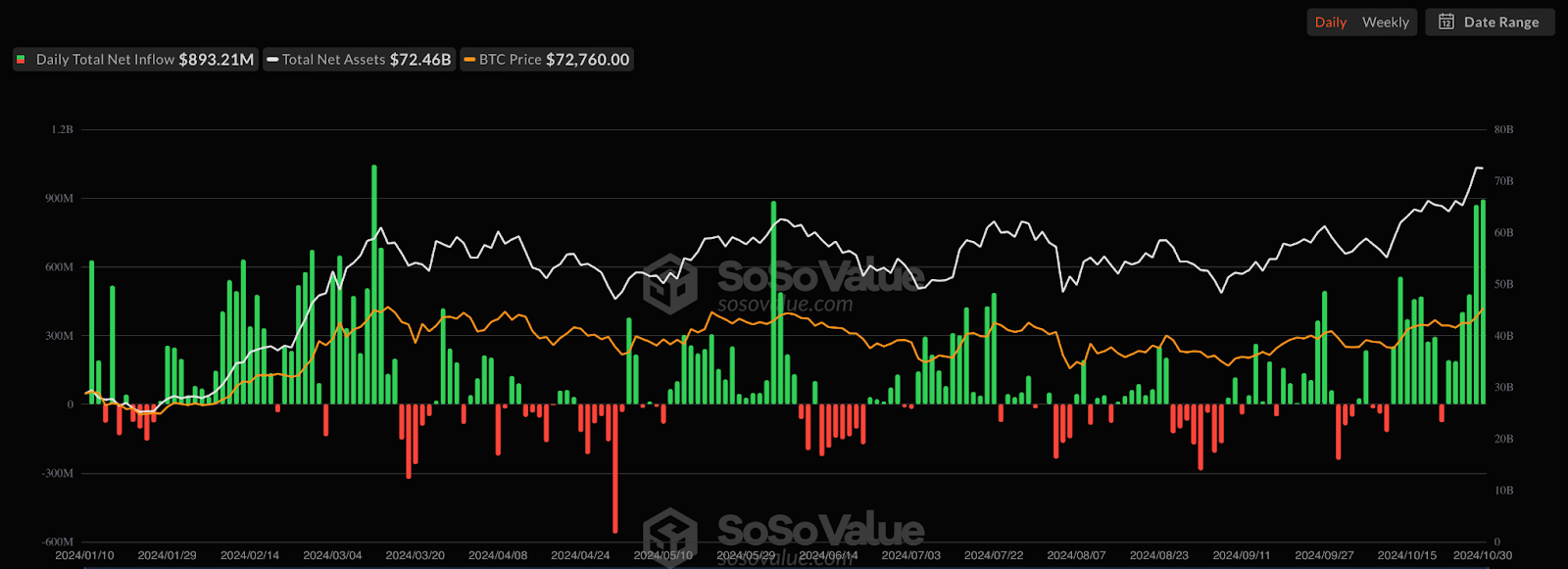
On January 10, the U.S. Securities and Exchange Commission approved the launch of spot ETFs based on the first cryptocurrency. Since then, the funds have amassed over $70 billion, with the second-largest inflow since trading began recorded on October 30 at $893.21 million.


At the time of writing, 97.14% of the total issuance of digital gold, capped at 21 million BTC, has been mined.
For more on what Bitcoin is and how it works, see ForkLog’s guides.