




Over the past 12 months, the aggregate market capitalization of stablecoins rose by 300%, topping $20 billion.
Four months ago, the figure stood at $10 billion.


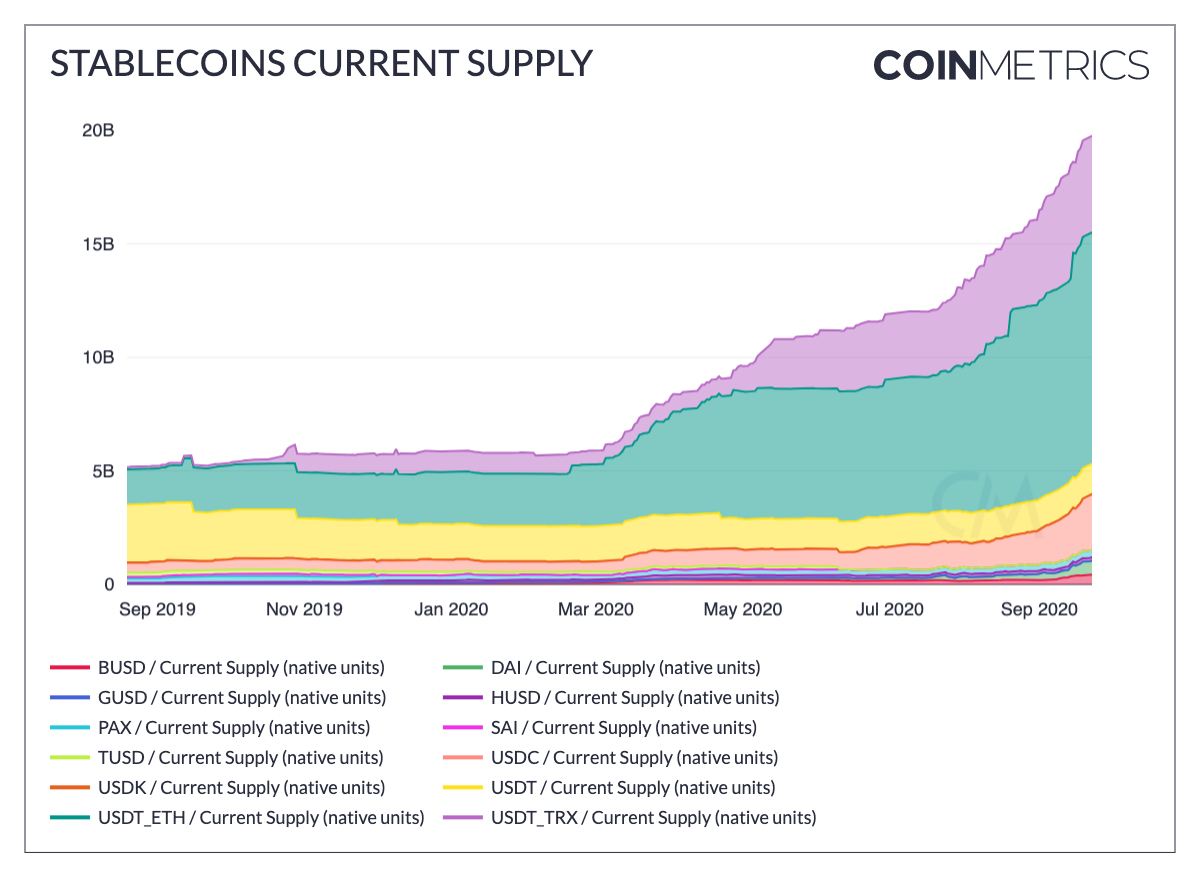
Earlier in September, daily growth in the aggregate stablecoin market capitalization rose to $100 million.
Nick Carter, co-founder of Coin Metrics, at the time suggested that the surge in stablecoin supply was driven by the growing popularity of DeFi protocols and demand for tokens in liquidity pools.
But it would be unwise to overlook investors’ efforts to hedge risk when investing in Bitcoin and other cryptocurrencies — stablecoins remain one of the principal tools for protecting assets from volatility.
Tether holds a dominant position in the sector, with around 80% share. At the time of publication, the stablecoin’s market capitalization, according to CoinGecko, was more than $15.2 billion, with a daily trading volume of more than $44 billion.
Earlier this week, the Office of the Comptroller of the Currency (OCC), part of the U.S. Treasury, allowed national banks and federal savings associations to hold the reserves of stablecoin issuers. The authorization applies solely to stablecoins pegged to a single fiat currency at 1:1.
Important developments are also unfolding in Europe. On the eve of the European Commission officially proposed new rules regulating cryptocurrencies and stablecoins, which will impose “tougher requirements” on capital controls, investor protection and oversight.
The new rules are expected to take effect by 2024.
Subscribe to ForkLog news on Telegram: ForkLog FEED — the full news feed, ForkLog — the most important news and polls.