



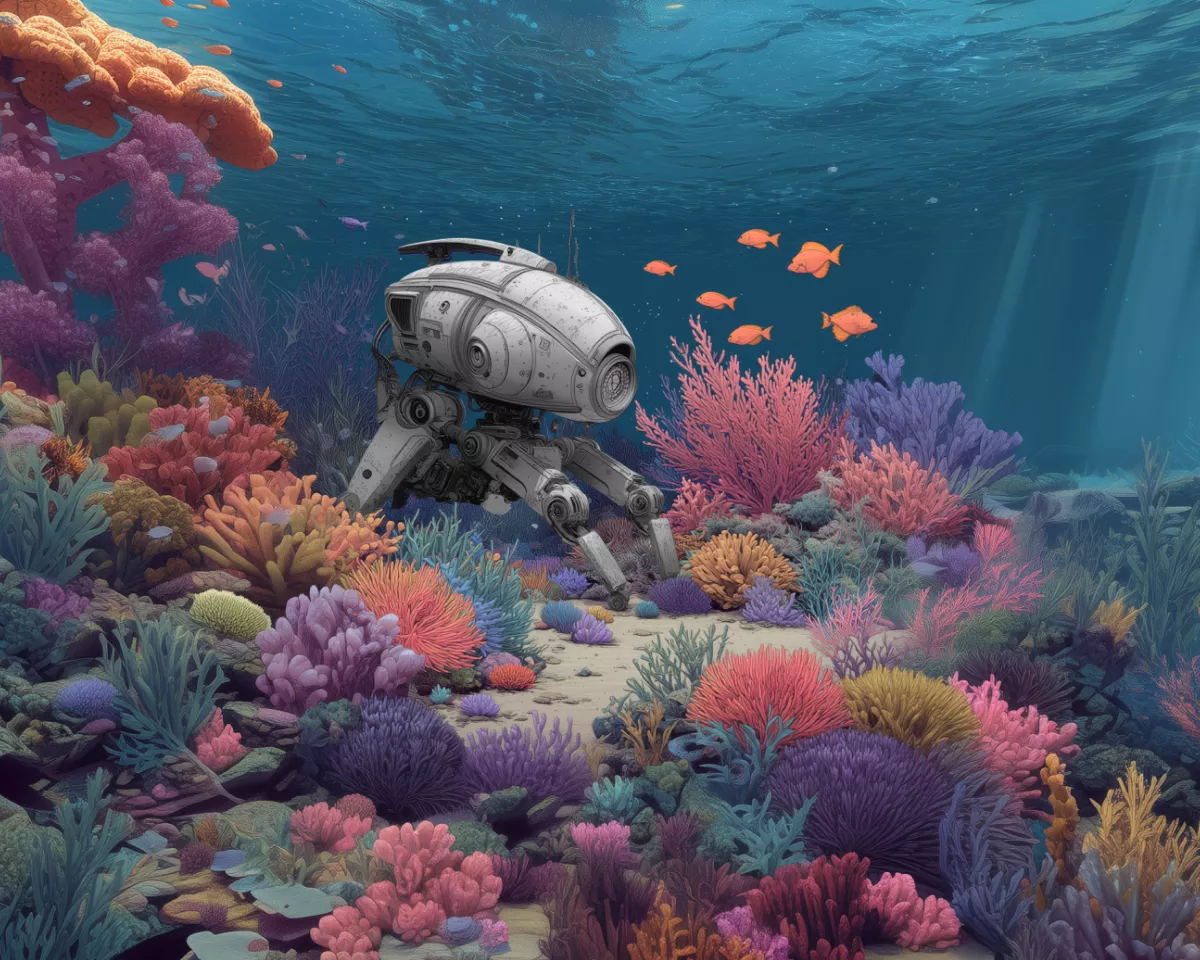
Researchers at Stanford University have developed a remotely operated humanoid robot designed for the exploration of the world’s oceans. The device is capable of transmitting tactile sensations to its operator in real time.

OceanOneK connects to a surface vessel linked to the internet, enabling control of the humanoid from anywhere in the world.
It is equipped with soft, sensitive “hands” capable of delicately handling even fragile objects. Researchers have retrieved treasures that sank over 2,000 years ago.
“We retrieved beautiful oil lamps, exquisite cups—all in perfect condition. The archaeologists were amazed,” noted Usama Khatib, director of Stanford’s Robotics Center.
The tactile interface allows the operator to “feel” what the robot experiences underwater, creating a sense of physical presence on the ocean floor.
“The uniqueness of this bot is that it not only observes but is capable of action,” added Khatib.
The humanoid can dive to depths of up to 1,000 meters. In 2022, it completed a series of missions in the Mediterranean Sea, including explorations of:
- a sunken Roman galley (circa 200 AD);
- a World War II-era submarine.
At a depth of 850 meters, the robot installed a commemorative plaque and later retrieved it back to the surface.
Khatib believes such gadgets could play a role in oceanography akin to that of observatories in space exploration.
“Now we can create ocean observatories that scientists worldwide can connect to, aiding in the study, protection, and restoration of ocean health remotely.”
In May, Amazon introduced the Vulcan robot with tactile capabilities.
That same month, the first combat tournament in Muay Thai style among G1 humanoid robots by Unitree Robotics took place in Hangzhou, China.