




On March 15, shares of one of Europe’s largest investment banks — Credit Suisse — fell more than 15% (at one point, the decline from ATH reached 98%). However, the bank’s troubles did not significantly affect the cryptocurrency market.
Credit Suisse plunges to fresh All-Time low as Saudi National Bank rules out assistance. Now down 96.7% below ATH. pic.twitter.com/33KDigAlDc
— Holger Zschaepitz (@Schuldensuehner) March 15, 2023
Bond sales in the banking sector resumed with renewed vigor after reports that Credit Suisse’s largest shareholder — Saudi National Bank — had no means to support the group.
The bank’s CEO Ammar Al-Hudayri said in an interview with Bloomberg that there were “many reasons” why the current 9.9% capital adequacy threshold would not be exceeded. He responded to a question about the bank’s willingness to provide liquidity for the investment bank.
UBS Group AG CEO Ralph Hamers declined to speculate on Credit Suisse’s status, noting that the institution he leads is focused on organic growth.
The Swiss National Bank’s reluctance to comment on the situation only intensified the crisis of confidence.
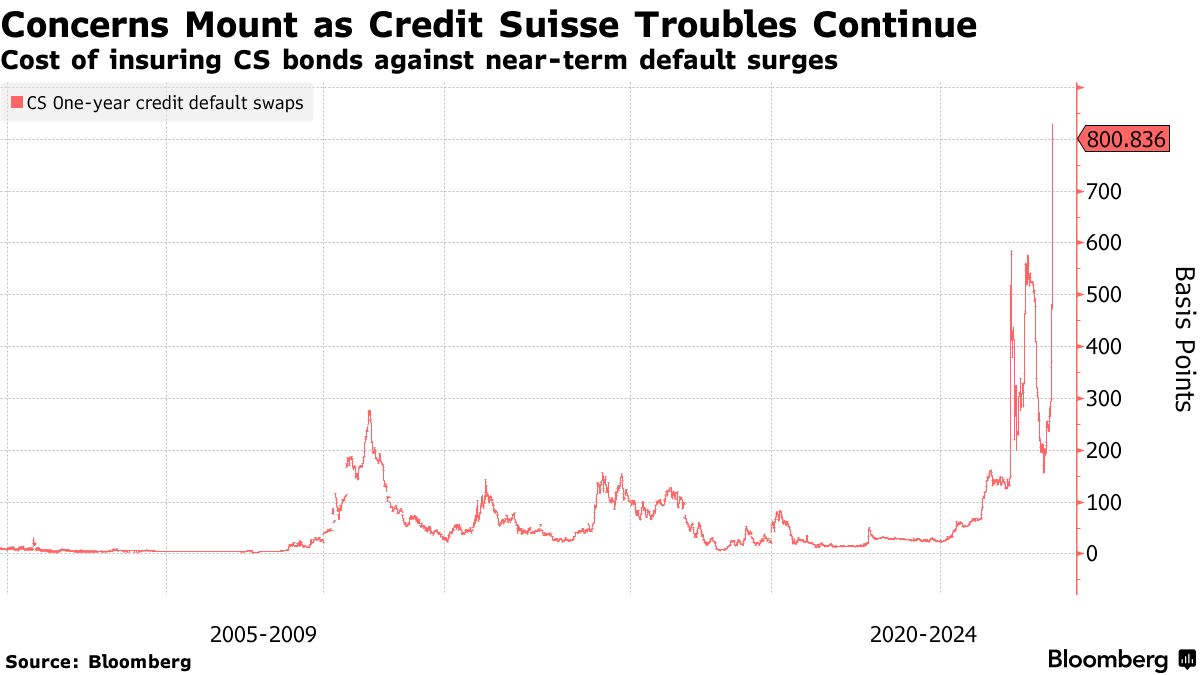
The cost of default insurance on Credit Suisse bonds rose to 800 bps (a level last seen at Lehman Brothers before its bankruptcy). By contrast, at the peak of the 2008–09 crisis the measure for the bank remained below 300 bps. As of writing, the CDS on the bank’s debt stood nine times Deutsche Bank’s and 18 times UBS’s.


Chairman Axel Lehmann assured that the bank is in good shape and that possible comparisons with Silicon Valley Bank are misplaced given strong capital adequacy and liquidity, as well as the restructuring program launched in October. He stressed that government assistance “is not a topic” for the bank.
According to the WSJ, representatives of the ЕЦБ have approached the largest creditors to assess their exposure to Credit Suisse-related risks.
The situation around the bank has weighed on the outlook for the regulator’s Thursday meeting.
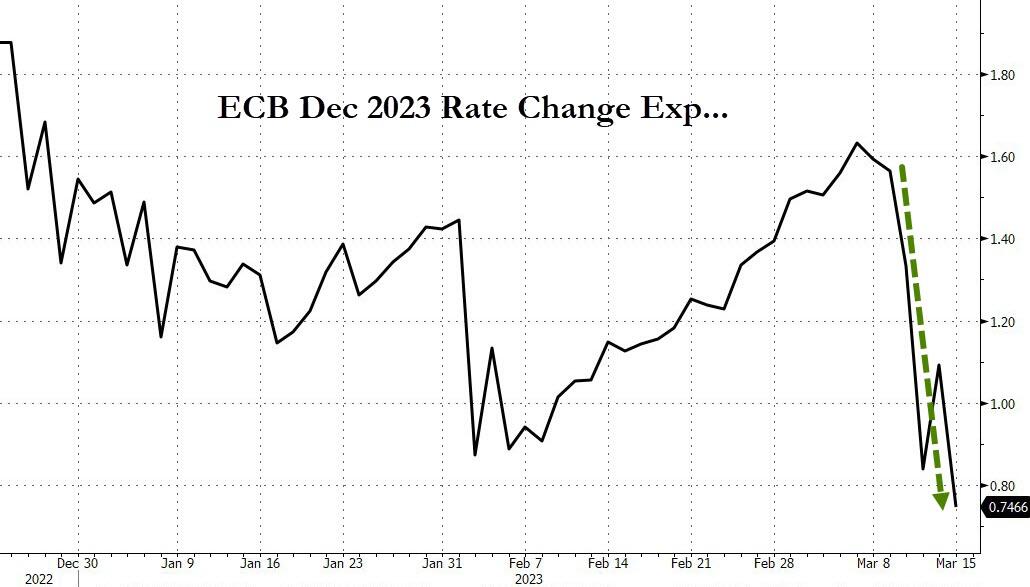
The market questioned the relevance of the morning insight from Reuters on lifting the key rate by 0.5 percentage point. The average projection for the move dropped to 0.36%.
The maximum gain is now estimated at 75 bps. Before the collapse of American banks it was projected to be twice as high.

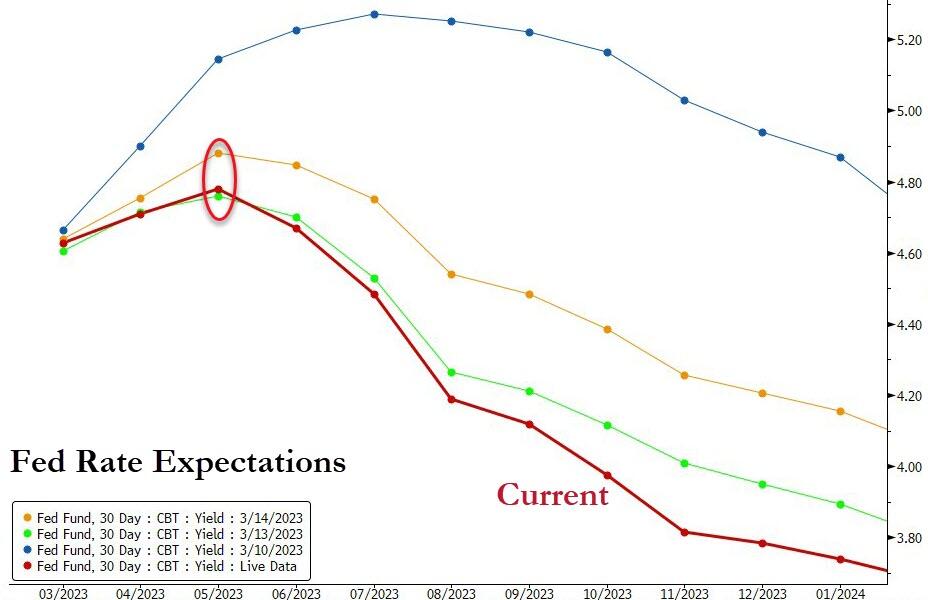
Ahead of the March 22 Federal Reserve meeting, the market is weighing between a pause and a 25-basis-point hike. Investors have begun to anticipate policy easing of 60 basis points by September 2023.
On March 10, the rate curve projected a peak at about 5.2% (the current level is 4.5-4.75%) with a decline to 4.8% by December.

Against the backdrop of declines in the Stoxx 600 (Europe) and the S&P 500 (US) by 2.3% and 1.7% respectively, the crypto market capitalization fell by 3.4% (24-hour basis), according to CoinGecko.
The latest dynamics reflect a pullback after a sharp rally on news of a slowdown in US inflation, which occurred earlier. Following the release of macro data, Bitcoin exceeded its June 2022 high, surpassing $26,000.
As of writing, Bitcoin was down 5.4% and Ethereum 5.7%.
Earlier, Morgan Creek founder Mark Yuskopredicted the start of a bull market for digital assets in the second quarter of 2023, citing a slowdown or pause in Fed tightening.