



A problem with DeFi indexes is their excessive dependence on the performance of a handful of ‘blue chips’. They do not always achieve the goal of reducing risk for investments in this sector. This is described in a study by Messari analyst Roberto Talamas.
6/ Check out our latest report for @masonnystrom’s and my detailed analysis of DPI through this framework of diversificationhttps://t.co/1nUBAsrQ5M
— Roberto Talamas (@RobertoTalamas) November 25, 2020
The expert studied the DeFi Pulse Index. Since launch in September, the product based on it has attracted $35 million. The instrument allows users to invest in 10 popular Ethereum tokens — LEND, YFI, COMP, SNX, MKR, REN, KNC, LRC, BAL and REPv2.
1/ The DeFi Pulse Index (DPI) now has over $35M in assets showing increased demand for crypto indexes
While DPI is a good investment for beginners, it may not provide the diversification that sophisticated investors demand, leaving them overexposed to individual DeFi assets
— Roberto Talamas (@RobertoTalamas) November 25, 2020
In traditional finance, index funds are gaining popularity due to diversification, broad market access, lower fees and the aim to reflect market dynamics or asset class.
Talamas noted that the methodology of such financial instruments can lead to high concentration of certain components and a reduction in diversification benefits. The analyst explained that this can apply to both the popular US stock market index – the S&P 500, and the DeFi Pulse Index.
3/ Despite these attributes, index funds can become highly concentrated depending on their construction methodology reducing the diversification benefits of the product. This applies in particular to capitalization-weighted indexes like the S&P 500 and the DeFi Pulse Index pic.twitter.com/pFpe8oNHAT
— Roberto Talamas (@RobertoTalamas) November 25, 2020
Based on the covariance assessments of components and the overall variance of the DeFi Pulse Index, the analyst concluded that 77% of its total risk is formed by just four assets. Uniswap (UNI) accounts for 26.1% of total risk, Aave (AAVE) — 20.18%, Yearn Finance (YFI) — 17.87% and Synthetix (SNX) — 13.29%.
5/ After analyzing the DeFi Pulse Index we found that four assets account for 77% of the portfolio’s total risk pic.twitter.com/KrbMoW7uEW
— Roberto Talamas (@RobertoTalamas) November 25, 2020


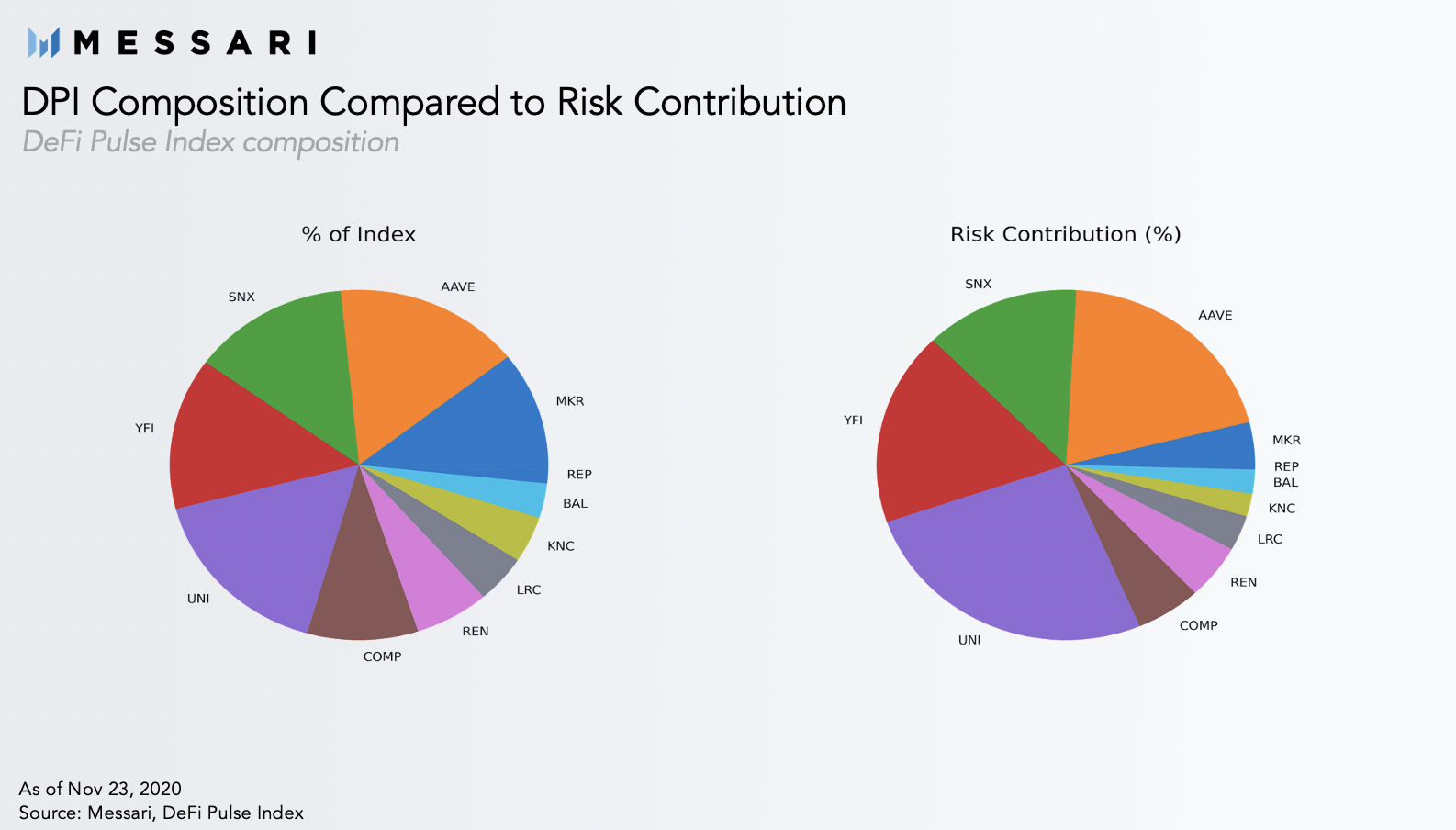
Composition of the DeFi Pulse Index and its components’ contribution to total risk. Data: Messari.
Talamas emphasised that simply adding more assets to the index due to their high correlation during sustained trends would be counterproductive.
The expert believes that higher returns with lower risk could be achieved by switching to an equal-weighted portfolio with weekly or monthly rebalancing. However, this would raise gas costs, he added.
The DeFi Pulse Index, launched on September 9, has fallen by nearly a quarter from its initial value.


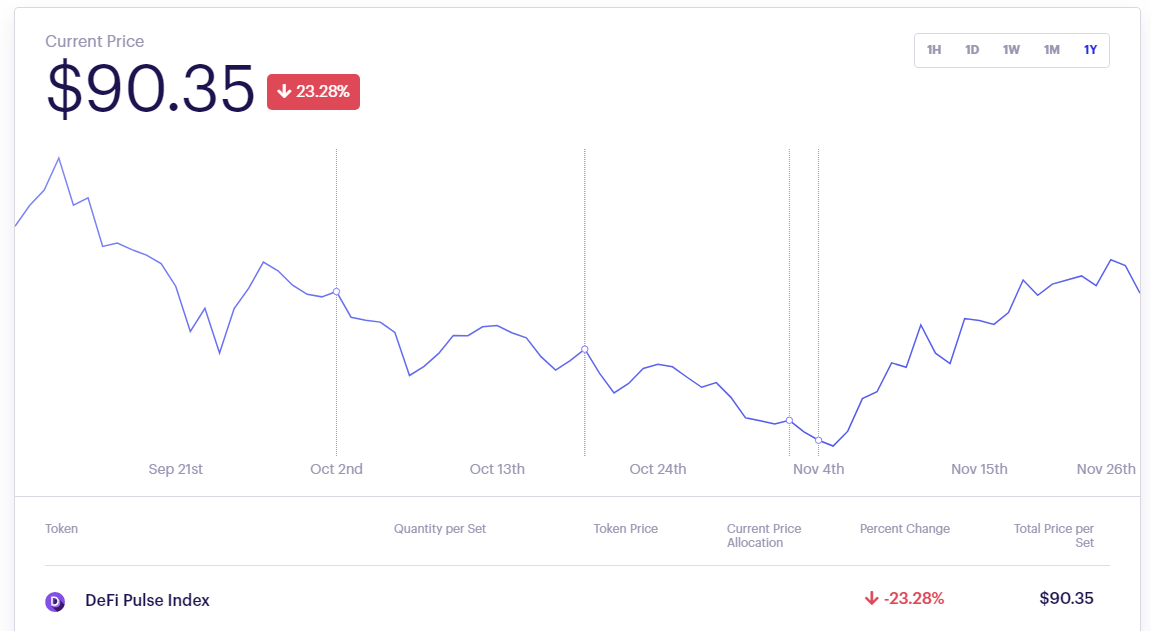
DeFi Pulse Index dynamics. Data: TokenSets.
According to Dune Analytics, the total number of DeFi protocol users approached 1 million. The figures may include multiple addresses belonging to the same investor.
Total market capitalization of DeFi tokens amounts to $16.7 billion. Over the past seven days, assets in the top 10 of this list showed movements from -16.6% to +3%.


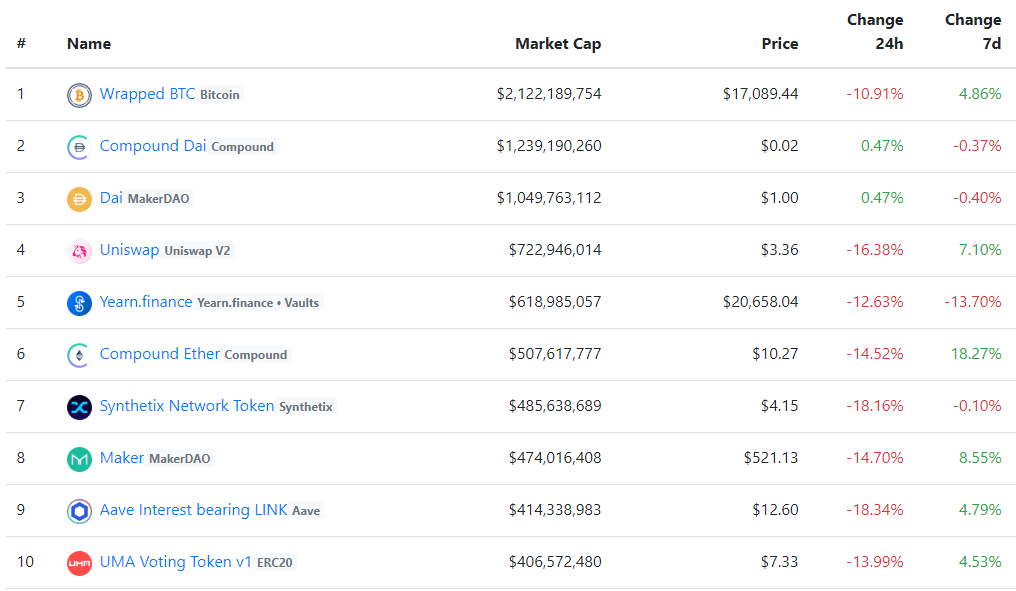
Data: DeFiMarketCap.
A third of ForkLog users surveyed refused to invest in the DeFi sector due to distrust in projects.
Subscribe to the ForkLog channel on YouTube!