




The launch of the Runes protocol has significantly bolstered miners’ revenues post-halving through increased fees, according to TeraWulf co-founder and CEO Nazar Khan in an interview with Cointelegraph.
On the day of the fourth block reward halving on April 20, the average transaction fee surged to a record $128.45. According to BitInfoCharts, this figure has since adjusted to approximately $13.
At least in the first day or two, transactions with Runes significantly increased fee volumes, leading to a rise in hash price, Khan acknowledged.
With the fixed block reward reduced from 6.25 BTC to 3.125 BTC, this has become a ‘wild card’ for Bitcoin miners, he added.
Daily miner revenue fell from $107.7 million on the day of the halving to $36.4 million by April 25. The share of fees in this figure dropped from 75% ($81 million) to 19% ($7.06 million) respectively.


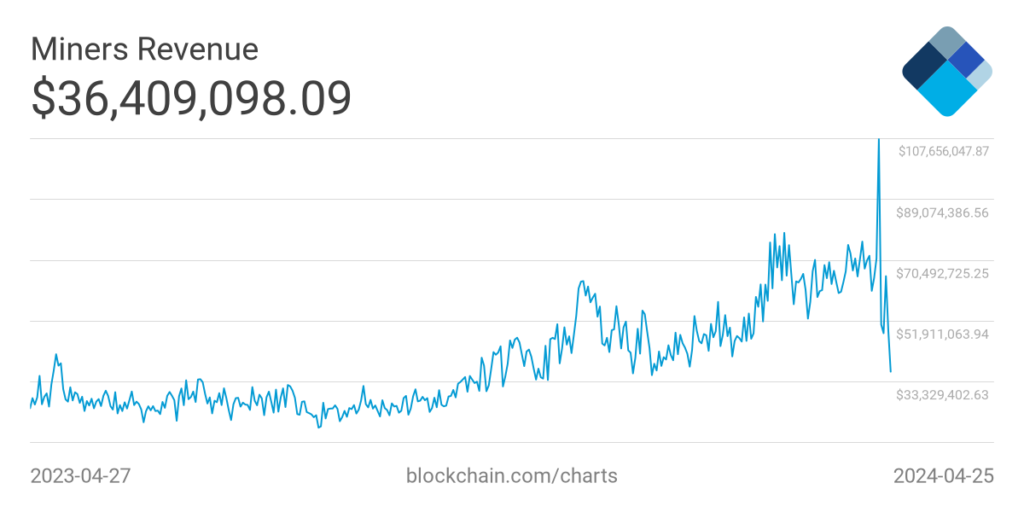
In the preceding days, fees accounted for up to 30% of miners’ revenue. According to Khan, at this level, it represented an additional income of 1 BTC per block, which is ‘significant.’
When planning profitability post-halving, the company assumed a Bitcoin production cost of $37,000 with a 10% fee share. Any excess over this figure means mining at TeraWulf becomes more profitable, Khan emphasized.
According to CoinShares experts, the average fee share in revenue over the coming months is expected to be around 15%. Only on peak days will the figure reach 30%, the company suggested.
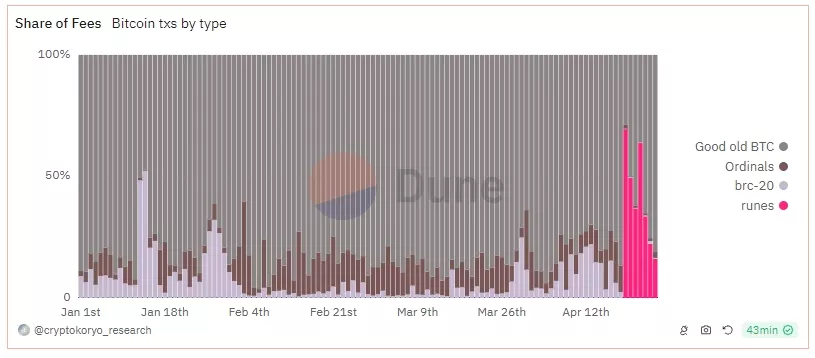
The initial excitement around Runes has noticeably waned since its launch: the transaction share dropped from a peak of 81% to 30%, according to dashboard data on Dune. In terms of fees received by miners, the figure decreased from 69.5% to 16%.


Analysts at Franklin Templeton have identified Runes, alongside Ordinals, L2 solutions, and DeFi primitives, as one of the main drivers of renewed innovation in Bitcoin.