




Indonesia, the world’s fourth-most populous nation, lives with a digital paradox. Millions of smartphone-native youngsters are piling into meme tokens in search of a quick score, even as the government touts ambitious plans for artificial intelligence.
Recent mass protests in Jakarta, sparked by lavish perks for officials, only underscored the gulf between national aspirations and an archaic reality. How this vast country—whose principal asset is its youth—navigates the divide is the subject of a new ForkLog piece on the Global South.
Historical context and demographic profile
To grasp contemporary Indonesia, start with its recent past. The country declared independence from the Netherlands in 1945. Its first president was Sukarno, a leader of the anti-colonial movement.
In the early 1960s the region endured acute social, political and economic turmoil, culminating in a series of coups led by General Suharto. Attempts to seize power were accompanied by mass killings of people suspected of loyalty to President Sukarno.
The victims of the “politicide”, as modern researchers describe the repression, numbered between 500,000 and 3m by various estimates. The dictator Suharto was toppled only in 1998 amid the Asian financial crisis. The military junta left a legacy of corruption, bureaucracy and inequality that the country is still struggling to overcome. In 2013 the documentary “The Act of Killing” was released; its creators claim that many organisers of the mass killings in Indonesia retained senior posts even after Suharto’s fall.

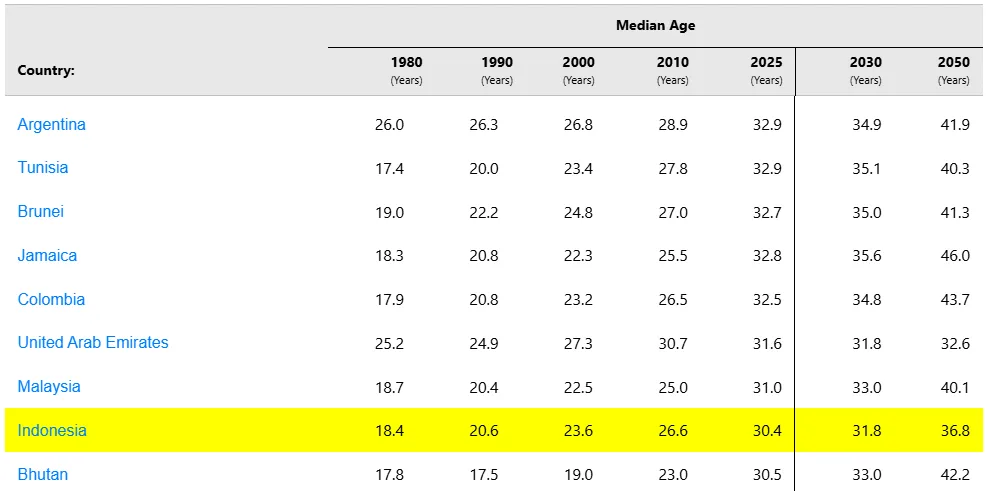
Today Indonesia is a young country. The median age is about 30. Of its 280m people, more than 215m use the internet, spending up to eight hours online daily—among the highest rates in the world. Enthusiasm meets harsher economic realities, however.


Average monthly income hovers around 5m–6m rupiah ($300–$370), making the recent scandal over housing allowances for lawmakers particularly galling. This income gap creates a setting in which crypto is not just a medium of exchange but, for some, a possible ticket to a different life.
Cryptocurrencies: the people’s speculative tool
In January 2025 Indonesia’s Financial Services Authority took crypto under its wing, reclassifying it from a “commodity” to a “digital financial asset”.
Previously, virtual currencies were treated as a commodity regulated by the Commodity Futures Trading Regulatory Agency. Using crypto for payments remained banned. Companies had to comply with AML/CFT rules and operate with an approved list of assets.
The new status formally integrates crypto into the financial sector. It entails stricter capital requirements for market participants and stronger consumer protections.
According to Statista, Indonesia has more than 28m crypto investors—around 10% of the population. Behind the numbers stands a competitive infrastructure. The country has over 15 licensed trading platforms.
The ecosystem’s foundation was laid by old hands such as Indodax, the country’s first and largest exchange, operating since 2014. It provides deep local liquidity and supports hundreds of trading pairs, primarily against the rupiah.
They are followed by players with global backing, such as Tokocrypto (backed by Binance), and local venues with international-grade technology, such as Upbit Indonesia (a branch of a South Korean giant).
For Indonesian youth, crypto is less a technology than a social escalator and a casino rolled into one. Investing in Bitcoin or Ethereum requires sums beyond most budgets. Enter meme tokens.
For Gen Z, a coin adorned with a dog or a frog is not just an asset. It is part of online culture, a badge of belonging to a global tribe and, most importantly, a lottery ticket with a low barrier to entry.
Guides to easy money
Local crypto influencers fan the speculative fever. Their content is not about the philosophy of decentralisation but about actionable steps to make money now. They set the agenda and chase riskier niches with outsized upside.
Influencers such as Yunepto and AnalisaCrypto, for instance, specialise in hunting and hand-holding for airdrops.
TerminalFi Retroactive Confimed Airdrop Q4@Terminal_fi adalah DEX Spot Trading institutional assets and yield-bearing stablecoins yang didukung oleh @ethena_labs.
fyi di follow @AndreCronjeTech
Untuk Video Tutorial & penjelasan lengkapnya disini https://t.co/TOr1SoFpqA pic.twitter.com/xXpx80zsEU
— Yunepto.base.eth (@yunepto) October 10, 2025
Analysts like Crypto Ndo and IhsanAgaz provide more traditional fare—technical analysis—but they, too, are geared to short-term trading.
Market lagi mode enak buat taking profit?
Iya lah apalagi masuknya pas $BTC $30K / $SOL $12!
Ya sekarang dan beberapa bulan kedepan ini waktunya panen—jual ke euforia,— IhsanAgaz Crypto (@ihsanagaz) October 9, 2025
These promoters are not selling a dream of remaking finance. They offer playbooks for entering a global casino—an approach that resonates with a generation eager for any chance to escape inequality.
Artificial intelligence: ambition and reality
Alongside the crypto fever, Indonesia’s government is trying to ride the AI wave. In 2020 it adopted a National AI Strategy (Stranas KA) through 2045. Priorities include health care, bureaucratic reform, education and food security. On paper, the plans impress: building an “AI ecosystem”, drafting ethical norms and nurturing talent.
Big tech sees potential. In April 2024 Microsoft announced $1.7bn of investment in cloud and AI infrastructure in Indonesia. Nvidia teamed up with local telecoms giant Indosat to build a $200m AI centre.
Yet the gap between strategy and execution is wide. The main hurdles are:
- a talent crunch — a dearth of specialists in machine learning, data analysis and AI engineering;
- brain drain — skilled developers and engineers depart for Singapore, Malaysia, Europe and North America in search of higher pay and more compelling projects;
- infrastructure — despite investment, quality digital infrastructure, including data centres and fast internet, remains uneven across the archipelago’s 17,000 islands.
Against its neighbours, Indonesia still lags. Singapore is already a global AI hub. Vietnam is investing in R&D and attracting the factories of tech giants. Indonesia, for all its vast domestic market, risks remaining a consumer of others’ technologies rather than a creator.
Generation Z’s revolt
Student protests in Jakarta in September 2025 laid bare the contradictions. The spark was news that 580 lawmakers were receiving hefty housing allowances amid broad economic stagnation. For a generation used to digital transparency and instant response, it looks like brazen mockery.
The rift is made more combustible by cultural proximity to Malaysia. Indonesian and Malay are so similar that they form a near-shared information space. Memes, corruption exposés and calls for justice cross borders in a flash, amplifying the resonance. A shared dominant religion—Islam—adds to the edge.
Tech-savvy youth have run into the brick wall of an old political system. As in Nepal, Gen Z Indonesians are taking to the streets—but here the trigger is the internal divide between elites and the public, not social-media blackouts.
What next? A path to digital sovereignty
Indonesia stands at a crossroads. It has a demographic dividend and a vast, still-underdeveloped domestic market. To turn this potential into growth, it needs decisive, systemic steps:
- Education reform. Move beyond basic digital literacy to mass training in frontier technologies. Create joint programmes with global companies and universities.
- Incentives. To stem brain drain and attract investment, offer not only tax relief but also simpler bureaucracy, intellectual-property protection and predictable regulation. Today’s flip-flopping on crypto rules sends a poor signal to the entire tech sector.
- Infrastructure parity. Development must reach beyond Java and Bali. Investing in connectivity and data centres on remote islands could unlock regional potential and ease social strains.
- A balanced green agenda without Luddism. As a country vulnerable to climate change, Indonesia cannot ignore the environment. But that should not mean shunning technology. AI and blockchain can help monitor deforestation, optimise agriculture and build efficient supply chains for “green” products.
Whether the country’s leaders will heed the young remains an open question—and the story is far from over. Indonesia is another chapter in the broader tale of the Global South’s digital transformation.
ForkLog has already explored how Bhutan taught the world “green” mining, how Bangladesh is trying to marry innovation with a mounting ecological crisis, and how the UAE and Saudi Arabia are investing in AI and Web3.
Together these stories form a mosaic, showing how global technological waves collide with local socio-economic realities to create new growth points—and fresh fault lines.
Indonesia’s future depends on whether its leaders listen to the young. If they continue to ignore demands for fairness and development, the energy now channeled into meme-token speculation could easily shift to more radical protest.
If, instead, conditions for self-realisation are created, Indonesia could turn from an archipelago of contrasts into a technological leader of South-East Asia. But to get there, the country must stop building AI castles in the air and start fixing the foundations—education, infrastructure and governance.