



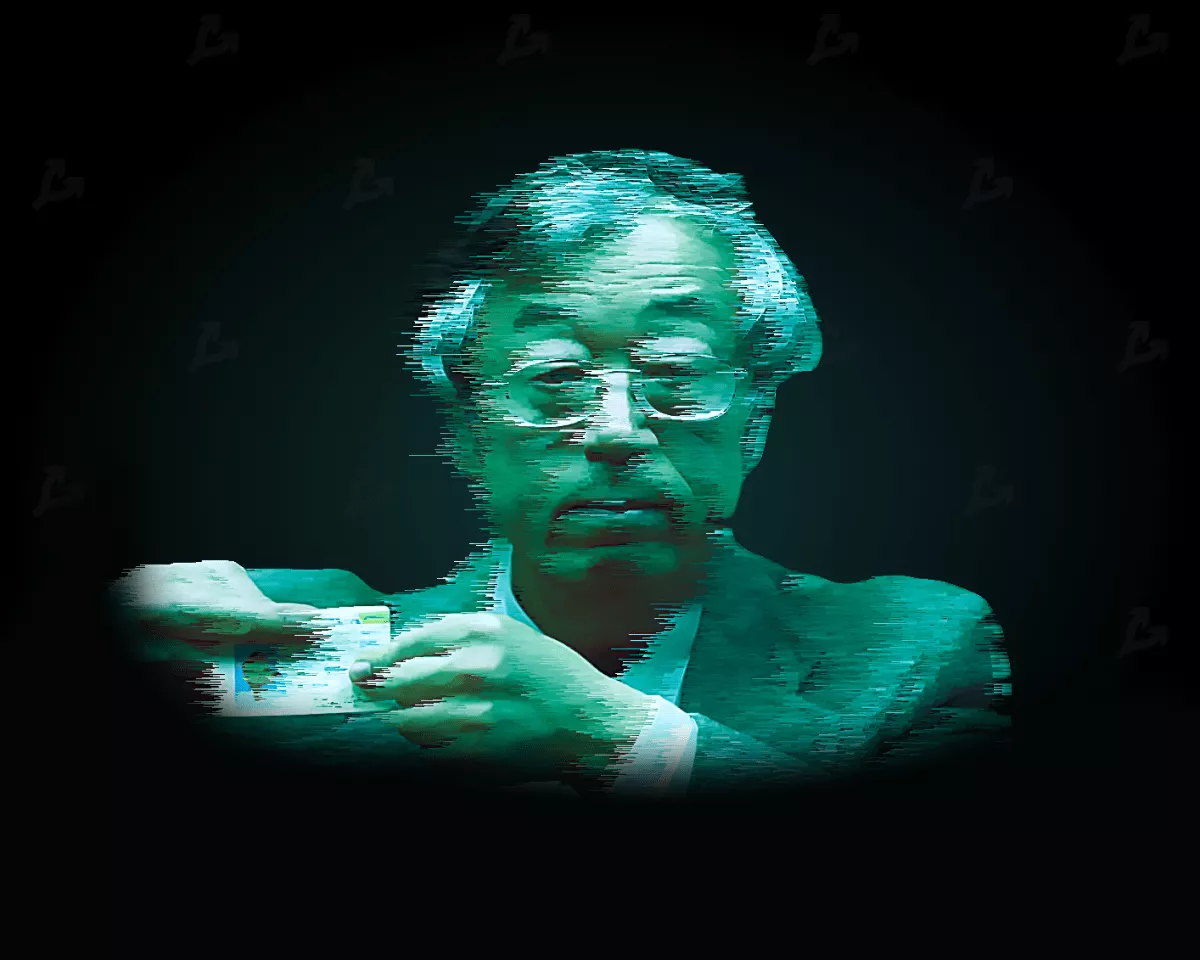
The Bitcoin creator Satoshi Nakamoto disappeared ten years ago—on 26 April 2011. For Bitcoin Magazine, journalist Pete Rizzo told the story of his last actions before handing the project over to a community of developers led by Gavin Andresen. We present an adapted translation.
They suspected he was a Briton, that he was involved with the Yakuza, that he laundered money. They gossiped, whether he was a woman, and smutted, that they would take him. They discussed what would happen if he turned out to be crazy, they watched the phases of his sleep, argued why he spoke or was silent.
At the end of 2010 Nakamoto still enjoyed the authority of having invented Bitcoin. People respected him for turning the world’s first decentralized digital currency into a market with about $1 million in turnover. Yet as dissatisfaction with his power and access grew, users began referring to Nakamoto more often simply as an administrator, a bottleneck of development, and even a dictator.
Ultimately, the quiet protests against the Bitcoin creator, simmering since the summer, evolved into something resembling a revolt. As demands escalated, the surveillance of Nakamoto took on a sporting character: users debated when and why he might surface on the forums.
Nakamoto was capable of keeping order in discussion when and if he appeared.
Indeed, as winter approached, the tenor of the conversation shifted — messages emerged casting doubt on the project, or more precisely — Nakamoto’s role in it. In the end, users laid out the matter clearly: not Nakamoto, who was still leading development at the time, but the people using Bitcoin software who were the project’s ultimate authority.
“In an open-source project there is no single leader. After all, the brain is where each individual is merely a cell,” — wrote ShadowOfHarbringer. “If one day Satoshi says: ‘Okay, guys, that was all just a joke, I’m closing the project,’ we will simply fork the code.”
This line of defence found a receptive audience even in Andresen, who unambiguously wrote: “If Satoshi goes off the rails, there will be a fork in the project.”
At the heart of this thinking was a growing belief — perhaps stronger than confidence in Nakamoto himself — that no Bitcoin user could be more important than another; that all are nodes, authors of code, people whose actions determine the project’s success.
Nevertheless, in the weeks that followed, early Bitcoin users would exercise this authority to reshape views on usability, policy, constraints, and freedoms within the software.
Ultimately, this awakening would be tantamount to something bigger: the first assertion of power over the creator of Bitcoin and the system his rules prescribed, defined by decisions so refined that they could be mistaken for divine.
User Thrashaholic wrote to one of the critics:
“So you’re comfortable with natural laws determining how much gold, silver or palladium there can be? Call these laws ‘God’ if you like; it’s no different from Nakamoto.”
I. Innocence
For Nakamoto, all this might have seemed far from the calm of 2009, when, for months after the initial software release, there were no loud reviews about him, if there were any at all.
Indeed, as the year drew to a close, the optimism that permeated his early correspondence with the renowned cryptographer Hal Finney had faded, and even ordinary responses to Bitcoin’s mailing list had almost entirely ceased.
But if Nakamoto was indeed confident in Bitcoin’s scientific base and could explain its merits as money, the fact that he added a forum function to the official site perhaps shows he was considering evangelising his invention.
Of course, one could suppose that the forum bitcoin.org, launched in November 2009, could have done much to raise the profile of the still little-known project — a year after launch it had processed just over two hundred transactions and suffered from a lack of an available exchange rate.
Besides Nakamoto, a student Marti “Sirius” Malmi was already working on the project, who in his spare time fixed bugs in the code; however the forum allowed the team of developers to broaden. When asked how much a Bitcoin would cost, NewLibertyStandard answered: “So that it would be enough to buy paper bowls; no more than 50 pieces.”
Together, the forum users would later find a better answer, creating the first exchange and persuading shops to start accepting their currency.
Nakamoto watched all this from the sidelines. The lead developer and his assistant released around 50 updates in the first year.
Drop by Drop
What Nakamoto thought of the first visitors to bitcoin.org we can only guess, but from the responses, he was modest and responsive.
Indeed, most of them revealed no more about themselves than Nakamoto. Some chose awkward nicknames like Giik, Xunie and riX; other pseudonyms were prosaic (SmokeTooMuch) or political (1currencynow), but almost never personal.
However, one nickname stood out at the time: Gavin Andresen. Unlike the other unusual handles Sirius or Nakamoto, behind this alias was a real person — Gavin Andresen — easy to identify.
His avatar also contrasted with others. While most profiles showed blank grey squares, Andresen’s avatar depicted a smiling traveler along a path. The image was fitting. By May 2010, Bitcoin looked like a barely-traced path; it drew the attention of Andresen and the first wave of Silicon Valley startups, modestly debuting on the pages of InfoWorld.
Yet to attract attention to Bitcoin on increasingly active forums, something more than a name was needed, and Andresen’s first project, launched in early June, was meant to provide this.
In its announcement he wrote:
“In my first project I decided to do something that sounds really silly: I created a site that dispenses bitcoins… For a start I placed 1100 [bitcoins] on it. Why? Because I want Bitcoin to succeed.”
The “Bitcoin Faucet,” as this site would be named, was met with enthusiasm. It attracted attention from early network participants like Laszlo and quickly acquired a status perhaps even more cult-like than the famous Papa John’s pizza purchase. The site was not just an exchange, but a creative act that helped realise Bitcoin’s potential in online commerce.
While traditional money lay inert in accounts, taking days for bank-to-bank transfers, payments from the “Bitcoin faucet” flowed like a river from one user to another. Within a week Nakamoto himself noted the work, calling it a “great choice for a first project.”
“I planned to do something similar if no one else did, so that when generating 50 BTC becomes too hard for mere mortals, new users can immediately obtain a few coins to get in the game,” — he wrote.
This message was enough for Andresen to respond with a letter. The tone of his reply immediately revealed how different these two people were.
“I’m very curious to learn more about you — how old are you? Is Satoshi your real name? Do you have a job? What projects have you worked on before?” — Andresen wrote. “In any case, Bitcoin is a brilliant idea, and I want to help. What do you need?”
The fact that Andresen had his own complex backstory, or that he had once been widely known as Gavin Alexander Bell, did not trouble anyone, as did the ironic thought that another great inventor’s shadow hung over his life.
Slashdot Effect
By the end of June Bitcoin traded around a penny per unit, with double-digit daily transactions in its network. It seemed the project had found its footing. The calibre of developers grew as well — releases became a community affair.
Soon Andresen, Gavin and a small group of developers testing his builds, announced a possible Bitcoin 1.0 release.
While most participants worked on compiling code, the release version became the main news.
“We should try to publicise the project, advertising on forums, IRC, YouTube, Facebook, Google Ads. Slashdot with its millions of technically savvy readers would be a fantastic option, perhaps the best we could imagine!”
Soon the forums were buzzing with discussions about press statements, debating whether Bitcoin was really “energy-backed” and whether its limited issuance would matter. The fact this work continued even after Nakamoto reconsidered and published the release proved that Bitcoin, as anticipated, was a public project.
Nevertheless Nakamoto’s conservatism proved prophetic. Shortly after the Slashdot post, Bitcoin’s infrastructure was nearly overloaded, price jumped to $0.10, and mining difficulty rose fourfold as more miners connected to the network.
Along with this came technocrats like William “Nenolod” Pitcock, who attempted to shake Bitcoin’s economics for scientific or sporting interest. In his Twitter feed he wrote:
“Bitcoinexchange: destroyed. 84,732 BTC [sold for] 1,500 euros looooooooooooooooool.”
A wave of fear swept forums; conjectures about attacks by bankers or data-centre operators proliferated. With such a frenzy, a drop to $0.05 seemed only a matter of time. The once plentiful faucet dried up, payouts shrivelled.
A Strange Block
Yet with each wave of Bitcoin’s popularity, new users emerged. So, even as Nakamoto began to more regularly include Andresen’s code in the software, he was not the sole continuer of work.
Of course, nothing prevented anyone who wished from contributing. Nakamoto’s email was listed on the home page of bitcoin.org, and his name, largely unknown outside the forums, would hardly have seemed prestigious.
Tiago Faría recalls that he sent Nakamoto the site localization while en route to Lisbon and received enthusiastic thanks on landing. When Ribuck encountered compilation issues, Nakamoto declined compensation for his help. (“I have plenty of bitcoins,” he replied*). Likewise, the name of David Parish was added to the list of contributors after he showed a fleeting interest in studying the code.
In short, working on the protocol was rarely a source of pride. Those who could contribute simply came and went, like Laszlo, who by August vanished from the radar and soon left the project for good. For those who kept at it, it often served their own aims.
Andresen was busy working on a “super-secret” Bitcoin faucet adopter with commercial ambitions. Leaving his part-time programmer job, he hoped Bitcoin would help him find work in Amherst, Massachusetts, a university town where capitalism is less tolerated than welcomed, and where the Boston offices are a day’s drive east.
The Bitcoin inventor did not reveal details of his biography, making it hard for others to tell whether he was reclusive or simply busy.
Yet by late summer 2010 the era of doubts about Nakamoto had begun. If there was magic in his code, did Nakamoto the mage, alchemist who turned C++ into a philosopher’s stone?
This pristine image cracked on 15 August 2010, when the blockchain suddenly spawned 184 billion bitcoins. A critical vulnerability in the code — an unprecedented breach of the network’s monetary policy — was the work of a saboteur who could modify the software and undermine the distributed ledger.
While bewildered users spread the word across forums, Andresen and other developers tried to find a fix. Yet it was Nakamoto who prepared and implemented the patch.
Subsequently, user Freemoney noted how dependent the software had become on its king:
“Are we lucky, or does Nakamoto have a secret pager that notifies of emergencies?”
II. Disappointment
In the weeks that followed, the Bitcoin network recovered, and the exploit remained in the past.
Yet the attacker managed not only to breach Bitcoin’s rules but to reveal the system itself, exposing its mechanics and governance for the first time.
After the attack Nakamoto actively hardened the codebase, adding and removing large swaths of it. He took measures to neutralise suspected attack vectors, disabling strong-transaction commands, integrating checkpoint blocks directly into the source code, and setting up an alert system that allowed him to push notices to all clients.
In a sense, his actions were understandable — Bitcoin was under quiet siege, which only its creator could detect. By June 2010, users began probing the code seriously, and although most reported vulnerabilities to Nakamoto, there was no guarantee such altruism would continue.
Nevertheless Nakamoto’s actions showed that not all Bitcoin rules were equal. The nature of consensus still relied on all users agreeing to the same rules for all valid blocks (to recognise a single blockchain, and thus a single currency). However, the so-called policy rules lay outside this logic, giving Nakamoto freedom to act against transactions in the name of safety.
What should a transaction cost? Should there be limits on transaction types? Can any transaction be deemed undesirable, suspicious or harmful to the network?
In these questions Nakamoto was less cooperative, and his decisions were opaque. The problem was compounded by his apparent willingness, at least behind the scenes, to alter key messages to secure widespread adoption of Bitcoin.
As early as 2009 Nakamoto handed Malmi credentials to bitcoin.org; between semesters he freely used them to supplement the FAQ. Notably, one such addition described the “advantages” of the project.
“Bitcoin transactions are almost free, while credit cards and other payment systems typically charge 1-5% for processing plus merchant fees that run into hundreds of dollars,” — the updated site proclaimed.
Perhaps it is unsurprising that where magical money on the internet intersected with real costs, doubts about Nakamoto’s authority first emerged, and the conflict between his directives and developers’ and users’ decisions became apparent.
The Gatekeeper
Ultimately the exploit cracked the Bitcoin blockchain for five hours. Before users restored network rules, 53 blocks were generated.
Yet if today such an event would pose serious problems, then it would be a point of pride — early Bitcoin enthusiasts boasted that the exploit was closed faster than critical vulnerabilities in “Google and Microsoft.”
Even more surprising is how little Nakamoto spoke about it. Apart from a warning in the mailing list, there seemed to be no public comments from him. The nature of the fault, and how the fork would be implemented, and how Nakamoto in effect tightened network rules unilaterally, and his patch changing transaction input and output rules, were not discussed.
Even if other developers had questions about what happened, it was not clear where to ask them. In the summer, there were several attempts to hold a developers’ meeting, but without Nakamoto’s participation it would have been pointless.
To be frank, it was unclear whether Nakamoto wanted to contribute at all. Weeks earlier he had quietly tightened the rules on block size, introducing a MAX_BLOCK_SIZE feature under the guise of a routine update.
Similar events occurred at the end of July when Nakamoto released an update with the description: “Please upgrade to version 0.3.6 as soon as possible!”
This update integrated code that had not previously been publicised for discussion. Not that he lacked reason for changes. It appears the update fixed a bug that could allow an attacker to spend Bitcoins that did not belong to him.
But such actions carried their own consequences. Andresen, for instance, soon began discussing development with the newcomer Jeff Garzik, an experienced Linux programmer whose Slashdot article inspired him to study Bitcoin’s code.
There is nothing surprising in the two finding much in common. Like Andresen, Garzik was a startup veteran who lived on the outskirts of Raleigh, North Carolina. He slept and worked in a Fleetwood RV 1980s caravan.
From the IRC correspondence, they quickly became friends.
gavinandresen: I’d simply like to convince [Satoshi] to move to a more collaborative model of work.
Tritonio: What do you mean? What is the current development model then?
jgarzik: Closed, largely. Open source, closed development.
gavinandresen: Satoshi is now the gatekeeper; all code goes through him.
A Quiet Slide
Whatever the reason, in the autumn users and developers appeared to care less about Nakamoto’s authority.
Garzik aggressively opened up forums with discussions about tougher questions on economics. He first scrutinised Bitcoin’s fee policy and proposed abolishing free transactions on the grounds that they are presented as hidden storage costs.
Nakamoto did not fully reject subsidising, explaining both the current fee threshold (200 KB, roughly 1000 transactions per block) being free, and why he supported only a lower limit at 50 KB.
“Bitcoin must always allow at least a few free transactions,” — he believed.
In response to objections to this logic, Nakamoto quickly adopted the desired change, integrating it within two weeks. Yet some users appeared dissatisfied with the higher cost implied. They argued that it should be the market, not the developers, setting fees.
After this change, developers, such as Andresen, were puzzled by how the network regulates fees, and could not readily answer users. The awkwardness arose as the network grew that no one could bring questions directly to Nakamoto.
By then the community had already exchanged user patches for unofficial software that corrected minor issues or boosted mining efficiency.
evidently Nakamoto also recognised the problem. In October he gave Andresen access to a software update. Andresen took advantage of the new capabilities to engage IRC users in decision-making, although Nakamoto remained the final authority.
More important questions, however, were resolved only at Nakamoto’s direction. When Garzik proposed increasing the new block-size limit by creating a patch for “PayPal-like transaction throughput,” Nakamoto rejected it, saying changes could be made “if there is real need.”
Today his response may seem incomplete. Garzik apparently asked in contained terms how developers should handle “incompatible” changes that do not merely alter the rules but expand or even implement new ones.
Already then some questioned how such decisions could be made by Nakamoto or any benevolent dictator. One newcomer — Vladimir van der Laan — stated that such a precedent could push the system toward a dangerous path toward centralisation.
wumpus: Indeed, a developer should set the protocol, not policy on fees.
wumpus: Otherwise we may end up calling Mister Nakamoto a dear leader 😛
III. Confrontation
As criticism grew, Nakamoto remained active and online, but even he struggled to keep up with the scale and urgency of the forthcoming debate.
By November, users seemed to be testing Nakamoto’s boundaries across the board. Some argued his design was flawed; others went further, asserting that the system had unfairly enriched him.
Even though this logic is now outdated and coloured by misunderstanding, these posts can be seen as concerns that changes by developers could hurt investors’ interests. The echo that users hold ultimate power over the system grew louder.
Not surprisingly, most verbal attacks targeted the more discretionary rules Nakamoto had put in place: most damage went to the rule that capped Bitcoin’s issuance at 21 million coins.
mesees: How can you stay calm when some random guy sets the amount in circulation?
Kiba: Who will then set the quantity?
thrashaholic: I’d rather trust Nakamoto than Bernanke.
mesees: A crowd of random people is better than one random person.
ArtForz: What matters is that the value is fixed, accepted by all participants and known to all in advance.
Remarkably, it was here that users began to rally around the idea that they could manage Bitcoin by effectively forking it and continuing the work even if they disagreed with Nakamoto’s or other developers’ decisions.
Michael “Theymos” Marquardt, administrator of the Bitcoin Talk forum, was among the first to articulate this thought. When Nakamoto released an update, Marquardt stated that he had merely proposed a modification the users had themselves approved by loading the software.
Later he developed this logic, rejecting the idea that new software, even with better functionality, remains Bitcoin if users do not agree with it. In a sharp reply he wrote:
“Obviously I’m prepared to put my balance on the line for security of the system. Don’t hesitate, make another version with silly rules. No one will use it.”
Soon a 20-year-old college student from Wisconsin challenged Nakamoto’s authority for the first time, though he was not the only supporter of this path.
From Decimal Points to DNS
It is fitting this part of the tale begins with a question about decimal places.
As many of you know, Bitcoin, unlike other money, can take values up to eight decimal places, with the smallest units having no definition at the time. The practice of wallets rounding to two decimals, as with dollars and cents, added to the confusion, and the decision traced back to the original code.
“Coming to a consensus now about when to move the decimal point seems like a good idea,” — Andresen wrote. “When Bitcoin is worth around ten dollars (or euros), I think it will be time to allow payments smaller than a penny.”
The question, of course, was policy, how — or if — the software would be changed to facilitate mass adoption. Subjectivity of decisions appeared quickly: users debated for several pages whether their mothers know the term “milli” or the exact meaning of “micro.”
Meanwhile Matthew “Appamotto” Willis was engaged in expanding the Bitcoin concept. His inquiries became the first study of how a world with multiple blockchains could be structured.
Could applications run atop Bitcoin? Or was Bitcoin destined to move to a different blockchain type that would enable thousands of coins? The spark of this idea spread quickly; users began approaching Nakamoto, unsure whether to initiate a fork or ask for his approval first.
“I think BitDNS could become a completely independent network with its own blockchain, but share compute power with Bitcoin,” — Nakamoto wrote after 12 pages of debate. “While you’re mining Bitcoins, why not also receive free domain names for the same work?”
That topic became something of a phenomenon, underscored by Hall Finn—who directly asked Nakamoto, “does he approve of the idea” of multiple blockchains, each with its own set of coins?
Although the discussion around this idea stretched for years and perhaps still continues, it is notable that there were already objections to Nakamoto’s sidechains. Doubts about whether he would ever truly know where the revolution he started would lead began to surface.
“A slippery topic, what everyone wants to avoid but won’t say — the need to create a currency that would run parallel to Bitcoin because Bitcoin itself cannot adequately handle the tasks set.” — a user named RHorning posted.
Perhaps the fiercest proponent of Bitcoin as solely a currency was Garzik. Though later he urged the creation of new blockchains resistant to Nakamoto, he wrote:
“Remove the fear of forks, embrace several competing blockchains with competing rules. Let Nakamoto be a magnanimous dictator of the main blockchain. We need competition.”
Carved in Stone
Another blow to Nakamoto’s authority came when he again limited the use of advanced commands with a rule called IsStandard.
Andresen and Nakamoto positioned it as a way to “prevent possible security problems we have not thought of.” Users who installed this update agreed to pass only those types of transactions deemed safe by developers and validated by software against a standard list.
What this amounted to as an intrusion into users’ freedom was obvious to Marquart, who worked not only on BitDNS but also on a private version of a kind of starter map; both projects for transaction transmission used “non-standard” commands.
Developers who sought to advance the code disliked the update, and soon Marquart wrote a patch aimed at undoing this policy. The next day he asked miners whether they wished to drop this measure, and some came out in support of alternative software, seeking to use their right to handle more profitable transactions.
Oil on the fire was Garzik, who argued that Bitcoin’s rules are defined by users. He wrote: “The market decides the best possible policy. I have nothing to do with it.”
Andresen tried to defuse tensions, insisting that changes to the Bitcoin network would always be easy if they had the consent of participants.
“Please stop acting as if IsStandard is carved in stone,” — he responded. “This is not the case, and, as Nakamoto said, new client versions are quickly adopted by the majority of participants, so introducing a new type of transaction will not be a big problem.”
In private correspondence Nakamoto agreed with Andresen. He noted that no one “could stop” anyone from building something on top of Bitcoin, and that he supported the idea.
“No rush,” — he wrote. “I don’t like building castles in the air; perhaps it’s better to first implement a basic version and see what is really needed.”**
The Hornet’s Nest
While disagreements about the project’s technical aspects accumulated, another topic pulled the debate toward politics.
This time the instigator was free-software advocate Amir Taaki, who in November asked whether Bitcoin could help Wikileaks. The latter faced trouble since PayPal and world banks had blacklisted it.
In early December an attempt was made on the forums to bring this idea to Wikileaks’ leadership, and it apparently worked rather quickly. Although the organisation ultimately declined Bitcoin as a payment method, rumours spread faster than facts. PCWorld published an article describing the plan.
Some say this moment became a tipping point for Nakamoto. In their view it reminded him of the punishment that could follow if he were exposed as Bitcoin’s creator. He wrote:
“It would be nice to attract that kind of attention in any other context. WikiLeaks has stirred up a hornet’s nest, and the swarm heads our way.”
Nevertheless, on IRC Nakamoto’s words and reports that someone had blocked an official statement on the forum so users could not respond were not well received.
Diablo-D3: Yes, Satoshi, you should really be removed from the leadership.
Diablo-D3: What he is doing is censorship, nothing more.
Diablo-D3: If I want to donate to Wikileaks with BTC, everyone else can take a hike.
Final Chord
The last Bitcoin software authored by Nakamoto, 0.3.19, appeared the next day, on 13 December.
If we regard this message as Nakamoto’s final public note, it seems he showed tact in withdrawing measures implemented after the exploit, perhaps feeling that his mission to lock down vulnerabilities had been accomplished.
Whether he decided to leave the stage entirely remains unclear. After all, the tone of his actions had shifted markedly over the year.
Yet about his departure, Nakamoto was unequivocal: he personally removed his name from Bitcoin’s copyright notice. He then updated Bitcoin.org to add the names and email addresses of other developers on the contact page, including Andresen, Malmi, Laszlo and Niels “tcatm” Snijders, and removed his own.
What little is known about this transition was publicly recounted by Andresen, who a week later stated that he had received the “blessing” of Nakamoto to take a more active role in managing the project.
When Andresen took the reins, he posted a call for help and made clear that promotion of the project was now in the hands of volunteers.
“Who wants and can help? Don’t ask for permission, just participate. Your reward will be recognition, admiration and respect. It’s time to turn Bitcoin from a project one programmer did into a robust open-source project with many participants.”
IV. Disappearance
He knew this could spark conspiracy theories — and it did.
Although Bitcoin has seen many events, few compare to the infamous visit Gavin Andresen paid to a US intelligence office in June 2011. In the ten years since, this event has been linked to everything from Nakamoto’s alleged murders to the start of a long campaign to undermine the network and place it under government control.
Indeed, in contemporary terms, the mere thought that Bitcoin’s lead developer would cooperate with American government agencies would be tantamount to heresy, tainting the most tenacious value proposition — independence of the first digital money from state influence.
Nevertheless what surrounds this question — the hypotheses and theories — may be explained by facts. Andresen did attend such an event, and the supposition that Nakamoto continued working on Bitcoin on the sidelines until the day Andresen accepted the invitation seems plausible.
We know that in January Andresen, Malmi and Nakamoto actively discussed strategy in private email correspondence. Andresen pressed for more public engagement; he volunteered, suggesting Nakamoto did not wish to deal with any media.**
“I think it’s better to create a realistic portrayal of Bitcoin. It’s a cutting-edge beta of software that’s still under development. It’s not ready to replace PayPal or the euro in the near future,” Andresen wrote. In reply Nakamoto said he was “the best candidate” to give interviews.**
The situation was complicated by Andresen’s rising profile, and it was unclear whether he remained aligned with the creator’s goals and the project’s vision.
He showed inconsistency in his statements: in a March interview he called development a “controlled anarchy,” noting that he and Nakamoto still reserved the right to unilateral changes if ever needed.
By April Andresen even began pondering kinds of policies that might emerge only through radical changes to the network, predicting that one day “only large organisations would pay attention to every transaction,” and suggesting that fees could be “paid by merchants.”
For Andresen, expanding the network to accommodate more transactions was a question of when, not if. Even then it was clear he was open to concessions to realise this vision:
“Right now I can run Bitcoin software on my computer, but as the network scales, that will become impossible. For now, people who like using their home machines would probably not be happy if they had to trust others to run one of these servers.”
The Ring Fence
As disagreements accumulated around the project’s technical aspects, yet another topic opened up to politics.
This time the provocateur was Amir Taaki, a proponent of free software, who in November asked whether Bitcoin could aid Wikileaks. The latter faced trouble as PayPal and banks worldwide had blacklisted them.
In early December an attempt on the forums to convey this idea to Wikileaks’ leadership appears to have succeeded fairly quickly. Although the organisation ultimately declined to accept Bitcoin, rumours spread faster than facts. PCWorld published an article detailing the plan.
Some believe this moment marked a tipping point for Nakamoto. In their view it reminded him of the consequences he could face if he were exposed as Bitcoin’s creator. He wrote:
“It would be nice to attract that kind of attention in any other context. WikiLeaks has stirred up a hornet’s nest, and the swarm is heading our way.”
Nevertheless, in IRC words from Nakamoto and reports that someone blocked an official statement on the forum so users could not respond were not well received.
Diablo-D3: Yes, Satoshi, you should be removed from leadership.
Diablo-D3: What he is doing is censorship, nothing more.
Diablo-D3: If I want to donate to Wikileaks with BTC, everyone else can take a hike.
Final Aria
The latest software, authored by Nakamoto, 0.3.19, appeared the following day, 13 December.
If one views this as Nakamoto’s final public message, it appears he showed tact by winding down measures implemented after the exploit; perhaps he felt his mission to lock down vulnerabilities had been accomplished.
Whether he decided to step away entirely remains unclear. After all, over the year the tone of his actions changed markedly.
However, regarding his departure, Nakamoto spoke plainly: he personally removed his name from the Bitcoin copyright notice. He then updated Bitcoin.org to add the names and email addresses of other developers, including Andresen, Malmi, Laszlo and Nils “tcatm” Sneider, and remove his own.
What little we know about this transition was publicly recounted by Andresen, who a week later stated that he had received Nakamoto’s “blessing” for “more active management of the project.”
When Andresen took the helm, he posted a call for help and clearly signalled that promotion of the project was now the duty of volunteers.
“Who wants and can help? Don’t ask for permission, just participate. Your reward will be recognition, admiration and respect. It’s time to turn Bitcoin from a project that, essentially, was one programmer’s work into a robust open-source project with many participants.”
IV. Disappearance
He knew this could fuel conspiracy theories — and indeed it did.
Although Bitcoin had seen many events, few could compare with the infamous visit of Gavin Andresen to the US intelligence community in June 2011. In the ten years since, this event has been linked to everything—from claims of Nakamoto’s murder to the start of a long campaign to undermine the network and bring it under government control.
Indeed, by contemporary standards, even the idea that Bitcoin’s lead developer would cooperate with American government agencies would be tantamount to heresy, tarnishing the most durable value proposition — independence of the first digital money from state influence.
Nevertheless, what surrounds this issue — the conjectures and theories — may be grounded in facts. Andresen did indeed attend such an event, and the supposition that Nakamoto continued working on Bitcoin, albeit behind the scenes, until the day Andresen accepted the invitation, seems plausible.
We know that in January Andresen, Malmi and Nakamoto actively discussed strategy via private email correspondence. Andresen spoke in favour of greater public engagement; he volunteered, suggesting that Nakamoto “didn’t want to deal with any media.”**
“I think it’s better to create a realistic portrayal of Bitcoin. It’s a cutting-edge beta version of software that is still under development. It’s not ready to replace PayPal or the euro in the near future,” Andresen wrote. In reply Nakamoto told him he was “the best candidate” to give any interviews.**
The situation was complicated by Andresen’s rising profile, and it remained unclear whether he remained aligned with Nakamoto’s goals and the project’s vision.
He showed inconsistency in his statements: in a March interview he described development as “controlled anarchy,” noting that he and Nakamoto still reserved the right to unilateral changes if ever needed.
By April Andresen even began considering the kinds of policies that might emerge only through radical changes in the network, predicting that one day “only large organisations would pay attention to every transaction,” and suggesting that fees could be “paid by merchants.”
For Andresen, expanding the network’s capabilities to support more transactions was a matter of when, not if. It was already clear that he was open to concessions to realise this vision:
“Right now I can run Bitcoin software on my computer, but as the network scales this will become impossible. For now, people who enjoy using their home computers probably won’t be happy if they have to trust others to run one of these servers.”
The Beeline
As disagreements accumulated around technical aspects, another topic drew the debate toward policy.
This time the provocateur was Amir Taaki, who in November asked whether Bitcoin could help Wikileaks. The latter faced difficulties as PayPal and global banks blacklisted it from their systems.
In December an attempt to reach Wikileaks leadership on forums appeared to succeed rather quickly. Although the organisation ultimately declined Bitcoin, rumours spread faster than facts. PCWorld published a piece on the plan.
Some believe this moment became a kind of last straw for Nakamoto. In their view it reminded him of the accountability he could face if his identity as Bitcoin’s creator were to be revealed. He wrote:
“It would be nice to attract such attention in any context. WikiLeaks has stirred the hornet’s nest, and the swarm is heading toward us.”
Nevertheless, in IRC Nakamoto’s words and reports that someone blocked an official forum post so users could not reply were not well received.
Diablo-D3: Yes, Satoshi, in essence you must be sidelined from leadership.
Diablo-D3: What he’s doing is censorship, nothing more.
Diablo-D3: If I want to donate to Wikileaks with BTC, everyone else can go to hell.
Finale
The latest software authored by Nakamoto, 0.3.19, appeared the following day, 13 December.
If one regards this message as Nakamoto’s final public communiqué, it appears he showed tact by rolling back measures introduced after the exploit, perhaps feeling his mission to shore up vulnerabilities had been accomplished.
Whether he decided to exit the game entirely remains unclear. After all, over the year the tone of his actions shifted significantly.
Nevertheless, regarding his departure, Nakamoto spoke with clarity: he personally removed his name from Bitcoin’s copyright notice. He then updated Bitcoin.org to add the names and email addresses of other developers, including Andresen, Malmi, Laszlo and Niels “tcatm” Sneider, and removed his own.
What little is known about this transition was publicly recounted by Andresen, who a week later stated that he had received Nakamoto’s “blessing” for “more active management of the project.”
When Andresen took the helm, he published a call for help and clearly signalled that promotion of the project was now the responsibility of volunteers.
“Who wants and can help? Don’t ask for permission, just participate. The reward will be recognition, admiration and respect. It is time to turn Bitcoin from a project that, essentially, only one programmer worked on into a robust open-source project with many participants.”
IV. The Disappearance
He knew this could fuel conspiracy theories — and it did.
While Bitcoin’s history is full of events, few can compare with Gavin Andresen’s noted visit to the US intelligence community in June 2011. Ten years on, this has been linked to everything from Nakamoto’s supposed murder to the start of a long effort to undermine the network and bring it under government control.
Indeed, by modern standards, the mere idea that Bitcoin’s lead developer would work with American intelligence agencies would be heresy, undermining the idea of independence for the world’s leading digital currency from state influence.
Nevertheless the claims that surround this issue are grounded in facts. Andresen did attend such an event, and the notion that Nakamoto continued to work on Bitcoin in the background until Andresen accepted the invitation seems plausible.
We know that in January Andresen, Malmi and Nakamoto discussed strategy in private email correspondence. Andresen advocated for more public engagement; he volunteered, suggesting that Nakamoto did not want any media attention.**
“I think it’s better to create a realistic portrayal of Bitcoin. It’s a cutting-edge beta version of software that is still under development. It is not ready to replace PayPal or the euro in the near future,” wrote Andresen. In reply Nakamoto said he was “the best candidate” to provide interviews.**
The situation was further complicated by Andresen’s rising profile; it remained unclear whether he agreed with the creator’s goals and the project’s vision.
He showed inconsistency in his statements: in a March interview he described development as “controlled anarchy,” noting that he and Nakamoto still reserved the right to unilateral changes if ever needed.
By April Andresen even began to envision policies that could emerge only through radical changes to the network, predicting that one day “only large organisations would pay attention to every transaction,” and suggesting that fees would be “paid by merchants.”
For Andresen, extending the network’s capacity for more transactions was a question of when, not if. Even then it was clear that he was open to concessions to realise this vision:
“Right now I can run Bitcoin software on my computer, but as the network scales, that will become impossible. For now, people who like using their home computers are unlikely to be happy if they have to trust others to run one of these servers.”
The Final Message
As expected, the final rupture between Nakamoto and his allies took place on 26 April 2011.
According to Andresen’s records, on that day Nakamoto sent him an email asking to downplay the image of him as a “mysterious backstage figure,” while at the same time reproaching the new “technical leader.”**
“The press simply turns this into pirate money. Perhaps instead it would be better to talk about an open-source project and to recognise your colleagues; this helps motivate them,” Nakamoto wrote.
Following this, a separate message contained only a copy of the cryptographic key for the Bitcoin alert system. This key effectively gave Andresen sole control over security notifications.
In his reply Andresen accepted the advice but quickly moved on to more pressing matters, informing Nakamoto of his intention to attend the “annual US technology conference.”**
“This may be a foolish endeavour if it puts Bitcoin in their crosshairs, but I think it’s too late. Bitcoin is already on their radar,” he wrote. The next day he would announce his decision on Bitcoin forums.
The news drew broad attention, but surprisingly little response among developers like Vladimir van der Laan, Christian Decker and Meni Rosenfeld. They supported the move on the grounds that interacting with authorities would represent a change many had long awaited.
Ordinary Bitcoin users also discussed Andresen’s actions; the sense is that his decision to acknowledge authority over governments gained popularity. Rather than remaining silent as Nakamoto did, Andresen gave the project a more principled tone.
“All of this proves that Bitcoin is a meritocracy, and that Gavin earned the position of lead developer through his expertise,” wrote an anonymous user. Some claimed that Nakamoto had “pushed” Gavin to take command, pointing to the fact that his email address was added to the bitcoin.org page as proof.
Others believed Andresen was not “chosen” but rather volunteered for the role. This remains the prevailing view to this day.
Nevertheless, by all accounts, few cared whether Nakamoto would ever return.
Kiba: Will Nakamoto, gavinandresen, return?
BlueMatt: The last I heard, he “moved on to other projects.”
BlueMatt: And that Bitcoin is “in safe hands.”
Kiba: So… what is the official statement?
gavinandresen: I don’t know; he said he would be doing other things, so expect him to go deeper into the shadows.
Round Rewind
If Nakamoto was beginning to turn into a myth, Bitcoin in the second half of April rose above $3 and entered public consciousness for the first time.
When Bitcoin trades steadily above a dollar, the press will come to look for the face of the project. When Forbes’ turn comes, that person was Gavin and “his group of secretive cryptographers” — Nakamoto was mentioned only in a footnote.
Yet as interest in Bitcoin grew, the person who shouldered the burden of telling the story became more closely identified with its creator. “I have never met Satoshi Nakamoto. I have never spoken to him on the phone,” Andresen would say, but the rumours persisted.
Indeed, Andresen first voiced the idea that Nakamoto’s disappearance was linked to a CIA event — a notion he would later repeat on a YouTube show.
From this seed grew another myth — of the benevolent Gavin, the “Batman of Bitcoin,” his silent protector, whose good will would help win user trust.
Where does one story end and another begin? The successor was defined earlier by Nakamoto’s own absence.
Over time they settled on a tone that was muted, dramatic. “So,” a The New Yorker reporter asked, “I would like to know more about Nakamoto.”
“Me too!” Andresen replied, and his laughter was described as “genuine, clear, and believable.”
* — Ribuck in private correspondence.
** — From private e-mails that Gavin Andresen shared.
Subscribe to ForkLog news on VK!