




In March, annual inflation in the US reached 2.4% (the lowest since September), down from 2.8% the previous month. Economists had anticipated a decrease to 2.5%.
On a monthly basis, the consumer price index fell by 0.1%, compared to a 0.2% increase in February. This marks the first negative rate in nearly five years. The consensus forecast had predicted a 0.1% rise.
Excluding food and energy prices, the index rose by a minimal 0.1% from the previous month and 2.8% compared to March last year.
The previous report showed figures of 0.2% and 3.1%, respectively. Analysts had expected a slowdown to 0.3% and 3%.
“The report indicated a reduction in discretionary spending across goods and services categories,” explained Bloomberg.
The agency noted that following the “liberating tariffs”, imports for US citizens will become more expensive. “Tariff pause” by President Donald Trump for 90 days does not prevent a 10% increase for foreign supplies. For goods from China, the rate is 104%.
Samuel Tombs, Chief US Economist at Pantheon Macroeconomics, pointed out that the impact of tariffs will be reflected in May’s data.
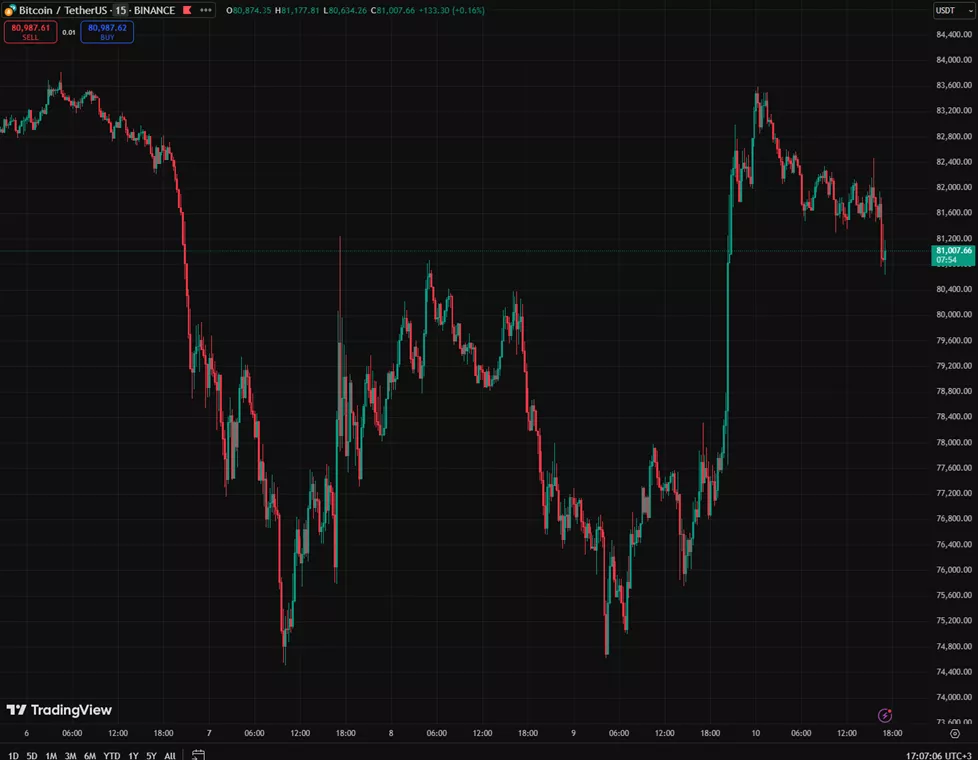
The release of macroeconomic statistics caused a brief surge in Bitcoin to $82,500. Subsequently, prices fell to $81,000, reducing the daily growth rate to 4.3%.


Futures market traders are anticipating a cut in the key rate by the Fed at the meeting on June 18. The probability increased to 84% from 73.3% the day before.


Earlier, QCP Capital expressed doubts about the Fed’s readiness to support the markets.