




Between November 15 and December 15, the hashrate of the leading cryptocurrency’s network fell by 4%. Miner capitulation has historically been a bullish indicator for the asset’s price, VanEck analysts stated.
“The longer the pressure on capacity persists, the higher the likelihood and scale of subsequent yield growth,” they noted.
According to experts, since 2014, Bitcoin’s 90-day performance was positive 65% of the time when the network’s hashrate declined in the preceding 30 days. In comparison, profitability was observed in only 54% of cases when the indicator increased over the same period.
This pattern holds over longer horizons. Considering a 180-day yield, after 90 days of declining capacity, the cryptocurrency appreciated in 77% of cases with an average increase of 72%. This surpasses the 61% positive periods when the hashrate increased over a similar timeframe.
This trend is also favorable for miners, according to VanEck. The subsequent rise in the price of digital gold could improve margins for existing participants and bring previously unprofitable equipment back online.
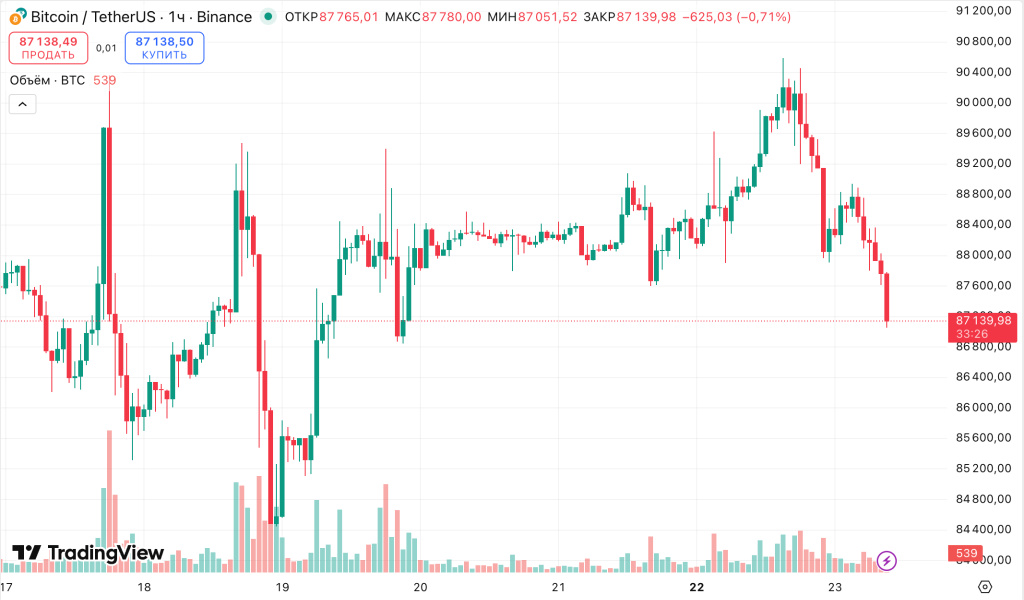
At the time of writing, Bitcoin is trading around $87,100, with its price down 2% over the past 24 hours.


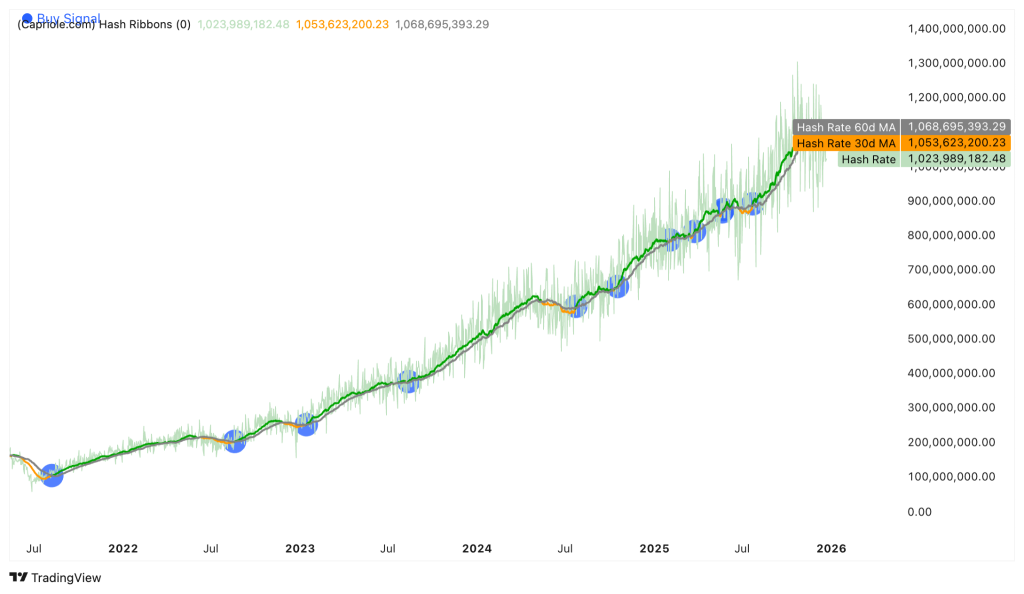
Experts described the current 4% drop in hashrate as the “most significant” since April 2024.
The Hash Ribbons indicator also points to miner capitulation — the 30-day moving average of the hashrate has fallen below the 60-day measure. However, the bottom has not yet been reached.


Profitability Crisis
Analysts emphasized that Bitcoin is approaching a critical point where the economic sustainability of the entire mining infrastructure is in question. Miners face pressure from two factors:
- Revenue reduction due to halving.
- Exponential growth in hashrate — averaging 62% annually.
To maintain their share of the network, miners are forced to continuously invest in new and more efficient equipment. The only solution is a steady increase in the price of the leading cryptocurrency, which must simultaneously offset the reduction in issuance and rising operational costs.
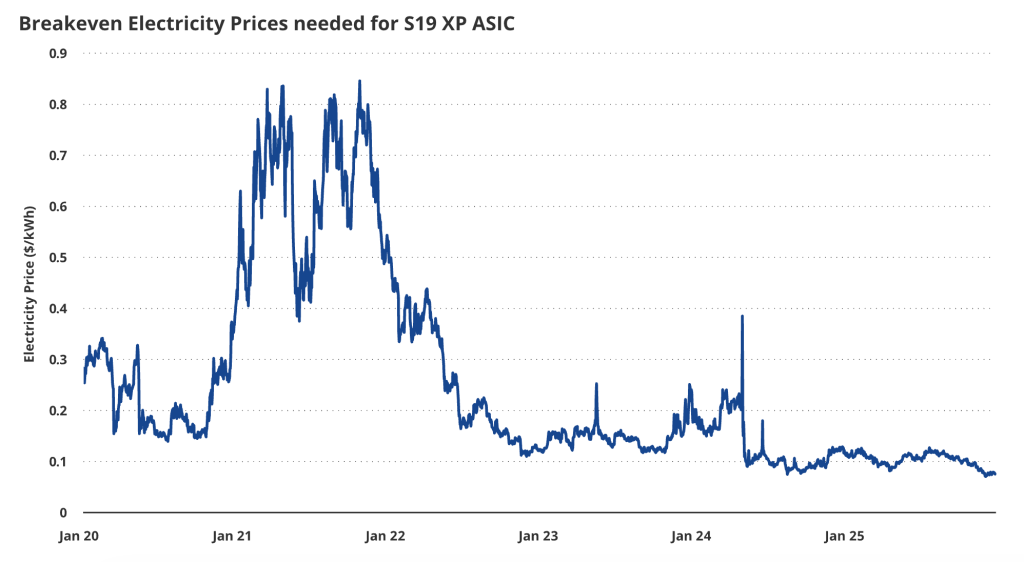
However, the coin’s prices have been in a sideways trend for several months, severely impacting the industry. The most striking indicator is the decrease in the breakeven threshold.
In December 2024, a miner using an outdated Bitmain S19 XP model required electricity priced no higher than $0.12 per kWh to break even, but by mid-December 2025, this level had fallen to $0.077.


Earlier in December, experts from TheMinerMag reported on the most severe profitability crisis in Bitcoin mining.