


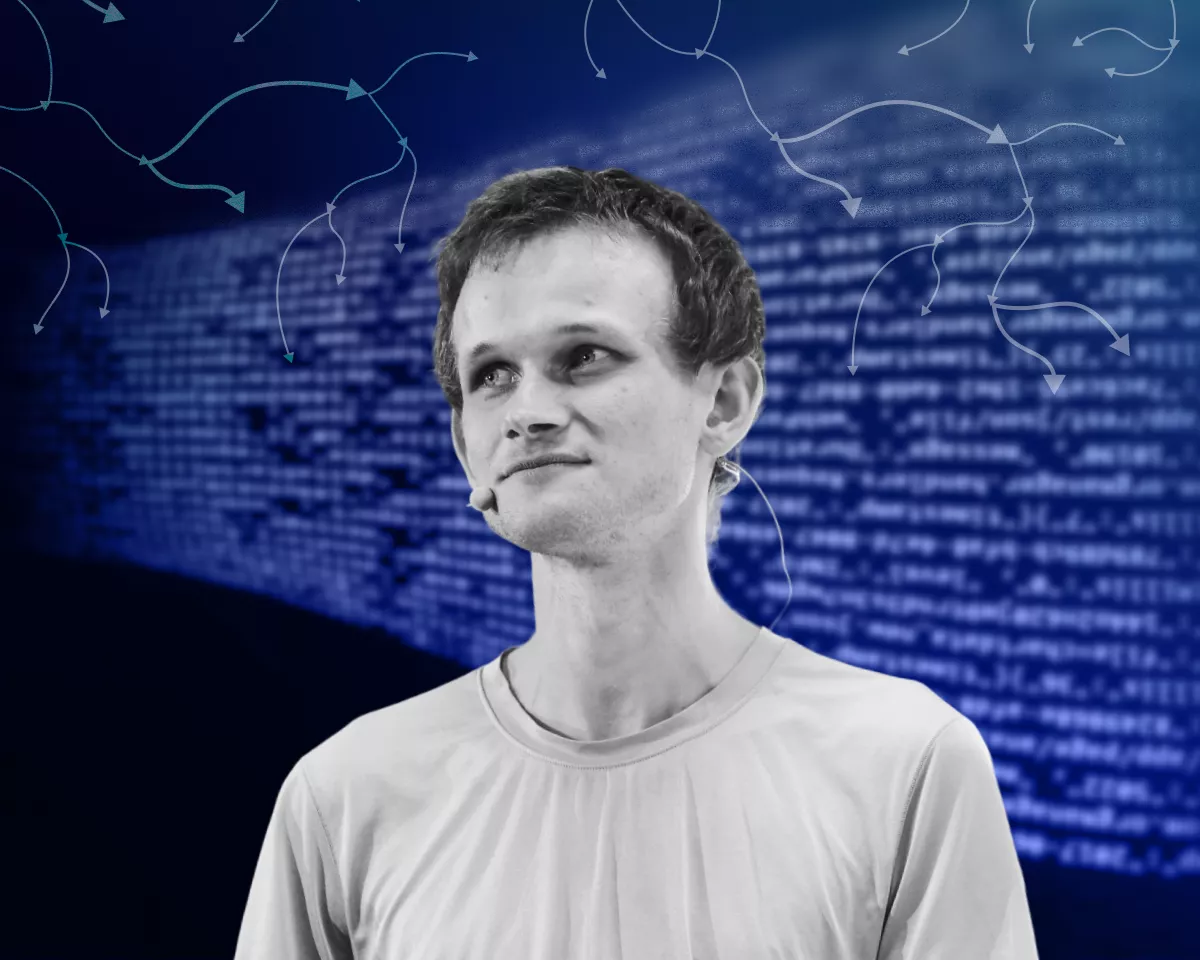
Vitalik Buterin Addresses Centralization Threats to Ethereum
Ethereum co-founder Vitalik Buterin has identified three primary challenges threatening the network’s decentralization: MEV, liquid staking, and the cost of running a full node.
Grats @dankrad @peter_szilagyi you got me to interrupt my work on EIPs and make a twitter response that turned into an unscheduled poast ?https://t.co/mmVaiEV68K
— vitalik.eth (@VitalikButerin) May 17, 2024
The unscheduled post, as he admitted, was a response to emotional criticism from key Geth client developer Péter Szilágyi. Buterin fully agreed with the programmer’s concerns, calling them justified.
Regarding MEV, he noted two strategies to protect users, termed “minimization” and “quarantine.”
The first strategy involves reducing additional extractable profit through protocol architecture, as implemented in CowSwap, for example.
The second approach involves using intra-protocol methods to reduce or eliminate MEV entirely. However, Buterin believes that the latter is impossible through minimization alone. Yet, quarantine carries certain centralization risks, he noted.
“If developers have the right to completely exclude transactions from a block, attacks could very well arise,” Buterin stated.
Nonetheless, he described developments in this area as “truly interesting.”
Buterin also acknowledged the low popularity of individual staking. Most users prefer centralized services like Coinbase or DeFi platforms such as Lido or RocketPool.
Among the main reasons, he cited the requirement to deposit 32 ETH to become a validator and the relatively high hard disk space requirement for running a full node—at least 4 TB.
According to Buterin, more can be done to reduce the deposit size, not only by lowering the amount limit but also by shortening the withdrawal time. He added that this topic raises several philosophical questions, including in the area of staking economics.
“Wrong answers could lead Ethereum down the path of centralization and ‘recreating the traditional financial system with extra steps’; right ones could create a vibrant example of a successful ecosystem with a broad and diverse set of individual stakers and highly decentralized pools,” wrote the project’s co-founder.
Regarding reducing hardware requirements for running a node, Buterin noted that the implementation of Verkle trees and EIP-4444 could “bring us closer to the ideal.”
“If both options are implemented, node hardware requirements could eventually drop to less than 100 GB, and possibly almost to zero if we completely eliminate the responsibility for storing history (possibly only for nodes not participating in staking),” Buterin believes.
He associates further progress in this direction with ZK-EVM, which will eliminate the need for computations, operating only with proofs.
“There is an almost unlimited number of blockchain projects targeting the niche of ‘we can be super fast, we’ll think about decentralization later.’ I don’t think Ethereum should be one of them,” Buterin concluded.
Back in March, the programmer described the next five years as “crucial” for the mass adoption of Ethereum.
Рассылки ForkLog: держите руку на пульсе биткоин-индустрии!