



Ethereum co-founder Vitalik Buterin has articulated arguments in a new essay for further expanding transaction space in the network’s first-layer block.
Reasons to have higher L1 gas limits even in an L2-heavy Ethereumhttps://t.co/BMFhzoO8bE
— vitalik.eth (@VitalikButerin) February 14, 2025
In early February, Ethereum validators supported increasing the gas limit from 30 million to 36 million, boosting capacity by 20%.
However, further progress in this direction faces risks of centralizing the use of L1. Given Ethereum’s rollup-centric roadmap, the question arises whether expanding capacity is the right long-term solution, Buterin acknowledged.
“Even in a world where most activity is concentrated on L2, there is value in significant scaling, as it provides simpler and safer application development patterns,” the programmer briefly responded.
As the main reasons for further increasing the limit, he pointed out:
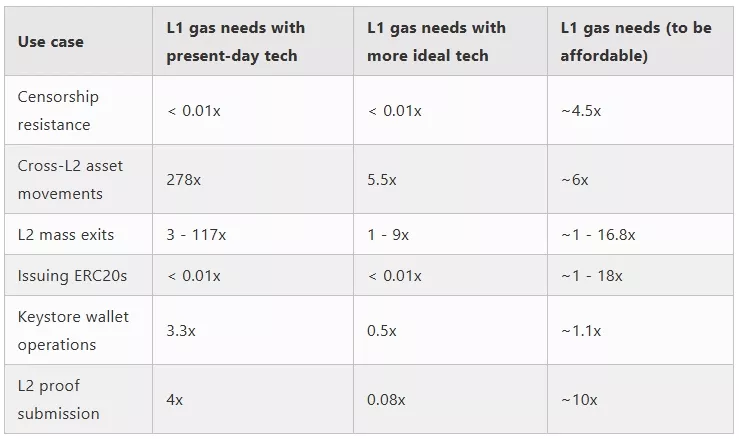
- enhancing transaction censorship resistance — ensuring their inclusion in the blockchain as quickly as possible;
- simplifying and reducing the cost of moving assets between L2 protocols;
- enabling rapid mass withdrawal of funds from a “broken” L2 to the base blockchain;
- ensuring large-scale and inexpensive issuance of ERC-20 tokens on L1.
Expanding capacity also facilitates operations from wallets like Keystore and accelerates interaction between L2s, Buterin added.


Back in January, the Ethereum co-founder confirmed that the ecosystem will continue to scale primarily through second-layer solutions.