




Validators of the world’s second-largest cryptocurrency by market capitalization have begun raising the gas limit. Vitalik Buterin, co-founder of the project, deemed this move safe.
Here’s an example of recent hard work by the Geth team that makes these kinds of scale increases safe.https://t.co/Wgi2F7mbUW
— vitalik.eth (@VitalikButerin) July 20, 2025
The gas limit determines the maximum computational work in a single block. Increasing it allows for more transactions to be included.
On July 20, the limit in some blocks rose from 36 million to 39 million units. According to GasLimit, about 49% of validators support a target of 45 million.


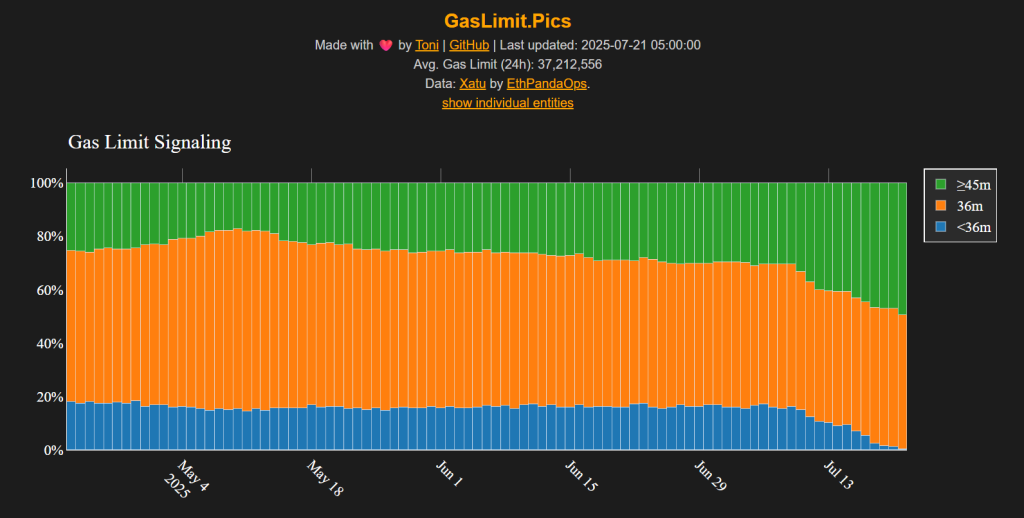
Vitalik Buterin commented on the situation on X. According to him, nearly half of the stakers support raising the gas limit to 45 million.
The expert also emphasized that a recent update to Geth, the most popular Ethereum client, makes such an increase safe. Developers have reduced the size of an archive node by 90%, from over 20 TB to 2 TB.
Buterin stated that it is the “hard work of the Geth team that makes these kinds of scale increases safe.”
On the other hand, a high gas limit complicates the work of validators with small capital due to increased data processing costs. Representatives of the Pump The Gas initiative acknowledge this risk. They note that an excessively large limit could make the blockchain “heavy” for solo node operators.
In May, the Ethereum Foundation launched the Trillion Dollar Securit initiative as a “cross-ecosystem effort to enhance Ethereum’s security.”
In July, the project team published its first report, identifying six major challenges for the network.
Later, Buterin and developer Tony Warshtetter proposed introducing a gas limit for a single transaction at 16.77 million.