



We aim to inform readers not only about events in the Bitcoin industry but also report on developments in adjacent technology spheres — cybersecurity and the world of artificial intelligence (AI).
ForkLog AI has gathered the most important AI news from the past week.
- NASA will test AI technologies as part of its lunar mission.
- Researchers solved a century-old differential equation to remove the computational bottlenecks of “liquid” AI.
- A neural network learned to decode brain waves and interpret what a person sees.
- Microsoft and Nvidia will build a supercomputer.
- Qualcomm unveiled a processor for the next generation of AR glasses.
- A robot dog was taught to move across any terrain.
- The week’s most important AI deals.
Alexa AI assistant launched on the Moon as part of NASA Artemis I mission
The US space agency NASA successfully launched the Artemis I lunar mission, under which AI technologies will be tested.
On board the uncrewed Orion spacecraft sits a Callisto console based on an iPad with the Alexa assistant and a WebEx videoconferencing client installed.
The mission will last 25 days 11 hours 36 minutes. During this time, Orion is expected to cover about 2.1 million kilometres.
Researchers near breakthrough in fast, efficient neural networks
MIT solved a century-old differential equation to remove the computational bottlenecks of “liquid” AI.
In 2021, scientists developed an AI algorithm capable of learning and adapting to new information during operation, not just at the initial training phase. These “liquid” neural networks are suited for urgent tasks such as monitoring a pacemaker, weather forecasting, or autonomous navigation of robo-dogs.
However such models are computationally expensive as the number of neurons and synapses grows. They also require various software to perform the underlying complex mathematical operations.
Now MIT says that solving the 1907 differential equation governing the interaction of two neurons through synapses will unlock a new class of fast and efficient AI algorithms.
Neural network trained to analyze brain waves and decode vision
A group of researchers created the AI system MinD-Vis, capable of decoding brain waves and displaying what a person sees.


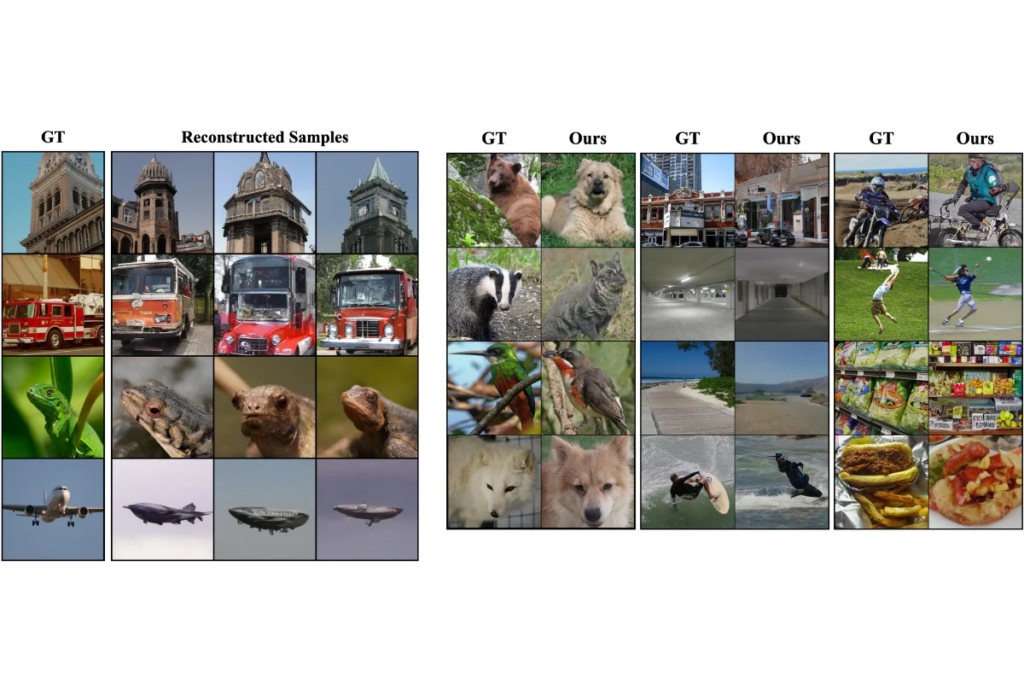
The algorithm interprets “mnemonic invariants, patterns formed in the brain when viewing objects. They are patterns stored in different memories of the same object.
To decode the waves, scientists used a self-supervised learning model trained on identical brain activity data from several people. They also added a pre-trained diffusion AI image generator for text and a transformer neural network on these imagined representations.
After a brief fine-tuning on 1,500 pairs of “image—fMRI system could decode what a person sees.
MinD-Vis is released with open source. Weights of the models are available on request.
Microsoft and Nvidia to build a supercomputer
Microsoft and Nvidia signed a multi-year collaboration to develop a massive AI supercomputer.
The partners will host the system in the Azure cloud. The machine will be equipped with Quantum-2 400Gb/s InfiniBand networking and H100 GPUs.
As part of the collaboration, Nvidia plans to use Azure VM instances to explore advances in generative AI and self-supervised algorithms capable of creating text, code, images, video or audio.
Microsoft, meanwhile, intends to optimise the DeepSpeed deep-learning library for the partner’s hardware. The aim is to reduce computational power and memory required during AI training workloads.
Qualcomm unveiled a processor for next-generation AR glasses
Qualcomm announced the Snapdragon AR2 Gen 1 platform for “thin and light” augmented reality glasses.
The system is a multi-chip design built on a 4-nanometer process. Snapdragon AR2 Gen 1 supports up to nine cameras simultaneously to understand the user and surroundings with a “visual analytics engine” tasked with object detection.
A companion processor located elsewhere in the glasses uses an AI accelerator to track gaze and perform other computer-vision tasks. The third module provides connectivity to networks such as WiFi 7, smartphones and PCs.



The company claimed that the multi-chip design delivers 2.5x higher AI performance with half the energy consumption compared with a XR2-based reference solution.
Earlier Qualcomm introduced the flagship Snapdragon 8 Gen 2. The new chip is equipped with a dedicated AI chip that is 4.35 times faster than its predecessor.
Waymo launches robotaxi in downtown Phoenix
Waymo will let everyone interested test a driverless robotaxi in Phoenix (USA).
The autonomous Jaguar I-Pace vehicles will shuttle customers around the clock in the service area.


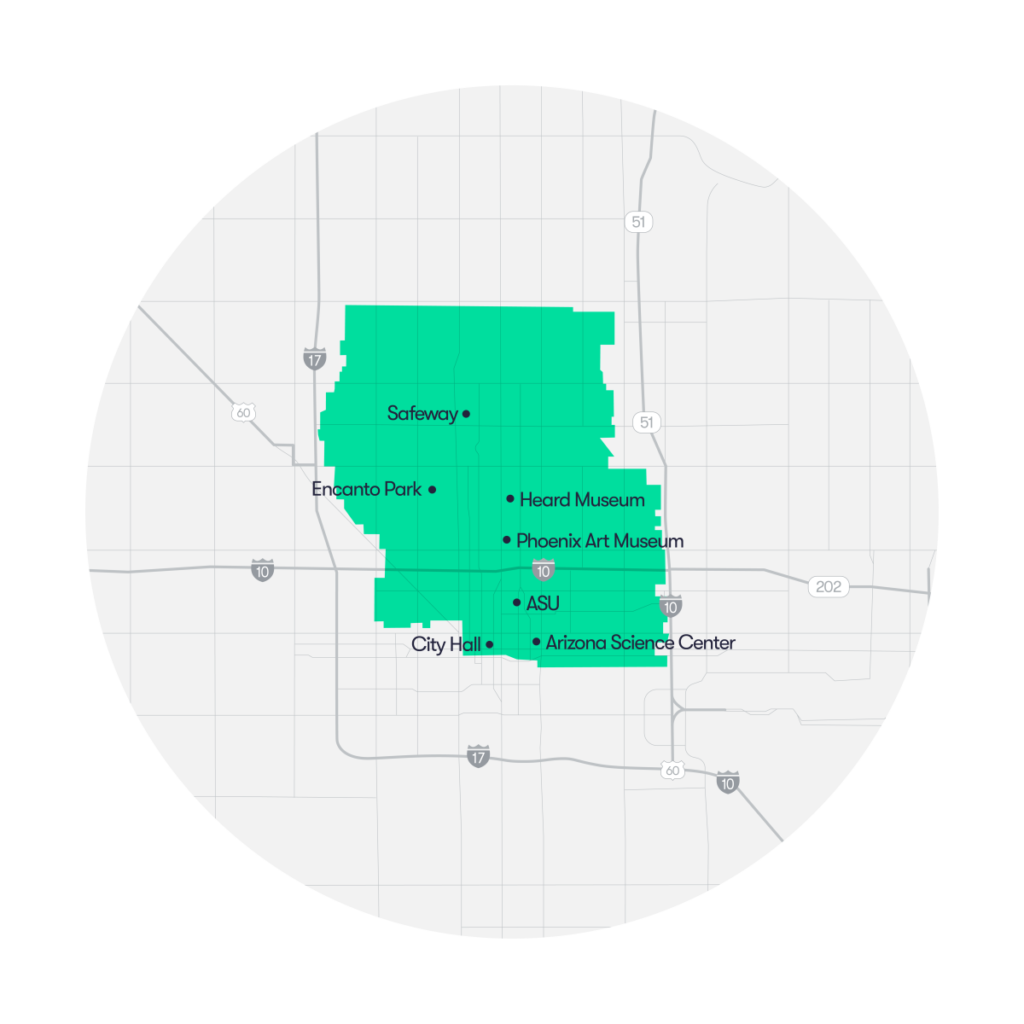
There is no information on how many robotaxi vehicles are deployed.
Notion introduces AI assistant for content writing
Notion began testing an AI assistant for writing notes and other content.
The system uses data from the Internet. The tool offers users a choice of templates such as a blog post, a pros and cons list, or a to-do list. Users then specify the topic and click “generate.” The result can be saved or revised.
The company said the feature is currently available to a few testers for free. Anyone wishing to try the tool can sign up on the waiting list.
In the future Notion plans to expand the number of users and possibly make the tool paid.
DeviantArt unveils text-to-image DreamUp
The online gallery DeviantArt has launched its AI image generator DreamUp.
The system is based on the Stable Diffusion neural network. According to DeviantArt, the tool will indicate authors whose images were used to train it and tag user-generated content with the AIArt tag.



The company said users can allow or disallow including their works in DreamUp’s training datasets. Authors can also opt out from having their pictures used to train third-party AI models.
DeviantArt urged other platforms to adopt this approach so artists can share images with an audience while retaining control over “non-human applications.”
Robot dog trained to move across any terrain
Researchers from Carnegie Mellon University and the University of California, Berkeley trained a robot dog to move across nearly any location.

During training, specialists used simulations, forcing 4,000 virtual devices to move across varied terrain to gain knowledge about the world. According to them, in one day this method helped the system acquire skills that would have taken six years to learn under normal conditions.
The data gathered during modeling was fed to a neural network and loaded into the robot. It could move across rough terrain, slippery uneven surfaces, and climb stairs.
According to researchers, a device trained in this manner does not require mapping or motion planning, and adapts in real time to conditions. This could significantly reduce the cost of building robots.
Cerebras unveils exaFLOP supercomputer
The company Cerebras has developed the AI supercomputer Andromeda with 1 exaFLOP compute power. The machine is available for commercial and academic use.


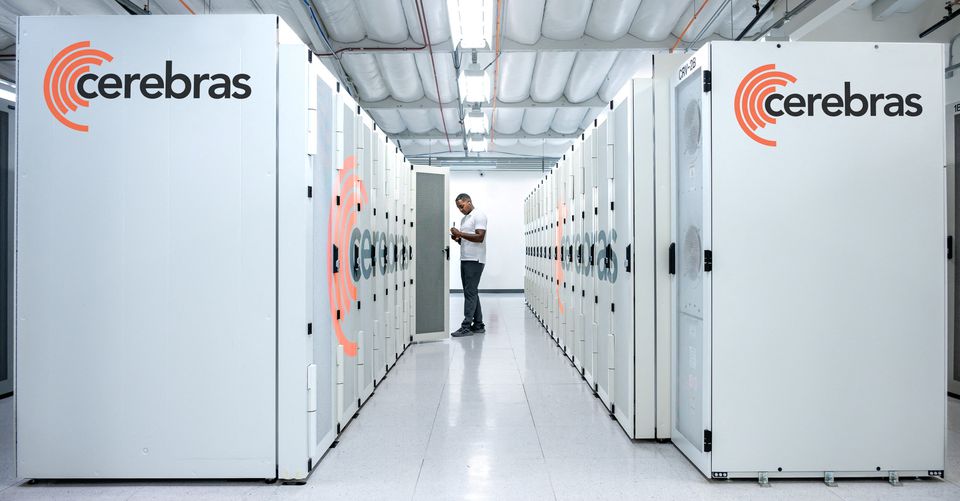
The system comprises 16 CS-2 servers built on the Wafer-Scale Engine 2 with 13.5 million cores. By comparison, the world’s largest supercomputer Frontier has 8.7 million cores. The cluster is managed by 284 AMD Gen3 EPYC processors.
According to the company, the cost of building Andromeda was $35 million versus $600 million spent on Frontier.
The week\’s most notable AI deals
From 13 to 19 November 2022, AI startups raised over $431.7 million. Here are the most notable deals.
- Astera Labs received $150 million for developing chips to connect AI systems in the cloud.
- Attabotics raised $71.7 million to expand robotic structures for vertical warehouses.
- Symend raised $42 million.
- Spot AI raised $40 million to develop an AI-powered video surveillance system.
- Speak raised $27 million to expand its language-learning AI platform.
- Soft Robotics raised $26 million.
- Pickle Robot Company raised $26 million.
- Owl Labs raised $25 million to scale AI cameras for meetings.
- Terzo raised $16 million to improve contract-processing software.
- Namecoach raised $8 million for embedded tools to teach correct pronunciation of names.
Also on ForkLog:
- The EU published a new version of the AI bill.
- Italy banned the use of facial recognition technology.
- Waymo turned the robotaxi into mobile weather stations.
- Tesla Autopilot was blamed for a deadly crash.
- Intel introduced a deepfake detector.
- Boston Dynamics filed a suit against the maker of “killer robots.”
- Microsoft and Lockheed will help the Pentagon deploy advanced technologies.
Subscribe to ForkLog AI news on Telegram: ForkLog AI — all the AI news!